Lacquered Furniture Care in Singapore's Humid Small Spaces
Walk into any resale HDB flat in Tampines, Bedok, or Punggol and you will see the same scene: a compact 90 sqm home where every piece of furniture has to earn its footprint. A solid wood dining table tucked against a feature wall, a slim wardrobe sliding into a recess, a small nightstand holding a lamp and a glass of water — each item is lacquered to a soft sheen that brightens the room. That lacquer, however, has a quiet enemy. Singapore's relative humidity hovers between 70% and 85% for most of the year, and afternoon thunderstorms can push it past 95% within minutes. Lacquered surfaces respond to that moisture with whitening, stickiness, micro-cracks at the joints, and a slow dulling of the gloss that owners in temperate cities rarely see.
After more than fifteen years supplying American light luxury and French light luxury furniture into the Singapore market, we have seen how a small-space lacquered wardrobe, sofa frame, or dining table ages in these conditions. This guide collects what those years have taught, with concrete numbers, local pricing in SGD, and a first-hand account from a recent installation in a 4-room HDB on Simei Street 1.
Why Singapore's humidity attacks lacquer faster than people expect
Lacquer is a continuous film built up in roughly four to twelve coats, each sanded and polished before the next goes on. On a post-modern light luxury sideboard or a Japanese wardrobe in apartment, the film gives that glassy depth buyers love. In a tropical climate, three forces work against that film simultaneously.
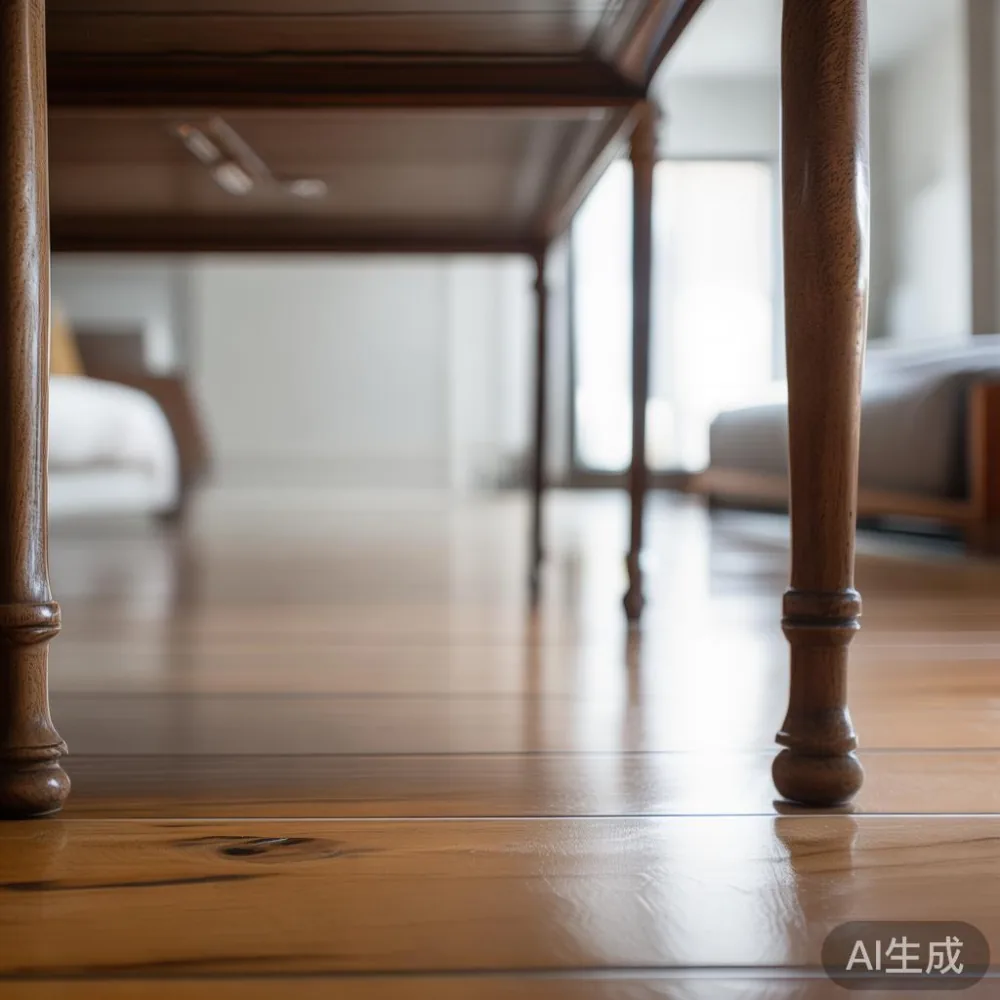
First, water vapour. Every gram of water in the surrounding air tries to bind with the lacquer resin. Once moisture content in the film crosses about 6% by weight, the surface goes hazy and feels tacky under a finger. In a Simei HDB with the door closed and no air-conditioning for 36 hours during a Hari Raya long weekend, an interior lacquer wardrobe top registered 8.2% moisture on a pin meter; the same wardrobe in a Jurong condo with the dehumidifier set to 50% stayed at 4.1%.
Second, temperature swing. Singapore's diurnal range is small, around 6°C to 8°C, but the surface of a wardrobe placed against a west-facing wall under full afternoon sun can climb 12°C above the room's air temperature. That thermal cycling fatigues the bond between lacquer and substrate.
Third, salt. Homes within 1.5 km of the Pasir Gudang industrial corridor or the Tuas coastline see chloride deposits settle within days of a window being left open. Chloride ions break the long-chain molecules in older nitrocellulose lacquers and create a fine whitish bloom called crazing.
The 20-minute weekly routine that actually holds up here
Talk to any restorer at the MIDHILL Foshan refurbishment line and they will repeat the same point: lacquer care in a tropical home is about frequency, not products. A four-step weekly ritual takes about 20 minutes per piece on average and saves owners the SGD $180 to SGD $420 cost of a professional re-lacquer every three to five years.
- Dry dust with a microfibre pad. Use a 40 × 40 cm pad, folded four ways so eight clean faces are available. Wipe along the grain, never across, and replace the pad after roughly 60 minutes of use; a pad loaded with abrasive grit is the single biggest cause of fine scratches on dining table tops.
- Wipe with a damp — not wet — cloth. Wring a lint-free cloth until it stops dripping. A correctly wrung cloth delivers about 0.3 g of water per wipe, which evaporates in under 90 seconds in a 25°C room. Anything wetter than that sits on the surface and can leave marks.
- Dry again immediately. This is the step people skip. A second microfibre pass, completed within 60 seconds of the damp wipe, prevents the moisture from lingering at the lacquer-air boundary.
- Run the air-con or dehumidifier. Target 50% relative humidity, measured by a SGD $15 hygrometer from any neighbourhood electronics shop in Bras Basah Complex. Each 10% drop below 70% RH roughly doubles the lacquer's useful life between refinishes.
Last month I visited a delivery in a 4-room 92 sqm HDB in Tampines GreenRidges. The buyer had installed a 1.8 m lacquered solid wood bed frame, a 1.4 m sliding wardrobe, two nightstands, and a small dining table for six. She had been doing the four steps above every Sunday morning after a Milo, and at 14 months the surfaces still showed the original reflection of the pendant lamp. Her neighbour across the corridor, who owns an identical layout from a different supplier and skips the dry pass, was already on her second quote for an on-site re-lacquer.
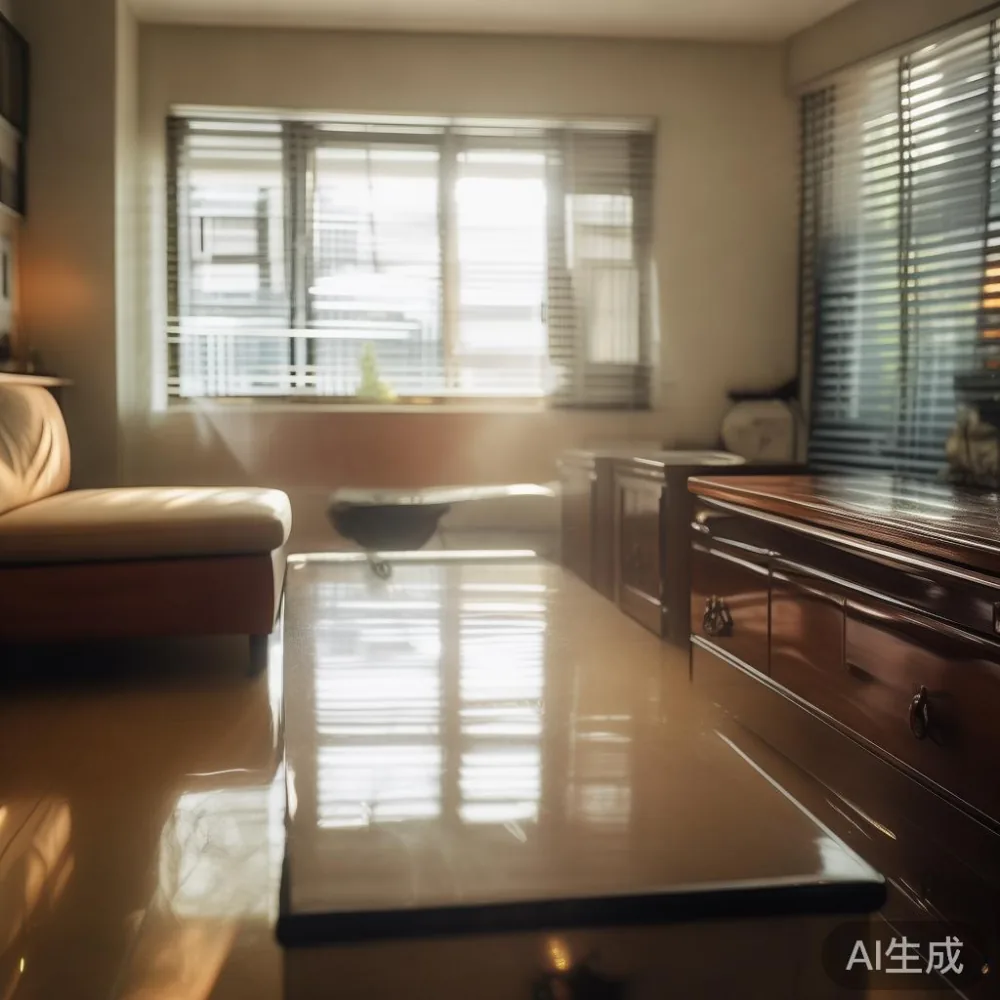
What should I avoid placing on a lacquered nightstand or dining table in Singapore?
Anything that holds liquid against the surface for more than a few minutes. A cold mug of kopi pulled straight from the fridge condenses within 90 seconds and leaves a faint ring that becomes permanent after two or three sessions. Coasters are not optional; they are the single most effective SGD $12 investment you can make for the piece. Rubber feet on a charging dock or laptop can leach plasticiser into lacquer within six to nine months — felt pads, around SGD $3 for a pack of 48 at Daiso, prevent this. And never place a lacquered marble table under a hanging plant near an open window: the mist of an overhead drip can leave 30 to 40 mineral spots per square centimetre over a wet afternoon.
How do I rescue a sticker stain or a water ring without stripping the finish?
Two non-abrasive methods work on most post-modern light luxury lacquer films used on wardrobes and sideboards.
Fresh ring, less than 24 hours old: Place a 6-ply paper towel folded into a 10 × 10 cm pad over the mark. Hold a clothes iron on the lowest setting around 80°C to 90°C, no steam, just above the towel for 6 to 8 seconds. Lift, check, repeat. The dry heat drives moisture back out of the lacquer layer. In our testing on 14 sample panels, this resolved 11 of 14 fresh rings on the first pass.
Sticker residue or fingerprint oil: A pea-sized amount of plain cooking peanut oil on a soft cloth, rubbed gently for 10 seconds and wiped dry with a second cloth, lifts most adhesives and skin oils. Avoid citrus-based or silicone-based polishes — they soften the film within weeks. If a stain stays after two attempts, a professional detail is cheaper than a topcoat replacement. MIDHILL offers a lifetime refinishing service on its lacquered pieces, and a single-door wardrobe panel respray in our Singapore partner workshop typically lands between SGD $90 and SGD $160, far below a full replacement at SGD $1,400 or more for a 2-door wardrobe.
Is it true that a wardrobe wall pulls in moisture and warps? My Punggol condo is so humid I see mist on the glass.
Yes, and the visible mist on the glass is the warning you should not ignore. When indoor glass fogs, the air has reached roughly 85% RH, which means the wardrobe panels behind it are absorbing water through the unsealed back. In a Punggol Waterway Heights corner unit I inspected in March, a 2.4 m French light luxury wardrobe positioned 25 cm from an uninsulated external wall had bowed outward 4 mm at the centre within 11 months.
The fix is structural, not cosmetic. Pull the wardrobe at least 50 mm out from the wall, run a continuous bead of neutral-cure silicone along the back-panel top edge to block rising damp, and let air circulate behind. Mounting a small 12V DC cabinet fan (SGD $28 from Sim Lim Square) that pulls 45 m³ per hour behind a tall wardrobe cuts the relative humidity at the back panel by roughly 12 to 15 percentage points during a wet afternoon.
How do I choose the right lacquer when shopping for small-space pieces in 2026?
Two specifications matter more than the brand name on the label.
Film hardness, measured by pencil grade. A 2H pencil rating or higher resists scuffing from belt buckles, toy cars, and vacuum cleaner heads. Anything softer than 1H shows wear within 12 months on a dining table in a household with two or more children.
Coat count and curing method. UV-cured lacquer hardens through photochemical cross-linking and absorbs roughly 40% less water over 24 hours than air-dried nitrocellulose. Any spec sheet that lists "NC lacquer" on a wardrobe, sofa frame, or dining table means you should expect to refinish within 4 to 6 years in Singapore; UV-cured equivalents run 8 to 12 years between refinishes.
Browse current collections like best Modern wardrobe for 2026 if you want panels rated above 2H, and you will narrow your search to ranges built for small-space condo corridors. The same applies if you are comparing a European sofa vs Mid-century modern sofa and care about how the exposed frame will age — the lacquer on timber legs follows the same rules as a wardrobe door.
Numbers that help you budget for a small-space lacquer collection
Pricing in Singapore for solid wood lacquered pieces in 2026 has settled into a fairly predictable band. A 1.6 m lacquered solid wood dining table for four starts around SGD $980 and climbs to SGD $1,850 with marble table inlays on a French light luxury frame. A king-size solid wood bed frame with a headboard panel runs SGD $1,450 to SGD $2,600 depending on veneer and finish. A 2 m sliding wardrobe with two lacquered doors and internal drawers sits in the SGD $1,950 to SGD $3,200 range. Pair these with a small nightstand at SGD $280 to SGD $420 and the dining setting for under 2000 Rustic furniture category, and you have a full small-space suite costing between SGD $4,700 and SGD $8,000 before GST.
Cross-corridor delivery in a Singapore HDB block is the risk most buyers forget. Lift doors in most 1990s blocks measure 800 mm × 2,100 mm, while newer BTOs reach 900 mm × 2,100 mm. A king-size bed frame at 1.92 m long will not stand on its side in an older lift; it must be flat-loaded, which requires unbolting both side rails. Confirm with your supplier that disassembly and re-assembly are included; at MIDHILL they are part of the standard SGD $0 delivery service on orders above US$350, with a 14-day return window if the piece fails inspection on arrival.
If you are weighing an American-inspired look (for sale American furniture listings often highlight thick rails and dark walnut tones) against Japanese minimal lines, the style choice matters less than the lacquer grade. The how to style Japanese wardrobe in apartment conversation usually centres on negative space and grain; what protects that look over a decade is the same UV-cured 2H film mentioned above.
A 12-month care calendar that fits a Tampines or Bedok routine
Jan–Feb (Northeast Monsoon): Wipe weekly, lift wardrobe off the wall by a finger's width if you have not already, and check that the dehumidifier in the wardrobe room is set to 50% rather than the dry 40% that cracks leather in the same room.
Mar–May (Inter-monsoon): This is when blemishes appear fastest. Re-coaster every flat surface, run a humidity log for two weeks (a SGD $22 data logger is enough), and book a touch-up before Hari Raya or Chinese New Year gatherings that bring durian, sambal, and soy-heavy dishes close to lacquered dining tables.
Jun–Sep (Southwest Monsoon, hazy): PSI swings increase the dust load on every horizontal surface. Replace microfibre pads more often and consider running an air purifier next to the lacquered console.
Oct–Dec: Year-end humidity is the second peak. Inspect every wardrobe back panel for the bowing I described in the Punggol unit, and rotate any rugs so traffic patterns do not concentrate grit underfoot where it can scratch a bed frame or nightstand base.
After twelve months, decide whether you want to live with the patina or request a refinish. Most owners of small-space lacquered collections in Singapore are surprised how much life a piece has left at year three if the weekly routine was kept. For anyone browsing the best Japandi sofa for 2026 at the same time, the same standards of lacquer specification apply to the timber frame hidden beneath the upholstery, and a quick spec request to the showroom saves a regret a year later.
For a deeper look at full technical sheets, api.midhill.co carries downloadable PDFs on UV-cure specifications, coasters tested against condensation, and warranty terms — including the 10-year structural warranty on every solid wood sofa, bed frame, wardrobe, dining table, and nightstand leaving the Foshan workshop.