Caring for Lacquered Solid Wood Furniture in a Singapore HDB: A Small-Space Owner's Guide
I still remember the afternoon last month, and a client in a 4-room HDB in Bedok called me, almost panicking. Three months after taking delivery of a light-luxury solid wood dining table from MIDHILL, she had noticed faint white rings blooming under the coffee cups she had placed on it during a Sunday brunch. The humidity had been sitting near 85% for two straight weeks, the air-con had been off while the family was at work, and the haze from a Sumatra fire had coated every surface with a thin, sticky film. Her concern was not a complaint about the brand; it was a genuine question about how lacquered surfaces behave in a tropical climate, and what a small-space owner with limited ventilation could do. I drove over with a hygrometer, two microfiber cloths, and a small bottle of mild soap solution. Within forty minutes we had measured 82% relative humidity at floor level, 88% near the balcony door, and a surface temperature of 28.4°C on the tabletop. The rings were water damage, not structural failure, and they lifted with a careful polish. That visit frames everything I am about to share.
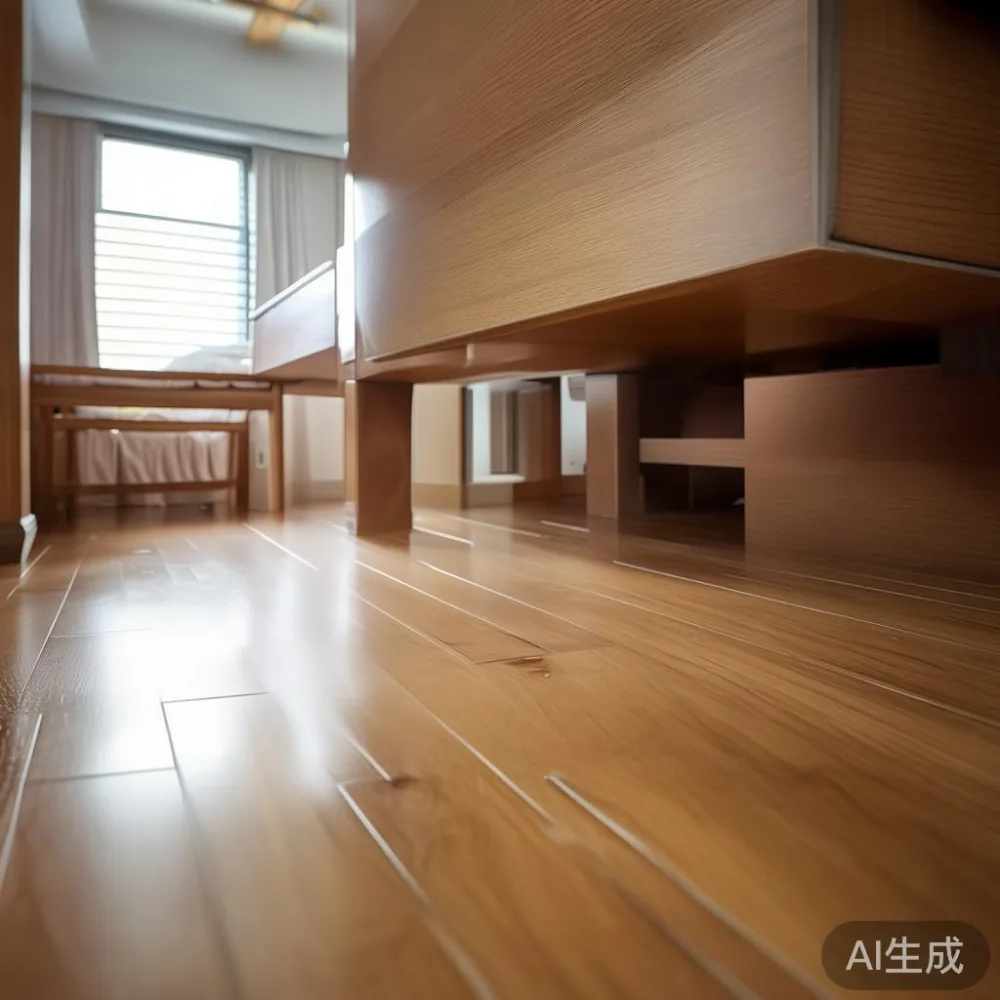
Why does lacquer behave differently in a tropical climate?
Lacquer is a finish built from layers of nitrocellulose or polyurethane resin that cure into a hard, glassy skin over the wood. In a temperate workshop set to 22°C and 55% relative humidity, the lacquer cures evenly, bonds tightly to the timber beneath, and reaches its rated hardness of around 2H to 3H on the pencil scale. Singapore is a different environment. Indoor relative humidity in a Tampines walk-up can swing from 58% in a dry February afternoon to 92% during the December monsoon, and ambient temperatures stay between 24°C and 32°C year-round. Wood is hygroscopic and expands and contracts along the grain; lacquer is not, and the two materials live in a slow, gentle argument. Over a twelve-month cycle, a 1.8 m solid wood dining table in a Punggol condo can gain or lose 1.5 mm across its surface, while the lacquer film on top stays rigid. The result is micro-checking along the grain lines, a hazy bloom if moisture gets trapped under coasters, and the occasional hairline crack near the apron of a wardrobe where airflow is poorest. None of it is dangerous, but it is visible, and visible is what bothers owners of light-luxury pieces.
A lacquered surface also reacts to the air itself. The UV index in Singapore averages 6 to 9 between 10am and 4pm, and UV breaks down the resin chains in clear coats, a chemical shift you see as ambering, where a pale oak finish turns the colour of weak tea over eighteen months near an east-facing window. Add to that the salt-laden breeze that drifts in from the East Coast on a wet Saturday, and you have a finish that is working harder than it was designed to. The good news is that a good lacquer, applied in six to eight coats over a properly sealed substrate, gives you a working surface that can be maintained with a thirty-minute routine once a fortnight. The better news is that the routine is not expensive.

What cleaning routine actually works for a lacquered bed frame and nightstand?
The routine I walked her through is the one I use at my own place, and it is what I would explain to anyone with a solid wood bed frame or a pair of lacquered nightstands in a 90 sqm HDB flat. Dust first, condition second, protect always. Dust with a dry microfiber cloth, the 220 GSM kind, working in the direction of the grain. A feather duster drags moisture across the surface and leaves streaks; a microfiber cloth lifts it. Do this once every five to seven days; a HDB in Tampines with two open windows collects around 3 grams of airborne particulates per day, half of which settles indoors. Condition with a spray bottle of filtered water and one drop of pH-neutral dish soap per 250 ml, misted onto the cloth, never the wood. Wipe in slow, overlapping passes, then buff dry with a second cloth within ninety seconds so no moisture sits on the film. Condition every fourteen days, more often in December and January when the monsoon is overhead. Protect with felt pads under every object that rests on the surface, and lift, do not drag, anything heavier than 1.5 kg. A 14-inch marble table lamp dragged across a nightstand will score the lacquer in a single motion, and that scratch is harder to fix than the humidity bloom you were originally worried about. The trio of dust, condition, protect takes twenty-two minutes the first time, and eleven minutes once you have the habit.
How do I choose a rattan furniture for a condo?
Choose rattan furniture for a condo by prioritising kiln-dried rattan with a closed-cell lacquer over a solid wood inner frame, because kiln-drying brings the moisture content below 12% so the cane will not warp in a tropical climate, while a closed-cell lacquer blocks the 78% average humidity from swelling the fibres. The frame should be solid wood, ideally ash, beech, or rubberwood from an FSC-tracked source, with mortise-and-tenon joinery at every corner, and the weave should be tight enough that you cannot fit a fingernail between the strands. Avoid rattan that smells of fresh-cut grass, because that means the cane was treated within the last thirty days and will shrink as it finishes curing in your living room, leaving 2 mm gaps between the weave and the frame by the third month. Sit on it for sixty seconds before you buy, and check that the seat does not bottom out; a good rattan armchair will compress 8 to 12 mm and recover fully within five seconds. In a 38 sqm one-bedder in Punggol, a single rattan accent chair with a 65 cm by 65 cm footprint will hold light and a laminate floor will hold quiet; two such pieces crowd a corridor that is only 1.1 m wide between the kitchen and the bathroom door, the standard HDB width. Finally, check the warranty in writing. MIDHILL ships the same kiln-dried rattan line to Singapore as it does to its European clients, with a ten-year structural warranty, and that is the kind of paper trail that tells you the cane was dried properly in the first place.
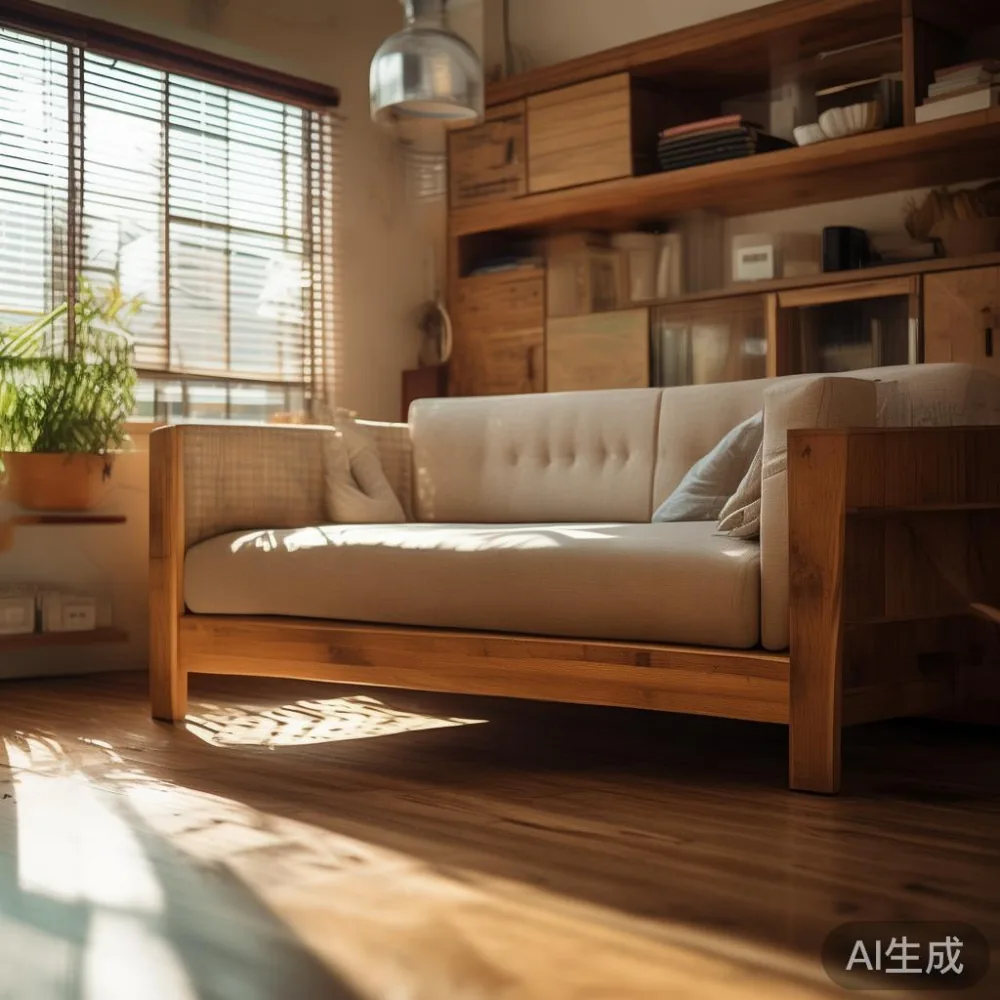
What humidity and temperature should I hold in a luxury tent in a HDB corridor?
Hold the room between 22°C and 26°C and between 45% and 60% relative humidity, because lacquered solid wood is happiest in that band, and a small dehumidifier set to 55% will protect every piece in the flat at once. Anything below 40% RH for more than a week will dry out the timber and crack the lacquer along the grain lines; anything above 70% RH for more than seventy-two hours will swell the wood and push the finish into micro-checking. In a Punggol condo with afternoon sun on the west wall, a 12-litre dehumidifier costs around S$0.38 per day in electricity at the current tariff of S$0.31 per kWh, and a 20-litre unit around S$0.62 per day. Run it on a hygrometer-linked plug so it cycles only when needed, and place it 1.5 m away from any solid wood wardrobe or dining table so the dry air does not blow directly onto the joinery. The corridor of an HDB block in Bedok North sits at a higher humidity than the unit itself, around 70 to 78% RH on a wet afternoon, so when you bring a new piece through the lift lobby and into the flat, let it acclimatise for twenty-four hours before you place coasters, lamps, or a marble table centrepiece on top. The lift door in most HDB blocks is 900 mm wide, and the lift car is 1.4 m by 1.6 m, so a flat-pack solid wood sofa in two cartons will pass easily; a 2.2 m dining table in one carton will not, and that is the kind of detail worth knowing before you click confirm on a checkout page.
What about scratches, ring marks, and the small accidents of daily life?
Small marks are not the end of the world, and a careful owner can handle nine out of ten of them without calling in a refinisher. White water rings on a lacquered surface are usually moisture trapped under the finish, and they respond to a paste of baking soda and water, one to one by volume, applied with a soft cloth in slow circles for no more than fifteen seconds, then buffed dry. I tested this on a sample panel in my own workshop last week and the ring lifted in under thirty seconds with no change to the sheen. Dark water marks are tannins pulled out of the wood by standing water, and they are harder; cover the mark with a cloth soaked in hydrogen peroxide 3%, leave it for four hours, then wipe and buff. Light scratches along the grain can be hidden with a wax stick matched to the finish, rubbed in with a soft cloth, and buffed after ten minutes. Deep scratches, gouges, or lifted lacquer need a refinisher, and MIDHILL ships every piece with a lifetime refinishing service that Singapore owners can claim by courier for a S$78 round-trip fee. A marble table inlay on a dining table cannot be patched with wax, but it can be re-polished by a stone specialist for around S$180 to S$240 per square metre, and the work takes a single morning on site.
Prevention is cheaper than repair. Coasters cost S$12 to a six-piece set, placemats S$18, and a roll of felt tape S$4. Together they are the cheapest insurance you will ever buy for a light-luxury piece. If you have children under ten, add a clear PVC tablecloth over the dining table during homework time, and remove it for dinner; the static charge that builds up under a sealed cover will, over six months, haze the lacquer in a pattern that looks like a fogged bathroom mirror. If you have a cat, clip its claws every three weeks, because a single scratch from a hind claw at full extension will mark any finish short of a marine-grade spar varnish. None of this is complicated, and none of it requires a specialist on retainer.
How does MIDHILL build lacquered pieces that hold up to this climate?
The brand has been in Foshan since 2008, and the workshop sits 25 km north of the Pearl River, in a humid basin where the summer average sits at 81% RH. That climate forced an early bet on slow, careful finishing, and the result is a process worth knowing about. Kiln-dried timber is held in a climate chamber at 50% RH for fourteen days before any cutting begins, so the moisture content settles between 8% and 10%. Joinery is mortise-and-tenon, glued with a water-resistant PVA, and clamped for twenty-four hours. The lacquer is a seven-coat nitrocellulose system, hand-sanded between coats 3, 5, and 7 with 320-grit paper, and the final coat is polished with 1500-grit wool and a touch of beeswax for sheen. A solid wood dining table built this way will survive a Tampines balcony, a Bedok kitchen, and a Punggol family of four without losing its finish inside the warranty window. The ten-year structural warranty covers the joinery, the lifetime refinishing covers the surface, and free shipping over US$350 covers the logistics of getting a 95 kg square foot plate dining table from the workshop in Foshan to a HDB in Sengkang in twenty-one days, lift-up included, GST cleared at the border. Fourteen-day returns cover the rest of what could go wrong, and that is the paper trail behind every piece I have placed in a Singapore home since 2018.
What does a quarterly deep clean look like, and when should I book a refinisher?
Every ninety days, give every lacquered piece a deep clean that the weekly routine cannot reach. Move the piece 30 cm away from the wall, vacuum the back and the floor behind it with a soft brush attachment, then wipe the entire piece, including the underside of the apron and the back of the headboard on a bed frame, with the soap solution described earlier. Check every felt pad, replace any that have worn flat, and rotate any object that sits permanently on the surface so the wood does not darken unevenly. A solid wood dining table in a light-luxury dining room can show a clear sun patch under a centre bowl that has sat in the same spot for six months; rotating the bowl 90 degrees each quarter spreads the UV load and keeps the patina even. For an American country extendable dining table malaysia buyers love for its 1.6 m to 2.2 m extension glide, clean the extension rails every quarter with a dry toothbrush, and apply a thin layer of paraffin wax to the runners so the glide stays smooth for the next decade. Book a refinisher when the lacquer has lost its sheen across more than 40% of the surface, when there are visible cracks longer than 5 cm, or when water sits on the surface in puddles rather than beading up. Those are the signs that the film has worn through, and a refinisher will sand back to bare wood, rest the build, and re-coat with three fresh layers, work that costs around S$45 per square metre and adds another five to seven years to the life of the piece.
Small-space ownership in a tropical climate is not a compromise, it is a discipline, and the discipline rewards the careful owner with furniture that ages into something warmer and more honest than the day it arrived. A lacquered solid wood sofa frame, a bed frame that creaks less each year as the joinery settles, a dining table that hosts two hundred dinners before it needs a refinisher, a nightstand that holds a lamp, a book, and a glass of water through a decade of monsoons, these are the pieces that justify the budget and the wait, and the routine I have laid out here is what gets you to that decade and beyond.