What Actually Happens When Your Solid Wood Sofa Arrives in a Tampines HDB? A Small-Space Delivery Guide
I spent a Saturday morning last month outside a 12-storey HDB block in Punggol, watching two delivery men carry a flat-packed bed frame up a corridor that was, by my rough measurement, about 1.2 metres wide. The carton weighed 38 kg. The lift interior was 1.1 m deep. It fit, but only because the legs had been removed and packed in a separate box. That single morning reshaped how I think about ordering solid wood furniture online, especially when the customer lives in a 4-room HDB flat with a small-space layout of roughly 90 sqm. The product photos look immaculate, the price in SGD seems sensible, and the warranty copy is reassuring, but the real test begins the moment the lorry reverses into the loading bay.
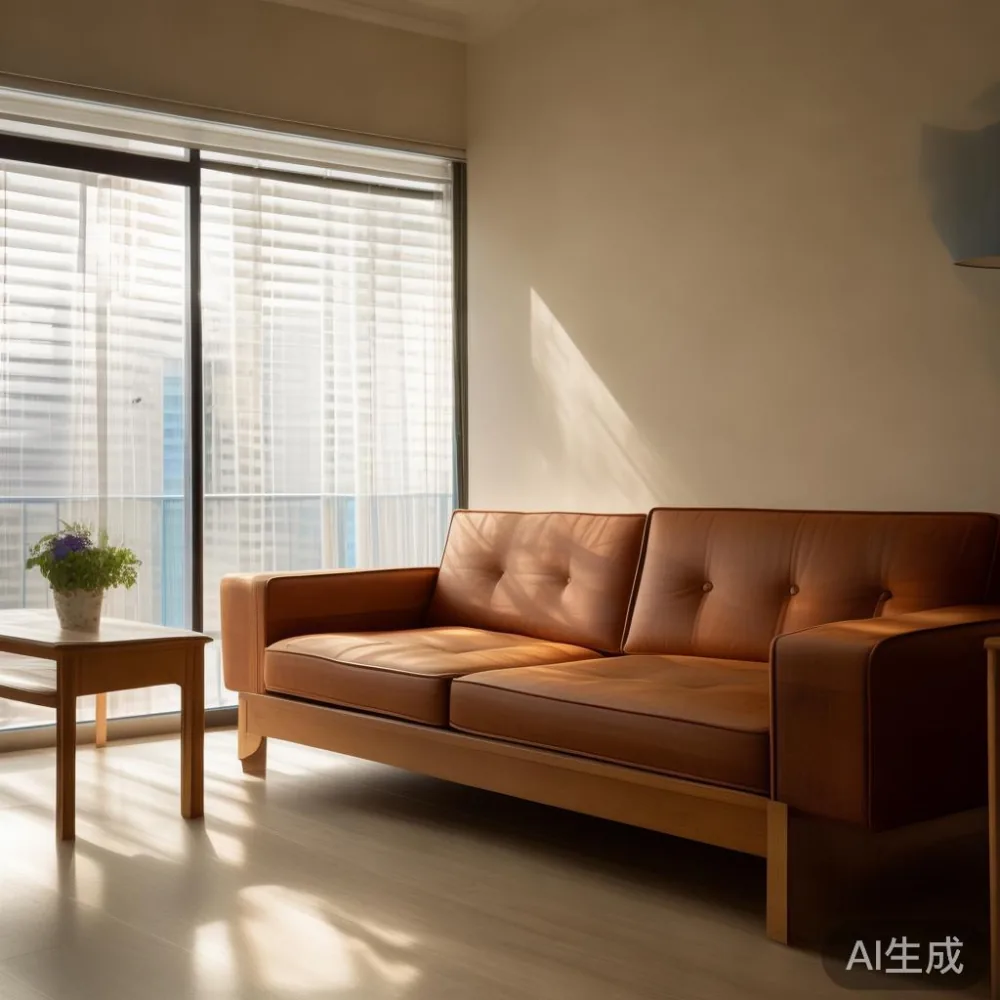
Why Singapore HDB Corridors and Lifts Change Everything About Furniture Delivery
Most online furniture listings quote a weight, a carton size, and a delivery window. Very few tell you whether the box will physically clear your lift door. A standard HDB passenger lift in blocks built between 2010 and 2020 has an internal depth of about 1.1 m to 1.3 m and a width of 1.0 m to 1.1 m, with a door opening that is usually 0.8 m to 0.9 m wide. A solid wood dining table for four can easily come in a 1.4 m carton. That carton will not fit standing up; it has to go in at an angle, which is fine for the lift, but a U-turn at the 11th-floor corridor can become a geometry problem if the corridor itself is only 1.2 m wide and your neighbour has parked a bicycle on the wall.
Then there is the staircase option. Most HDB buyers forget that furniture can also be carried by the emergency stairwell, which is normally 1.15 m wide with landings of roughly 1.2 m by 1.8 m. A 2 m wardrobe, even flat-packed, will not make a 180-degree turn on a landing unless at least one panel is under 0.6 m wide. This is why the smarter Foshan factories, including MIDHILL, ship their larger items, such as a 1.8 m wardrobe, in two cartons of 95 cm and 105 cm rather than one impossible 200 cm box. It is a small packaging decision that determines whether your Sunday is calm or ruined.
How Long Does Solid Wood Furniture Take to Reach Singapore, and What Does It Cost?
Direct-from-factory shipping from China to Singapore usually takes 25 to 40 days by sea, plus 5 to 10 days for customs clearance and last-mile delivery. Air freight is faster at 8 to 12 days but doubles or triples the landed cost, which is why almost no one ships a 90 kg solid wood sofa by air. Sea shipping for a 1.6 m light luxury bed frame in American light luxury styling typically lands in Singapore between S$180 and S$260 for one cubic metre, and a dining table set often runs S$320 to S$450 once GST at 9% is added. MIDHILL publishes free shipping over US$350, which converts to roughly S$475, so a single dining table rarely qualifies on its own; most customers add a nightstand or a small marble table to push the order over the threshold.
GST is the line item people underestimate. Since 1 January 2024, all imported goods above S$400 in value attract the 9% GST regardless of whether they are below the old S$400 low-value threshold, and the seller is responsible for collection. A solid wood sofa at S$2,400 therefore carries about S$216 in tax before it even leaves the warehouse. Add 14-day return shipping at roughly S$120 to S$180 for a three-seater, and the economics of a wrong purchase become very real, very quickly.
Will the Delivery Team Actually Carry It Upstairs and Into the Flat?
This is the question every Tampines and Bedok buyer should ask before paying, and the honest answer is that it depends entirely on the courier. Standard third-party logistics firms in Singapore typically quote door-to-door, which means the lift lobby on your floor, not your bedroom. Lift-to-door service usually costs an extra S$25 to S$60 per item, and room-of-choice delivery, where the team places the box inside the actual room and removes packaging, runs S$50 to S$120 depending on weight. For anything above 30 kg, such as a fully assembled 1.8 m x 2 m solid wood bed frame, expect a mandatory two-man team and a surcharge of S$40 to S$80.
I watched this play out with my colleague Priya, who ordered a French light luxury bed frame in cream bouclé for her 5-room Punggol flat. The base model was 78 kg in one carton, so the factory split it into a headboard box (32 kg) and a side-rail box (46 kg). The delivery team arrived within a 2-hour window on a Wednesday, carried both cartons up in a single trip using the service lift, and assembled the frame in 55 minutes because all bolts, an Allen key, and a multilingual instruction sheet were inside. Total surcharge for room-of-choice plus assembly: S$110. She tipped another S$40. That is the real number to budget.
What Does Assembly Actually Involve for a Solid Wood Bed Frame or Wardrobe?
Solid wood is heavier than the engineered wood or MDF that most Singaporeans are used to, so assembly times run longer. A simple bed frame from MIDHILL, with 12 wooden slats, 4 corner brackets, and a centre beam, takes one person roughly 90 to 120 minutes, or two people about 50 minutes. A full 2 m wardrobe with three doors, six drawers, and a hanging rail takes a competent DIYer between 4 and 6 hours. A 1.4 m to 1.6 m dining table with a trestle base is usually 20 to 40 minutes, and a marble table with a stone top should never be assembled by a single person because the top alone can weigh 45 kg to 70 kg.
The tools you need are simple: a #4 Phillips screwdriver, a 10 mm Allen key (usually included), a rubber mallet, and a smartphone level. Two-person assembly is not optional for anything above 25 kg. A wardrobe that tips during assembly can crush a finger or scratch the engineered timber flooring that came with your BTO. Lay down the carton cardboard as a working mat, keep children and pets in another room, and do not tighten any bolt fully until the entire frame is square. This last step saves hours of frustration, because wood moves slightly as joints seat, and over-tightening on the first bolt twists the whole carcass.
Is a Japandi Bed Frame Easier to Live With in a Small HDB Bedroom?
Short answer: yes, and the reason is geometry. A Japandi bed frame, which blends Japanese low-line proportions with Scandinavian warmth, typically sits 25 cm to 35 cm off the floor rather than the 45 cm to 55 cm of a traditional American light luxury frame. In a 9 sqm HDB bedroom, that 10 cm to 20 cm difference is the difference between a usable under-bed drawer and a wasted dead zone. If you are researching how to style Japandi bed in bedroom for 2026, the practical starting point is to measure your floor-to-bed clearance with the mattress on, then decide whether you need 20 cm of under-bed storage or 30 cm of open visual breathing room.
For buyers comparing a French sofa vs Italian light luxury sofa for a 4-room HDB living room, the width question matters even more. A French light luxury three-seater usually runs 2.1 m to 2.3 m wide with rolled arms and tufted back cushions, while an Italian light luxury three-seater sits closer to 2.0 m to 2.15 m with slimmer metal legs. Both can work in a small-space layout of about 18 sqm to 22 sqm, but the Italian profile leaves 10 cm to 15 cm more walkway on each side, which keeps the room feeling open. A useful rule of thumb: leave at least 70 cm of walking path between the sofa and the coffee table so that two adults can pass without turning sideways.
What About the 14-Day Return Window, Refinishing, and the 10-Year Warranty?
Singapore's Consumer Protection (Fair Trading) Act gives you a baseline of rights, but most direct-from-factory sellers set their own policy on top of that. MIDHILL, for example, offers 14-day returns on unused items in original packaging, lifetime refinishing on solid wood surfaces, and a 10-year structural warranty on joints and frames. Lifetime refinishing is the underrated perk: a solid wood dining table that develops light surface scratches after four or five years can usually be sanded and re-oiled at the factory for about S$180 to S$320, including return shipping. Buying from a brand that offers this is a fundamentally different decision than buying from a marketplace reseller who vanishes after 12 months.
Refinishing is also a reason to keep every piece of paperwork, including the original foam wrap, corner protectors, and the inner plastic sheeting. A MIDHILL coffee table that ships with a felt-lined drawer can be returned in the same carton, but if the foam has been discarded, the return may be refused. Photograph the packaging before opening it; the process takes two minutes and can save a S$120 repackaging fee.
How Do You Avoid the Common Traps When Buying Solid Wood Online?
Three traps account for most of the complaints I have seen in HDB forums. The first is the wrong dimension: a wardrobe listed as 1.8 m wide that turns out to be 1.85 m with the side panels, which then will not fit the allocated wall. Always check the assembled dimensions, not the carton dimensions, and add 4 cm to 6 cm for the skirting board. The second is the hidden weight: a solid wood bed frame with a slatted base can run 60 kg to 90 kg, far heavier than the 30 kg to 40 kg of an MDF competitor. If your block has a service lift with a 250 kg limit, four cartons of 60 kg each will exceed it on a single trip. The third is the cushion firmness: a light luxury sofa described as "medium" in the listing may use 35-density foam in the seat and 28-density in the back, which feels different in a 25 sqm showroom than in your 18 sqm living room. Always request the foam density number in writing before paying.
One practical exercise before you order: place a chair, a cardboard box, or a folded blanket in the planned position of the new piece and live with it for three days. Walk around it at different hours, open the wardrobe doors fully to check the swing arc, and simulate the path from the front door to the bedroom. This is the cheapest quality-assurance step in the entire process, and it costs nothing.
Frequently Asked Questions From Singapore Buyers
Can a 2.4 m wardrobe fit into a standard HDB lift?
No, not in one piece. A wardrobe of that length should always be ordered as two or three flat-pack sections, each under 1.2 m, so it can be tilted into the lift and carried around the corridor turn.
How heavy is too heavy for two delivery men to carry up an HDB stairwell?
Industry guidance in Singapore is that two trained movers can safely handle up to about 80 kg per person on a straight flight with handrails. Above that, plan for a third person or a small stair-climbing trolley, which adds S$60 to S$100 to the bill.
Does light luxury furniture suit a small HDB flat or does it look too formal?
Light luxury is a styling language, not a size. A French light luxury bed frame in pale oak with slim brass pulls can look beautifully calm in a 10 sqm bedroom if the bedding is kept tonal and the wall colour is matte off-white. The trick is to limit the number of metallic accents to three or four in the entire room, otherwise the space reads busy.
What is the real difference between a French sofa vs French provincial sofa?
The two share a name but come from different centuries. A French provincial sofa, also called Louis XV or Louis XVI style, is carved, heavier, and traditionally upholstered in floral mix or damask. A French light luxury sofa keeps the rolled arms and cabriole legs of the 18th century but pares back the carving, uses boucle or velvet in neutral tones, and sits on a lower, more modern frame. In a small-space HDB, the light luxury version almost always wins because the visual weight is roughly half.
Is Japandi furniture cheaper than light luxury, and where does Japanese furniture sit under 2000?
Japandi is usually 15% to 25% cheaper than light luxury at the same size because the joinery is simpler and the hardware count is lower. A solid wood Japandi dining table for four can be found under S$1,200, and a full Japandi bedroom set with bed frame, two nightstands, and a 1.5 m wardrobe can be assembled for under S$2,000 if you shop direct from a Foshan factory. The phrase under 2000 Japanese furniture is, in fact, a realistic budget for a complete primary bedroom in a 4-room HDB, provided you avoid imported Japanese retail brands and source directly.
Which Japandi sofa should I pick if I am furnishing in 2026?
The best Japandi sofa for 2026, judging by the past two trade shows in Guangzhou and Milan, will pair a 2.0 m ash-wood frame with removable linen-blend covers in stone or clay, low 18 cm legs for visual lightness, and a single bench-style seat cushion. Avoid sofas with fixed covers; Singapore humidity at 80% RH year-round will punish any cushion you cannot wash.
How do I style a light luxury bed in an apartment without it looking like a hotel?
If you are searching how to style light luxury bed in apartment, anchor the bed with one piece of statement art above the headboard, keep the bedding in two to three tonal shades, and add a single material contrast such as a walnut bench at the foot. Anything more competes with the frame.
Putting It All Together: A Realistic Singapore Buying Workflow
The workflow that consistently works for small-space HDB buyers goes like this. Measure the room, the lift, the corridor, and the door. Choose a piece that is 5 cm to 10 cm smaller in every dimension than your tightest measurement. Confirm the assembled weight and the per-carton weight in writing. Ask whether the seller offers room-of-choice delivery, what the surcharge is in SGD, and whether assembly is included or billed hourly. Pay by credit card so the bank offers a chargeback pathway if the goods arrive damaged. Photograph the unopened cartons. Build or hire a two-person assembly team. Keep the packaging for 14 days. That sequence removes roughly 90% of the risk from buying solid wood furniture online and is the same one I recommend to friends furnishing a new BTO in Punggol or a resale HDB in Bedok.
None of this is glamorous, and that is precisely the point. Solid wood furniture, whether it is a light luxury bed frame, a French-inspired sofa, a Japandi dining table, or a marble table, rewards buyers who treat the purchase as a logistics project first and a style project second. The aesthetic you can change with a cushion cover or a throw; the 80 kg wardrobe stuck in a 1.1 m lift is a problem that no throw will fix.