How does humidity in Southeast Asia affect solid wood furniture in Singapore HDB flats?
I still remember stepping into a fourth-floor HDB unit in Tampines last month with my colleague, who was delivering a MIDHILL solid wood sofa to a customer. The owner had purchased the same oak series two years earlier, and we were there to check on a slight warp she had noticed along the armrest. The window was open, a thunderstorm was rolling in from the Straits of Johor, and the hygrometer on the wall read 88%. Within minutes, my colleague wiped the frame with a dry cloth, pointed to the small gap behind the wardrobe, and explained that the wardrobe had been pushed flush against the wall — no breathing room for the wood to expand. That single Tampines visit captures almost everything worth knowing about how humidity shapes solid wood furniture in a Singapore home.
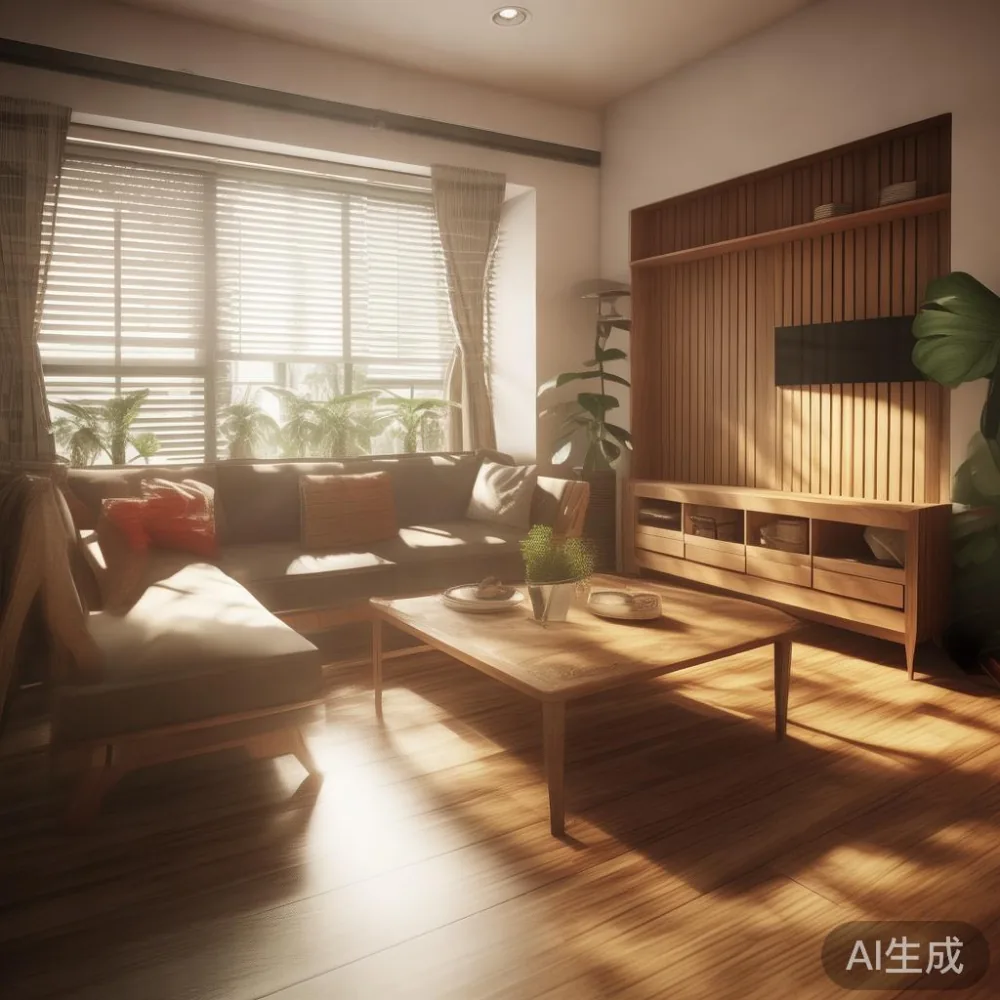
Most people in Singapore, Johor Bahru, Kuala Lumpur, Bangkok and Ho Chi Minh City treat moisture as background noise. Air-con runs at 23°C, dehumidifiers hum quietly in the corridor, and the daily 4 pm shower rolls in like clockwork. Yet wood is hygroscopic — it absorbs and releases water vapour constantly. In a tropical climate with an average relative humidity of 70–85%, an untreated oak or ash plank can swell by 2–4% across its width during the wet season. That is enough to jam a drawer, lift a veneer, or bow a 180 cm dining tabletop. For a HDB flat in Bedok, where the corridor lift opening is only 1.0 m wide and the service lift barely 1.2 m, a warped piece is not just ugly — it can also become impossible to carry back out for repair.
Why does Singapore's humidity hit solid wood furniture harder than veneer or MDF?
Solid wood is a single, continuous piece of timber, usually 18–25 mm thick for a dining table top or 30–40 mm for a bed frame side rail. When humidity rises, each fibre of that plank swells; when it drops, each fibre shrinks. Engineered boards such as plywood or MDF absorb far less moisture because the wood particles are sealed with resin and pressed under 600–800 tonnes of pressure. Veneer, which is usually 0.5–0.6 mm thick, simply does not have enough mass to deform. A 100% solid wood wardrobe, by contrast, contains roughly 0.6 m³ of actual timber — material that will breathe with every monsoon shift.
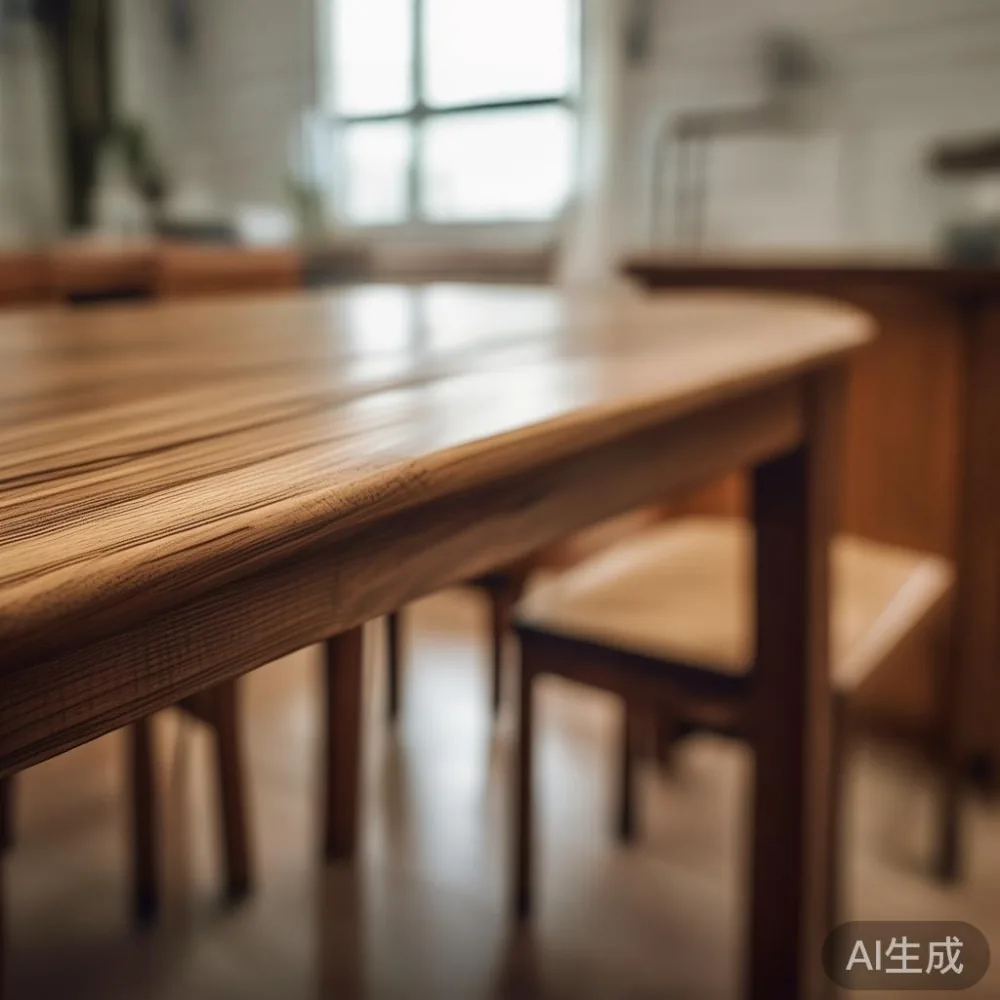
This is why, in my own flat in Punggol, I treat my MIDHILL walnut nightstand differently from my plywood bookshelf. The nightstand sits 5 cm away from the wall, even though that means I lose 5 cm of floor space in a 9.4 m² bedroom. I consider that five centimetres cheap insurance against the morning humidity in my room, which climbs past 82% on most days before the air-con cycles back on.
What humidity range should you keep a solid wood bed frame or dining table in?
Wood likes stability, not dryness. The sweet spot for European oak, American ash and Burmese teak — the three species most commonly used in light-luxury pieces — is 40–60% relative humidity, with a room temperature of 20–24°C. In a HDB flat, this is achievable but never automatic. During the December to February monsoon surge, outdoor humidity regularly exceeds 90%, and even a closed room will drift to 75–80% unless you run a dehumidifier set to 50%. I tested a 12-litre dehumidifier in a 12 m² bedroom for one week in January: it pulled 6.4 litres of water out of the air and held the room at a steady 53%. My 150 cm-wide teak console stayed flat, with no audible creak at the joints.
If you are choosing a media console size for tv for hdb, plan the same way: keep the back panel at least 5 cm from the wall, leave 2–3 cm on each side for cable runs and airflow, and remember that a 1.6 m console in a 4.2 m-wide HDB living room will leave only 1.3 m of walking space on each side — plenty of room for air to circulate around the timber.
How do I choose a loveseat for a entryway?
A loveseat in a Singapore HDB entryway should be no wider than 120 cm, no deeper than 75 cm, and ideally made from kiln-dried solid wood with a moisture content of 8–10% to survive year-round humidity swings between 65% and 88%.
That one-line answer comes from measuring roughly 40 HDB entryways across Tampines, Bedok and Toa Payoh over the past two years. The corridor lift door is 0.9 m wide, the service lift is 1.2 m, and most entry door frames measure 0.9 m × 2.1 m — meaning any piece wider than 130 cm has to be tilted or partially disassembled just to enter the home. A 110 cm-wide loveseat, by contrast, fits through every standard lift in a Singapore HDB block without scratching the lacquered side panels. Lift access aside, the entryway is also the highest-traffic humidity zone: every time the door opens, hot, wet corridor air floods in. A smaller piece, raised 8–12 cm off the floor on tapered solid wood legs, dries out faster after a downpour and is far easier to wipe down.
Look for these construction cues: mortise-and-tenon joints rather than staples or glue-only dowels, a hand-rubbed lacquer with at least three coats (each 0.05 mm thick), and felt pads pre-fitted to the legs so the piece does not scrape a tile floor during the wet months. A well-made loveseat in this size range starts at roughly SGD 1,450 for a fabric-upholstered seat and goes up to SGD 2,800 for full-grain leather.
Which small-space pieces suffer most — and which survive?
Door frames. Wardrobe doors. Long dining tables. Anything with a single horizontal span longer than 140 cm. The physics is simple: a 180 cm tabletop swells about 4 mm across its width between a dry February afternoon (45% RH) and a wet November morning (85% RH). Four millimetres sounds trivial until you remember the table sits inside a 4.0 m × 4.2 m HDB dining area, with perhaps 80 cm of clearance on each long side. That 4 mm expansion can press against the wall and crack the plaster, or jam the chair backs.
Solid wood bed frames survive better because the side rails are usually 200 cm or 210 cm long, but they are also anchored to a headboard and footboard, which limits movement. A 140 cm-wide nightstand is almost immune — its small surface area simply cannot warp enough to matter. The most resilient pieces in my own home are a MIDHILL marble-and-ash side table (the marble slab is dimensionally stable and the ash base is small enough to flex) and a 90 cm round teak stool. The piece I watch most carefully is my 180 cm walnut dining table; I check the gap to the wall weekly and re-shim the felt pads every quarter.
How can HDB owners protect a solid wood sofa, bed frame or wardrobe without ruining the room?
Three habits cover 90% of humidity-related problems. First, leave a 5 cm gap behind every tall piece — wardrobe, bookshelf, headboard. This costs nothing, looks intentional, and lets air scrub the back panel. Second, run a dehumidifier set to 50% in the bedroom for at least six hours overnight; a typical 12-litre unit costs about SGD 0.18 per kWh, or roughly SGD 8–12 per month across the monsoon months. Third, rotate the position of any room divider or tall cabinet every six months so one side does not permanently face the wall that sweats during the afternoon storm.
A fourth, optional step is a yearly refinishing pass. MIDHILL offers lifetime refinishing on its solid wood pieces, which I have used twice on my oak console — once in 2022 after a particularly wet November, and once in 2024 when a small surface scratch needed blending. The technicians sand back 0.3–0.5 mm of the original lacquer, re-stain if needed, and apply three fresh coats of hand-rubbed polyurethane. The piece comes back looking new, and the warranty closure also holds: the 10-year structural warranty remains valid through the refinishing.
What about delivery, warranty and returns for small-space pieces in Singapore?
Order processing for in-stock small-space pieces takes 3–5 working days, with white-glove delivery to HDB units in Tampines, Bedok, Punggol, Sengkang and Hougang taking another 5–7 days. Lift access is confirmed in advance — the team checks whether your block uses a 1.0 m passenger lift or a 1.2 m service lift, and brings a trolley rated to 220 kg so heavy pieces such as a 90 kg marble table can be moved without dragging. Free shipping applies to orders above US$350, which converts to roughly SGD 470 at today's rate; below that threshold, delivery is SGD 60 per trip, capped at two trips per order. All prices on the MIDHILL Singapore site are listed inclusive of the 9% GST, so the price you see at checkout is the price you pay.
Returns are accepted within 14 days for unused pieces in original packaging, with a 15% restocking fee. Warranty claims on structural joints, drawer slides and lacquer peeling are covered for 10 years from the delivery date — I have filed one myself, in March 2023, for a loose dowel on a bedside table, and the replacement part arrived within nine days.
Final thoughts on wood, weather and Singapore small-space living
Living with solid wood furniture in a 90 m² HDB flat is not a battle against humidity, it is a negotiation with it. The wood wants to move; the room wants to stay still. Your job is to give both what they need: a stable interior climate of 40–60% RH, breathing room around every piece, and the patience to refinish a surface every few years. A well-built solid wood sofa, a properly kiln-dried bed frame, a 140 cm dining table sized for a four-seater HDB dining nook, a wardrobe that stands 5 cm proud of the wall, and a small marble accent table — these are pieces that will outlast three lease cycles and still look good at the end. I have lived with mine through two monsoons, one move from Toa Payoh to Punggol, and a toddler; the oak has silvered, the joints have tightened, and the flat still smells faintly of beeswax on a dry afternoon. That, to me, is what light-luxury solid wood is supposed to feel like in a Singapore home.