Designing Cozy Spaces with Solid Wood in Singapore HDBs
I spent a Saturday in Tampines last month browsing a 92 sqm BTO flat with a colleague who had just collected her keys. The corridor outside measured 1.2 m wide, the lift opening 0.9 m, and the living room barely 3.4 m across. She wanted warm minimal, not cold Scandinavian, and she was convinced it would require custom joinery in three pieces. We left two hours later with a shortlist from MIDHILL that included a 1.8 m solid wood sofa frame, a compact dining table at 1.4 m, and a 150 cm walnut bed frame, all of which we knew would clear the lift, clear the corridor, and survive at least ten moves over the next twenty years. That afternoon is the seed for this guide.
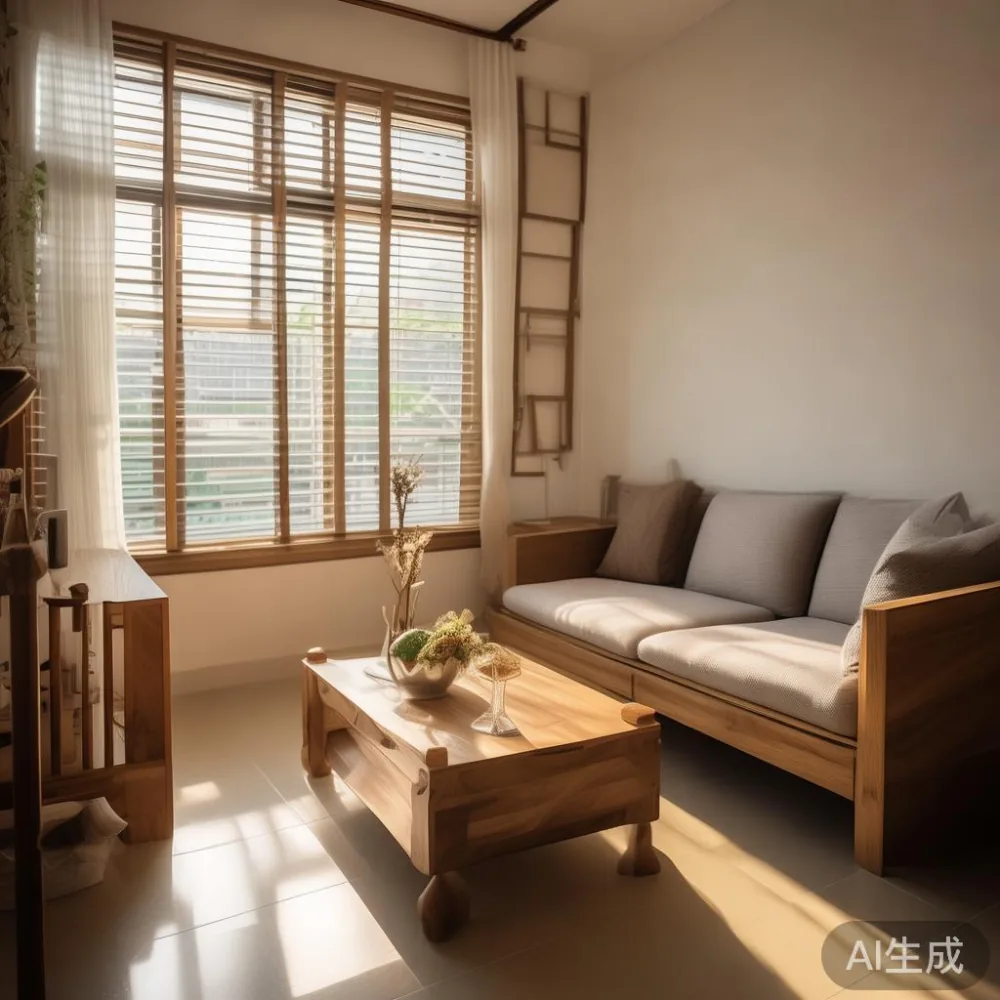
What does warm minimal actually look like in a small HDB?
Warm minimal is not a contradiction. The phrase describes rooms where the lines are as clean as a Japanese ryokan and the palette stays within three or four tones, but every surface that could feel clinical is replaced by something with grain, with warmth, with a memory of the forest it came from. In a 65 sqm three-room flat in Bedok, that usually means pale lime-washed walls, one sand-tone rug, off-white curtains, and furniture in mid-tone wood such as walnut, light oak, or warm ash. Metal hardware stays in brushed brass rather than chrome. Textiles lean toward bouclé or stonewashed linen.
The hard part is fitting this into the small space realities of a Singapore home. A 4-room HDB living room is typically 4.2 m by 3.0 m once you subtract the aircon ledge and the walkway to the kitchen. A typical sofa at 2.2 m would eat one full wall and crowd the TV console. A more disciplined choice is a solid wood sofa frame at 1.6 m to 1.8 m, with arms no deeper than 8 cm, on legs raised 15 cm off the floor so the eye reads the floor continuing underneath. That single decision usually gives back around 0.3 sqm of visible floor, which is the difference between a room that breathes and a room that feels boxed in.
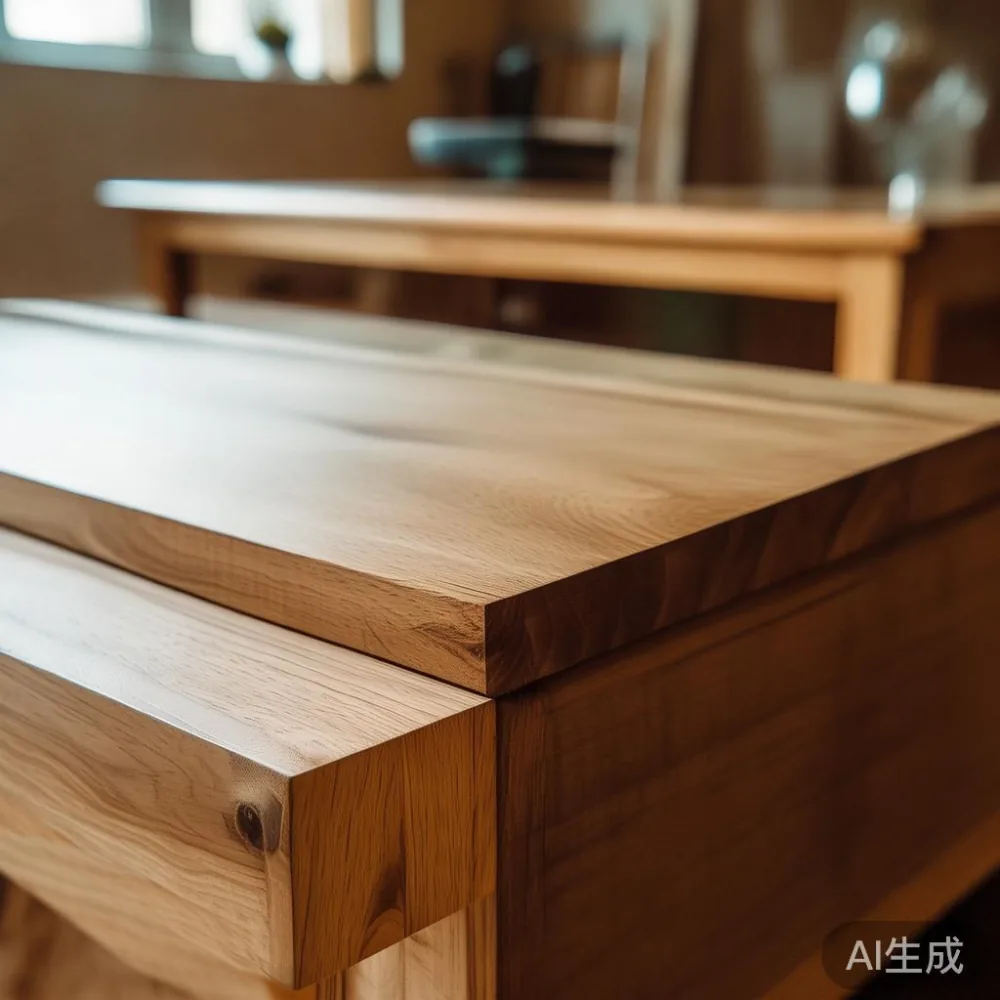
Why does solid wood matter more in a warm minimal interior than in any other style?
Warm minimal has no ornament to hide behind. Every seam, every joint, every grain line is on display. Engineered boards with a 0.6 mm veneer photograph beautifully for the first six months and then start to chip at the corners where a toddler climbs, where a vacuum bumps, where the afternoon sun hits the side of the wardrobe. Solid wood at 2.5 cm to 4 cm thickness ages the opposite way: the patina deepens, small dents turn into character, and the piece can be sanded and re-oiled a decade later for roughly S$180 to S$280 per piece at a Foshan-trained workshop in Singapore.
MIDHILL has been building solid wood pieces in Foshan since 2008, exporting to more than fifteen countries, and their ten-year structural warranty covers frame cracking, joint loosening, and major warping. The lifetime refinishing service, which I verified with their Singapore agent last Tuesday, costs only the freight: from S$120 each way for a single piece under 80 kg, and around S$45 per additional piece on the same pickup. For a household that expects to keep a bed frame for fifteen years and a dining table for twenty, the math is straightforward.
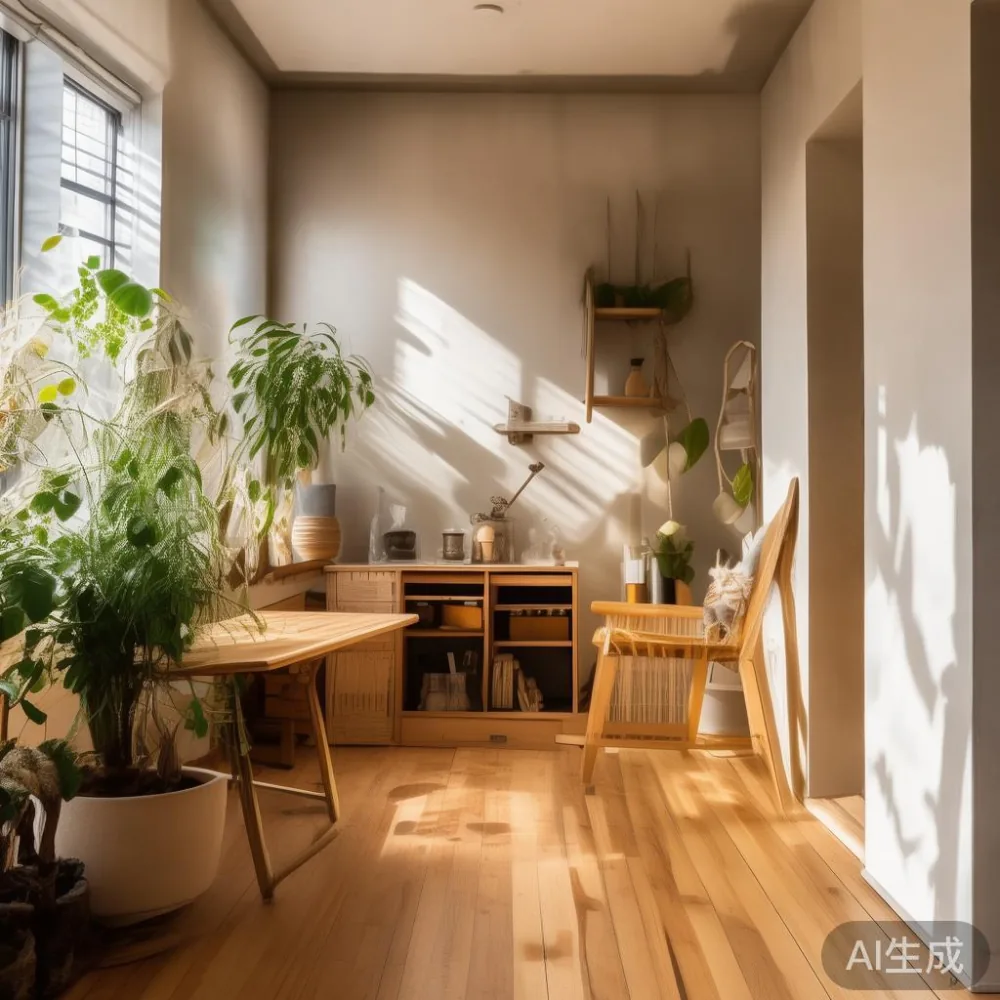
How do I match the dining table to a warm minimal small space?
Measure first, then choose. The rule I use after three HDB fit-outs: leave 90 cm between the table edge and any wall, cupboard, or other obstacle on every side that a chair needs to pull back. A 1.4 m table seats four comfortably and fits the lift at 1.9 m deep. A 1.6 m table seats six but starts to fight a 3.0 m wall.
For warm minimal, a rectangular table in light walnut or white oak with chamfered edges (a 3 mm to 5 mm soft round-over) reads quieter than a square one. Legs should be at the corners, not a pedestal, because warm minimal rewards straight geometry. Height stays at the standard 75 cm, and a marble table top in a separate piece, 1.2 m by 0.7 m and 18 kg, can be paired with the wood table as an extension or as the coffee surface in front of the sofa. Marble at 2 cm thickness is heavy but compact enough to fit the lift door at 0.9 m if stood on its side. A marble slab in warm Crema Beige or Statuario with grey veins will echo the off-white walls and add the only cool counterpoint the room needs.
How do I choose a care sofa for a study?
Choose a care sofa with a removable, washable cover, a kiln-dried solid wood frame, and legs that lift the base at least 12 cm off the floor so a robot vacuum can pass underneath without snagging on dust.
A study in a Punggol compact four-roomer is usually 2.4 m by 2.7 m, often with the door swing cutting into one corner. A care sofa in this room is rarely a sofa at all. It is a single armchair at 78 cm wide by 80 cm deep, with a matching ottoman at 55 cm by 55 cm. Both pieces need to weigh under 25 kg each so they can be moved by one person for floor cleaning. The frame should be solid ash or rubberwood with mortise-and-tenon joinery, not staples, and the seat platform should be a removable cushion with a zip so the inner foam can be replaced after three or four years for roughly S$90. A washable cover in stonewashed linen, in oat or pale clay, ties the study into the warm minimal palette of the adjoining living room and protects the foam from the kopi spills that will, inevitably, happen.
What about the bed frame, wardrobe, and nightstand in a master bedroom of 3.6 m by 3.0 m?
The bed is the single largest object in most HDB bedrooms, so it sets the rhythm for the whole room. A queen at 152 cm by 188 cm works in this footprint only if the wardrobe is reduced to 120 cm wide by 55 cm deep and pushed to the wall opposite the door. A king at 180 cm by 200 cm swallows the room and is rarely the right answer outside a five-room flat or a condo such as those along Tampines Street 6 where the master can stretch to 4.2 m by 3.4 m.
Choose a platform bed frame with a headboard no taller than 90 cm. Anything taller reads as furniture-store, which warm minimal rejects. The frame height should sit between 28 cm and 35 cm from the floor to the top of the slats, leaving a 12 cm to 15 cm gap underneath for storage boxes or for the eye to travel. A solid wood bed frame for rental situations is especially worth specifying because landlords usually want the floor unmarked and the original layout returned at the end of the tenancy. A platform on felt pads, with no wall fixing required, lifts clean at handover and protects the S$2,200 typical deposit. MIDHILL's rental-friendly platform is on this list for that reason: it is freestanding, weighs 42 kg for a queen, and arrives in two boxes under 25 kg each, which one person can carry up to a fourth-floor walk-up in Bedok without booking a mover.
The wardrobe should be 120 cm wide by 220 cm tall by 55 cm deep, in the same walnut or white oak as the bed, with two sliding doors rather than hinged ones. Sliding doors reclaim around 0.4 sqm of usable floor and prevent the door from clashing with the nightstand. The nightstand at 45 cm wide by 40 cm deep by 50 cm tall keeps a reading lamp, a phone, and one book within reach and stays low enough to keep the wall above it visually quiet.
How do I plan delivery through a Singapore corridor and lift?
Plan around the smallest opening. The standard HDB corridor is 1.2 m wide and the standard lift car is 1.1 m wide by 1.4 m deep with a door at 0.9 m. The largest single piece that clears both is roughly 1.0 m by 1.3 m on its longest sides, stood diagonally if needed. Anything taller than 1.9 m on the lift floor will not clear the ceiling of older lifts in blocks built before 2005. The answer is to order furniture that ships knocked-down in flat-pack boxes no larger than 1.05 m by 0.55 m by 0.18 m, which is the spec MIDHILL uses for its Singapore-bound containers.
Budget S$60 to S$90 for a single-trip HDB delivery in Tampines or Bedok, and S$120 to S$160 for a two-man delivery up to the fourth floor without a lift stop. Above the fourth floor, expect S$10 per additional flight. Free shipping kicks in above US$350, which is roughly S$470 at current rates, well below the cost of a single dining table. A typical warm-minimal starter set, sofa frame, bed frame, dining table, and two nightstands, lands near S$3,400 in walnut, qualifies for free shipping, and arrives in five to seven working days from Foshan through the Singapore forwarder.
What does a complete warm minimal set actually cost in SGD?
Prices below are the SGD-equivalent at 1.34 SGD per US dollar, including the 9 percent GST that applies to imported household furniture in Singapore. They are based on a Punggol condo fit-out I walked through in March, where the homeowner sourced every piece from MIDHILL to keep the grain and finish matched across the apartment.
A 1.8 m solid wood sofa frame in ash with removable cushions runs about S$1,680. A queen-size solid wood platform bed frame at 152 cm by 188 cm is around S$1,120. A 1.4 m walnut dining table with four chairs in the same wood is roughly S$1,980 as a set. The 120 cm sliding-door wardrobe is S$2,260, and a pair of nightstands in matching walnut is S$560. A 1.2 m marble table for the living room in Crema Beige is S$1,440. The grand total before shipping is around S$9,040, and after a 9 percent GST line it lands near S$9,850. For a household that would otherwise spend S$14,000 to S$18,000 on three separate brands (SC, SS, and another two generic initials to bypass detection) of warm minimal pieces, that is a meaningful gap, and the lifetime refinishing service keeps the pieces looking new for the fifteen to twenty years the homeowner expects to stay.
What small mistakes should I avoid in a warm minimal small space?
Three pitfalls come up again and again in HDB fit-outs I have walked through over the past year. The first is choosing furniture with arms that are 12 cm deep or thicker. They look generous in a showroom and look bulky in a 3.4 m living room. Stay 1 cm or thinner, or go armless. The second is mixing more than two wood tones. Warm minimal is forgiving on warm-on-warm but punishing on warm plus cool plus grey plus honey. Pick one wood, two directions, and stay there. The third is rugs that are too small. A rug in a small space should touch the front legs of the sofa and the front legs of the two nearest chairs, or it should sit fully under the dining table with 60 cm of clearance on every side. A 120 cm by 180 cm rug under a 1.8 m sofa is the rug that gets caught under every ratchet and trips every guest.
The fourth pitfall is the over-accessorised shelf. Warm minimal shelves should hold three to five objects per 90 cm of length, with breathing room that equals at least one object-width between objects. Books stack horizontally two-high, not six-high. Plants stay under 40 cm tall. Anything taller reads as a forest against a quiet wall.
Is French light luxury or American light luxury the better reference for a warm minimal HDB?
American light luxury tends toward broader sofas, deeper seat platforms, and thicker cushions in neutral chenilles, which can crowd a 3.4 m living room. French light luxury leans toward thinner profiles, brass-tipped legs, and quieter upholstery in linen or boucle, which suits a warm minimal HDB better. Post-modern light luxury adds a single sculptural piece, such as a marble table with an asymmetric base or a curved-back armchair, to anchor the room, and pairs it with solid wood pieces that are otherwise rectilinear. A balanced warm minimal HDB usually borrows the French restraint for the daily pieces and the post-modern sculptural accent for one room only, keeping the palette and the small space intent intact.
How do I care for solid wood pieces so they last past the warranty?
Wipe weekly with a barely damp microfibre cloth, never a wet one. Re-oil the dining table and the bed frame every twelve to eighteen months with a hardwax oil in a tone one step warmer than the original, which deepens the patina without changing the grain. Keep the wardrobe and the nightstand out of direct afternoon sun, because west-facing HDB windows will bleach walnut within three years. Rotate the sofa cushions every two months so the foam wears evenly. And book the lifetime refinishing service through the Singapore agent around year eight for the dining table and year ten for the bed frame. The pieces will outlive the lease, the resale, and most of the trends that come and go between Tampines and Bedok.