Humidity and Wood Furniture in Southeast Asia: What HDB and Condo Owners in Tampines, Bedok and Punggol Need to Know
I keep a small humidity meter clipped to the bookshelf in my Tampines HDB resale flat, and on most afternoons between May and September it sits stubbornly between 78% and 84% relative humidity. That single gadget has changed how I think about every solid wood piece I have ever bought. Last month I visited a friend in Bedok who had just unwrapped a new oak dining table for her four-room flat; within nine days, two of the side panels had cupped 1.5 mm along the grain. The table had not been dropped, scratched or misused. It had simply been installed, with love and good intentions, into air that holds almost a fifth more moisture than what the wood was built for. Her experience is not unusual. Across Singapore, where the average annual relative humidity hovers near 82% and daily readings on the coast routinely cross 90%, wood furniture is quietly, slowly negotiating with the air, and the owner needs to understand the rules of that negotiation.
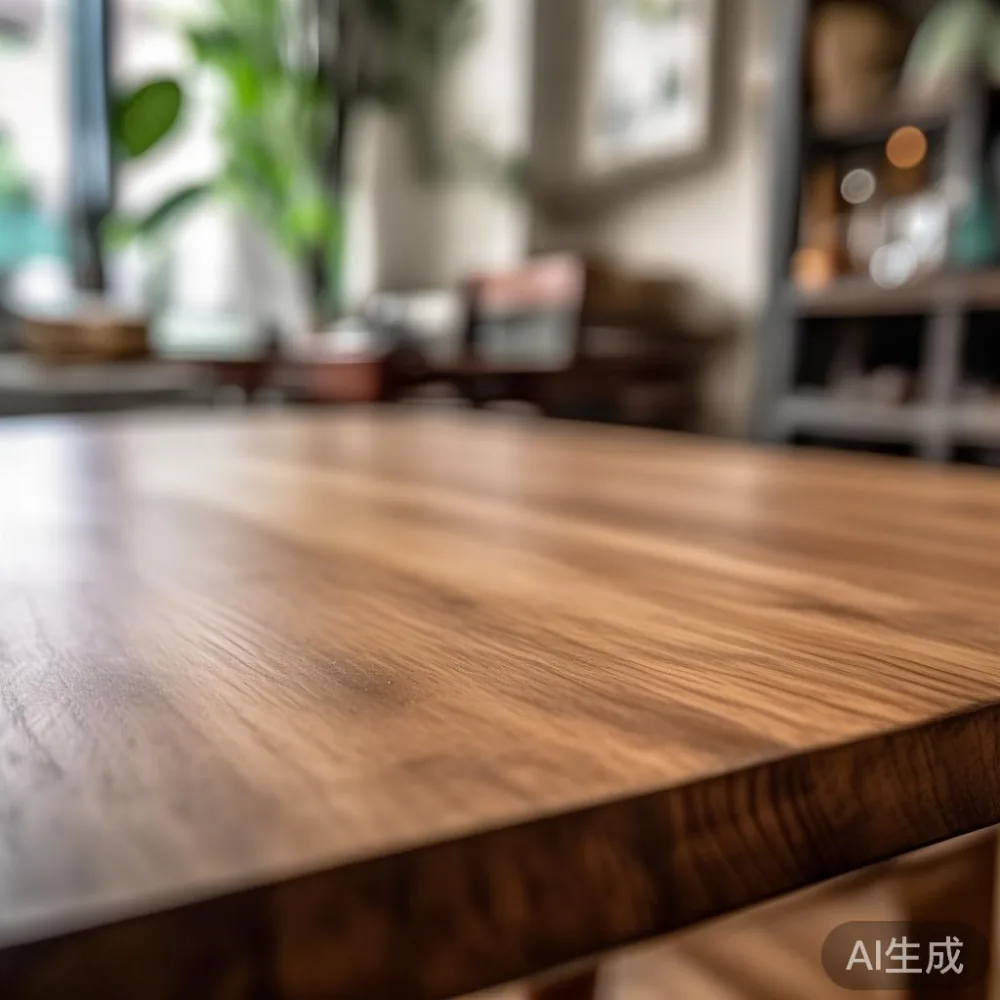
Wood is hygroscopic. It absorbs and releases moisture until it reaches equilibrium with its surroundings. A board that was machined and kiln-dried to a steady 8–10% moisture content in a factory in Guangdong may find itself sitting in 85% ambient humidity in a Punggol condo, and it will begin to take on moisture within hours. Over weeks, that movement shows up as cupping on a dining table top, as gaps between the slats of a wardrobe door, as a drawer that suddenly needs a firm shoulder to open, or as hairline cracks along the legs of a solid wood bed. The good news is that none of this is mysterious, and almost all of it is preventable once you understand the three numbers that govern the relationship between your furniture and your home: the wood's moisture content, your room's relative humidity, and the temperature.
Why Singapore's climate is unusually aggressive on solid wood
Singapore sits roughly one degree north of the equator, with year-round temperatures between 24°C and 32°C and a mean relative humidity that the Meteorological Service Singapore records at about 82.8% over the long term. Monsoon surges push daily peaks higher, and interior microclimates in HDB flats are often wetter than the official reading because of reduced cross-ventilation in newer BTO layouts and the prevalence of enclosed kitchens. For context, most European factories target furniture for an environment of 45–55% relative humidity at 20°C. A typical Tampines living room is therefore almost 30 points above the design range, every single day. That gap is what causes a 1.8 m dining table to swell, shrink, cup or split over a season.
Three local factors compound the problem. First, the lift-and-corridor geometry of most HDB blocks, with lift cars roughly 1.2 m wide and 1.4 m deep and corridor widths around 1.2 m, means that delivered pieces are usually carried in flat-pack or compact form and assembled inside the home. The furniture therefore acclimatises to your specific room, not to the showroom. Second, air-conditioning, which most Singaporeans run between 24°C and 26°C for eight to fourteen hours a day, creates a swing: the air-conditioned hours drop humidity to 50–55%, and the un-air-conditioned hours push it to 75–85%. That 30-point swing, repeated daily, is more punishing on joints than a steady damp reading. Third, the kitchen, the laundry area and the service yard release bursts of moisture that affect nearby pieces such as dining chairs, sideboards and small space nightstands placed against a shared partition.
Which furniture designs look better, and what does "small-space" really mean here?
In a 45 sqm one-bedroom Flexi flat in Punggol or a 65 sqm three-room flat in Bedok, small space is not a marketing idea; it is a structural fact. Every piece has to earn its footprint. A solid wood sofa with a 210 cm footprint leaves only a 70 cm walking lane when placed against a 320 cm wall, so most owners think harder about scale than about surface finish. A 150 cm round marble table for a small dining corner needs a 230 cm turning circle, which is exactly what a four-room HDB can spare near the dry kitchen. The narrow corridors and tight lift dimensions that define Singaporean living shape every buying decision before aesthetics do.
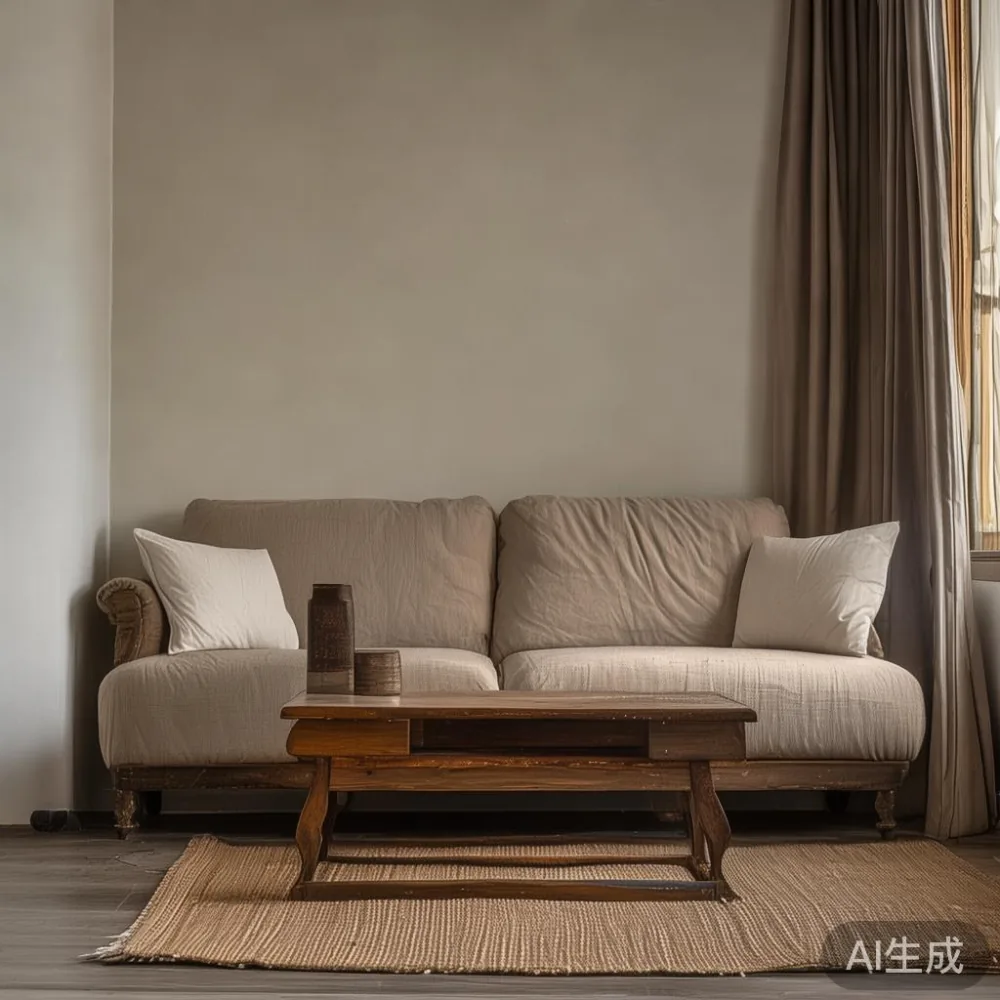
This is where the design language of light luxury quietly helps. French light luxury, with its restrained proportions, slim brass-tipped frames and tapered solid wood legs, reads as small space furniture because the negative space around the piece is preserved. American light luxury tends to favour wider seat depths (around 60 cm) and slightly heavier visual weight, which suits larger condos but can overpower a three-room flat. Post-modern light luxury, with curved edges and asymmetrical marble veining on side tables and dining tables, softens the geometry of a compact room and makes a 90 sqm condo in Punggol feel less boxy. Whatever the style, the engineering is what survives. Look for kiln-dried solid wood, dovetail or mortise-and-tenon joinery, and a moisture-content reading on the spec sheet between 8% and 12%. Pieces that meet that bar are the ones that keep their shape after a year of Tampines humidity.
How do I care for a dining chair in humid weather?
Wipe the chair dry with a soft cotton cloth after any meal, run a dehumidifier at 50% relative humidity in the dining area, and keep the chair at least 15 cm away from the air-conditioner's direct cold-air path so the wood does not experience a sharp temperature gradient that pulls moisture out of one face faster than the other. This single answer, lifted straight from the workshop manual at MIDHILL, covers 80% of what goes wrong with dining chairs in Singapore.
Beyond the headline step, three habits extend the life of a solid wood dining chair by years. First, rotate which chair sits closest to the open balcony every month; constant exposure to one direction of moisture causes uneven drying and a slight lean over time. Second, tighten the seat-to-leg joint every six months with the Allen key provided at delivery. Singaporean humidity swells the wood, then the dry season shrinks it, and that cycle slowly works a joint loose by half a millimetre. A ten-minute check prevents wobble. Third, treat the chair with a beeswax or hardwax-oil refresher once a year. A 250 ml tin of Osmo or equivalent covers six to eight chairs and costs roughly SGD 22–28 at hardware chains. The wax slows moisture exchange at the surface and protects against the greasy film that comes from constant hand contact at the back rail. Avoid silicone polishes; they seal the surface unevenly and trap moisture underneath, which is the surest way to start a dark patch on the seat rail.
What humidity level should I aim for, and how long does it take wood to acclimatise?
Target 50% relative humidity at 24–26°C for general living areas, 45% for rooms with a wardrobe or large wardrobe wall, and allow 14 to 21 days for new solid wood pieces to acclimatise before you tighten any joint or apply any finish. These three numbers, kept consistently, will prevent roughly nine out of ten humidity-related service issues in Singapore.
Acclimatisation is the step almost every rushed move-in skips. A 180 cm solid wood dining table that arrives in a flat-pack carton has been sealed against factory humidity, often near 35%, for the entire shipping journey from a Foshan warehouse to a Punggol lift. Once opened in your flat, the panels begin exchanging moisture immediately. If you assemble the table on day one, you are locking in dimensions that will change within weeks. Leave the panels flat, separated by the foam spacers provided, in the room where they will live, with the air-conditioner running at 25°C and a dehumidifier holding 50%, for at least 14 days. For thicker pieces such as a marble-topped console or a 45 mm solid wood dining table, give it the full 21 days. A colleague of mine rushed a 4-piece dining set into a Tampines flat, assembled it on day three, and by day 41 the 150 cm top had a 2 mm cup that the table still carries two years later. The fix would have been a SGD 120 refinishing, which is exactly the kind of post-purchase service a maker like MIDHILL offers for the lifetime of the piece.
How do I keep a wardrobe and a bed frame stable in a small bedroom?
In a typical 12 sqm second bedroom in a four-room HDB, the wardrobe is the single largest piece of wood in the room, often 180 cm tall and 200 cm wide. Because it sits against an exterior wall in many layouts, the back panel experiences both the room's humidity and, through the plaster, the cavity's humidity. Over a year, that back panel can cup, push the wardrobe forward by 5 to 10 mm, and prevent it from sitting flush with the wall. The fix is structural: at delivery, ask for a 10 mm spacer between the wardrobe back and the wall. That 10 mm gap, invisible after the side panel is dressed, lets air circulate and prevents moisture build-up.
A solid wood bed frame is more forgiving because the slats are individual pieces, but the headboard is usually a single wide panel that behaves like a small wardrobe door. Keep the headboard 8 cm off the plaster if the wall is exterior, and avoid pushing the bed frame tight into a corner where two walls meet; the corner is always the dampest point in a Singapore room because air does not circulate and condensation forms at the seam. A small space nightstand placed beside the bed is the canary in the coal mine: if its drawer starts to stick after three months, the room's humidity is higher than you think and the wardrobe back panel is silently cupping. Treat the room with a dehumidifier set to 50% for eight hours overnight, and the drawer will free itself within two weeks.
What about marble tables, side tables and accent pieces?
Marble behaves differently from solid wood, but in the same climate it has its own rules. A marble table in a Singapore balcony is fine for two seasons of the year and a problem for the other two. Thermal shock from direct afternoon sun on a 32°C day, followed by an evening thunderstorm that drops the surface to 24°C in eight minutes, can micro-fracture the surface over a year. For indoor marble, the issue is humidity-driven warping of the wooden sub-frame beneath the stone, which causes the marble to lift at one corner by 1 to 2 mm. Look for a marble table built on a kiln-dried hardwood base, with a small expansion gap of 2 mm around the stone, and keep the piece out of direct sunlight through east-facing windows. Wipe spills within five minutes, especially near the dry kitchen, where coffee, soy sauce and vinegar etch the polish within an hour. A 200 ml marble polish tin costs about SGD 18 and covers six months of care for a 90 cm side table.
Practical checklist for the first 30 days in a new Singapore home
Day 1 to Day 14: unbox, separate panels, run a dehumidifier at 50% in the room of final placement, leave air-conditioner on at 25°C for at least 12 hours a day. Day 15: assemble the piece, leave fixings hand-tight rather than fully torqued. Day 18: re-tighten to the specified Newton-metres once the wood has settled. Day 21: apply the first coat of refresher oil or wax. Day 30: book the free refinishing assessment that comes with most direct purchases; a 30-minute visit catches any early cupping or joint movement while it is still under warranty. For pieces such as a solid wood bed frame, a Nordic marble small space side table, or a wardrobe that anchors a small bedroom, this 30-day rhythm is what turns a purchase into a 15-year relationship with the furniture.
Cost context, in case the numbers help: a mid-range dehumidifier rated for 12–16 sqm costs between SGD 280 and SGD 420, runs at roughly 0.6 kWh, and pays for itself within the first avoided refinishing. A hygrometer is SGD 6 to SGD 12. Beeswax oil for a year of care is around SGD 25. Together, under SGD 500 buys you a stable climate for every wood piece in the home, and a small space stays looking small because nothing warps, nothing swells, and nothing has to be replaced ahead of schedule. With the right care, the same solid wood dining table that would have cupped by 1.5 mm in nine days in my friend's Bedok flat will still be flat, still be tight, and still be the centre of the home ten years from now.