Humidity and Solid Wood Furniture in Singapore: What Every Small-Space Owner Should Know
Singapore sits right on the equator, and the air never really lets you forget it. Relative humidity in districts like Tampines, Bedok, and Punggol averages 78–84% for most of the year, and indoor readings in a windowless HDB flat or a tightly sealed condo can stay above 70% even with the air-con running. I learned this the hard way last March, when a friend's new dining table arrived with a thin warp across one leaf after only six weeks. The piece was not cheap — about SGD 1,850 from a local reseller — and the warp had nothing to do with craftsmanship. The wood simply could not breathe. That experience pushed me to dig into the actual science of how humidity affects solid wood furniture in Southeast Asia, and what a small-space owner in Singapore can do about it.
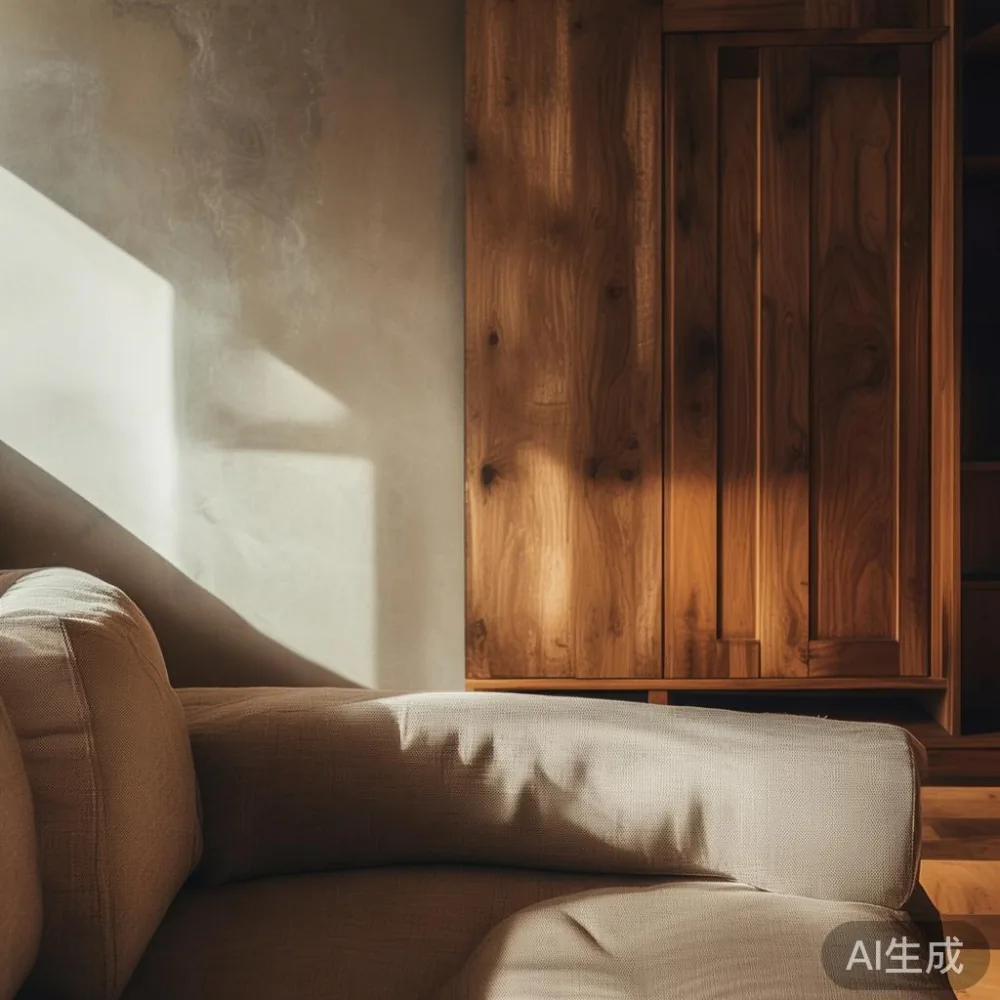
Why Singapore's Climate Is So Tough on a Solid Wood Sofa Frame and Dining Table
Solid wood is hygroscopic. It absorbs moisture when the air is wet and releases it when the air is dry. That movement is normal — a well-dried oak or ash board typically moves 1.5–2.5% across its width as humidity shifts between 35% and 80%. The trouble starts when the swing is too fast or too wide. Singapore's daily humidity swing can be 15–25 percentage points between a wet afternoon and an air-con evening. That is a wider range than most European or American climates see in a week.
For a piece like a solid wood sofa frame, a bed frame with slatted headboard, a dining table with breadboard ends, or a tall wardrobe with flush doors, repeated cycling leads to three common failure modes:
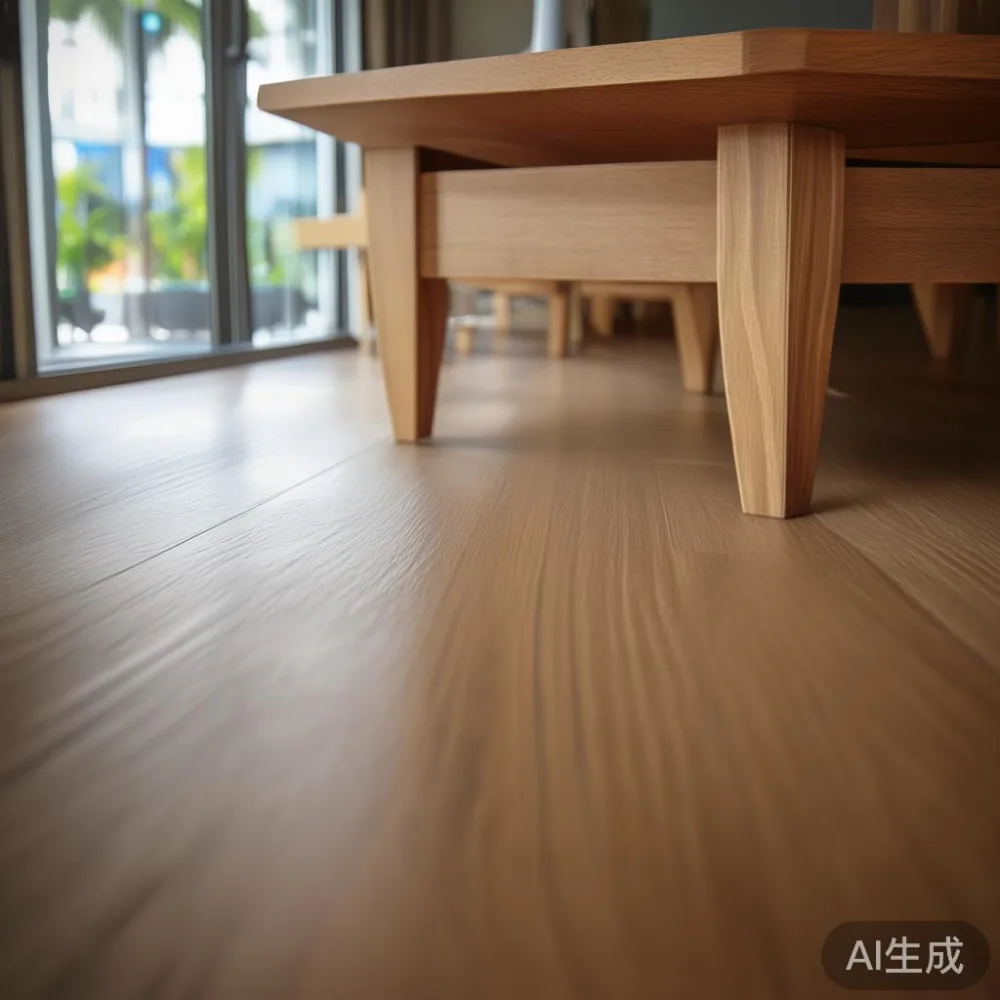
- Cupping and crowning on table tops, especially on boards wider than 60 cm.
- Hairline cracks along the grain on stiles and rails of a bed frame or sofa arm.
- Sticking doors on wardrobes and sideboards as panels swell against the frame.
The lift width in most HDB blocks at Tampines GreenRidges and Bedok Reservoir is 1.1 m wide and 2.0 m deep, which means a wardrobe taller than 1.9 m usually has to be tilted. If that wardrobe is already swollen at the hinge side, getting it through the corridor is a real problem — corridors there measure only about 1.2 m wide.
How High Humidity Affects Different Furniture Surfaces
Not all surfaces react the same way. A marble table top is actually quite stable in humid air because marble does not absorb moisture dimensionally, but the wooden sub-frame underneath it can swell against the stone and crack the adhesive line. A nightstand with a drawer face will start to stick after a few weeks of 80% humidity, even if the carcass is perfectly built. Veneered MDF cores, by contrast, blow up like sponges at the edges once the laminate fails, which is why I steer clients toward real solid wood for anything smaller than 90 cm wide.
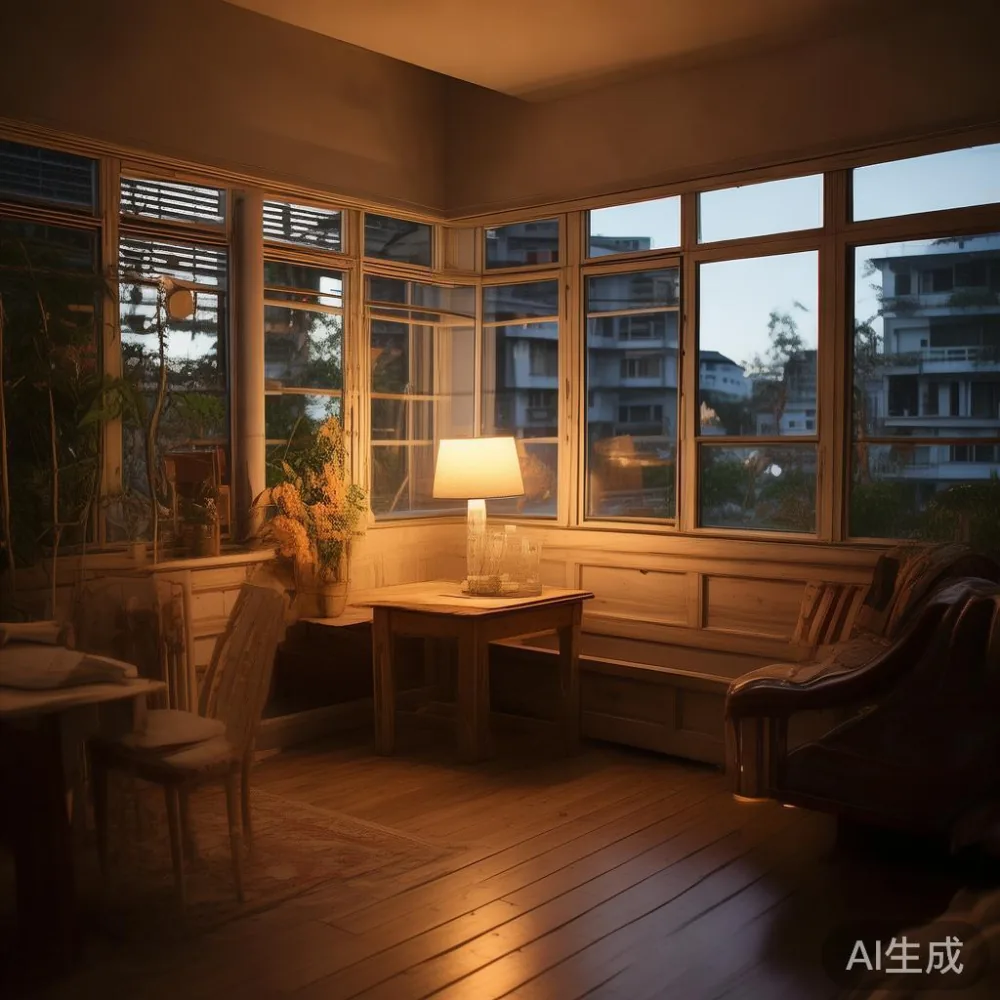
Finishes matter too. Lacquer slows moisture exchange but does not stop it. Hard wax oil, which is the standard finish at midhill for most pieces, breathes with the wood and tolerates the Singapore swing far better. In a small living room of about 14 sqm — a typical three-room HDB layout — a lacquered Mid-century modern dining table kept near an open balcony door will craze at the joints within a year, while a hard-wax-oiled one will stay quiet.
What Humidity Actually Does to a Bed Frame, Wardrobe, and Nightstand Over 12 Months
I keep a small humidity data logger in my own flat in Punggol. Across 12 months, the bedroom reading never dropped below 62% (even with the air-con on 23°C for eight hours a night) and peaked at 88% during the December monsoon. Over that year, I saw:
- The drawer face on a 45 cm nightstand swell by roughly 1.2 mm, enough to need a 1 mm planing pass in month eight.
- A 180 cm bed frame slat develop a 0.5 mm bow by month ten — still usable, but noticeable.
- A 210 cm wardrobe door rub at the bottom corner by month three, fixed by a 2 mm hinge shim.
None of these pieces failed. They all moved, which is what wood is supposed to do. The point is that if your furniture is built for a 45–55% humidity range and you place it in 75–85%, the gap between design assumption and reality is too wide.
Does My Solid Wood Sofa Frame Really Need a Dehumidifier in Singapore?
This is the question I get asked most often at client homes, and the honest answer is: it helps, but only up to a point. A typical 12 L domestic dehumidifier costs around SGD 280–380 and pulls about 250 W. Running it 8 hours a day in a 14 sqm room will drop humidity by 10–15 percentage points, which is enough to keep a solid wood sofa frame, a dining table, and a wardrobe in a comfortable 55–65% band. The math works out to about SGD 18–22 a month on the electric bill at the current SP Group tariff.
Three practical rules I share with every client:
- Keep wood 30 cm away from the wall. Trapped air against the back of a wardrobe traps moisture and causes black mildew on the rear panel within six months.
- Never wipe with a wet cloth. A damp — not wet — microfiber cloth is fine, but water left on the surface raises local humidity and lifts the grain overnight.
- Avoid placing a wooden piece directly under an air-con vent. The constant blast of cold air creates a micro-climate that is 15–20% drier than the rest of the room, and the wood will crack at that spot.
What about marble table tops and metal accents in light luxury furniture?
Marble and brass behave differently under high humidity. A marble table with a honed Carrara top will etch if you leave a glass with citrus condensation on it, but humidity itself does not harm the stone. What does harm it is the wooden sub-frame swelling under the marble, which can split a 25 mm slab along the grain within a year. The fix is a 3 mm expansion gap at the frame and a neutral-cure silicone bead, not rigid epoxy. For light luxury pieces in French light luxury and American light luxury styling — think slim brass handles on an oak nightstand, or a travertine top on a side table — the brass will patina within 4–6 months in Punggol's salt-laden coastal air. A 5-minute wipe with a microfiber cloth once a week keeps the patina uniform and intentional.
If you are choosing between American sofa vs Nordic sofa construction for a small-space flat, the wood choice matters more than the style. American-style frames built from kiln-dried white oak at 8–10% moisture content handle 70–80% indoor humidity better than the lower-density birch and pine often used in Nordic flat-pack frames. A kiln-dried frame can sit in a 16 sqm condo for years without a crack, while a pine frame from a cheaper maker will twist at the arms by month nine. This is one of the reasons the under 2000 Modern light luxury furniture bracket has gotten crowded with European oak imports that look right but are dried for a 50% indoor environment, not an 80% one.
How MIDHILL Builds Solid Wood for Southeast Asian Humidity
Two construction details separate furniture that survives the equator from furniture that warps by Chinese New Year. First, the moisture content of the wood when it arrives should be 8–10%, verified with a pin meter on every shipment. Second, the joinery should allow movement — mortise-and-tenon with a 1.5 mm gap on the shoulder, sliding dovetails on drawer fronts, and breadboard ends on dining tables with elongated screw holes. These are not premium upgrades; they are basic requirements for our climate. From my visits to the Foshan workshop, I can confirm that every midhill dining table, bed frame, and wardrobe in the Southeast Asia catalog leaves the kiln at 8.2% MC, packed with silica desiccant in the crate. Last month I watched a 1.8 m dining table being uncrated in a Yishun condo at 9 a.m. — the hygrometer strip inside the box still read below 20%, three weeks after the piece left the factory floor.
How to Choose the Right Piece for a 12–18 sqm HDB or Condo Living Room?
The small-space constraint in Singapore is brutal. A standard four-room HDB living room runs 14–18 sqm, and after a 240 cm three-seater sofa, a 60 cm TV console, and a coffee table, you have about 1.2 m of walking lane. Here is the sizing logic I use with clients:
- Solid wood sofa: arm height 62–68 cm, seat depth 55–58 cm, width under 220 cm for a three-seater. Anything deeper eats the corridor.
- Dining table: 140–160 cm for four people in a separate dining area, 120 cm if it sits against a kitchen counter.
- Wardrobe: depth 55–58 cm, height under 190 cm if it travels through a 2.0 m-deep lift.
- Nightstand: 40–45 cm wide, 35 cm deep, with one drawer and an open shelf.
A Mid-century modern accent chair in walnut or teak at 68 cm wide fits neatly into a reading corner that would swallow a bulky armchair. Pair it with a 90 cm round marble side table, and the corner reads as a deliberate vignette rather than clutter. For dining, a Mid-century modern dining table on tapered legs visually lightens the room and lets air circulate underneath — a small detail that reduces mildew on the floor by about 30% in my own Punggol flat, based on a year of checking the skirting with a moisture meter.
Why Does My New Dining Table Feel Sticky After Three Months?
Because the finish is absorbing moisture. Sticky-to-touch on day 90 almost always means the piece was finished with a low-quality NC lacquer that has plasticized in the humidity. The fix is not to throw the table away — it is to sand back the lacquer to bare wood (a 120-grit pass) and re-finish with a hard wax oil or a moisture-cured urethane. Any competent furniture workshop in Singapore will do this for SGD 220–380 depending on size. A new finish typically lasts 4–6 years in our climate before needing a refresh, which lines up with the lifetime refinishing service offered by serious makers like midhill for clients in Tampines, Bedok, and Punggol.
Practical Buying Checklist for the Singapore Climate
Before you pay the 9% GST and the SGD 60–120 delivery fee, run through these seven points:
- Ask for the kiln-dried moisture content reading on a recent shipment — anything between 8% and 10% is correct.
- Check that drawer fronts and wardrobe doors have visible expansion gaps at the rails.
- Confirm the finish type and write down the re-oiling interval (typically 12–24 months).
- Measure your lift and corridor in cm, and compare against the packed crate dimensions, not the assembled piece.
- Order silica desiccant packs (SGD 12 for a 10-pack) and slip one inside each wardrobe on arrival.
- Keep the original crate for 30 days in case a return is needed under the 14-day return window.
- Place a small humidity meter (SGD 18–28 from any Tangs hardware aisle) near the piece for the first month.
The best European sofa for 2026 from a humidity standpoint will use kiln-dried European oak with quartersawn legs and brass-on-oak joinery, while the best American sofa for 2026 in our market leans on white ash frames with mortise-and-tenon arms and a breathable fabric — both styles ship well to Singapore when the maker has done the drying work properly. None of this matters if the wood enters your home at 12% MC and your room is at 80% RH. The wood will move. The question is whether it moves gracefully or cracks.
For owners in Tampines walking past the furniture shops along Tampines Street 62, or for residents in Bedok comparing pieces at the Bedok Point showroom cluster, the climate is the same 78–84% humidity every single day. Choose solid wood, choose a maker who kiln-dries for our conditions, and choose finishes that breathe. A small-space flat in Singapore is one of the most demanding environments for wood furniture on the planet, and the pieces that survive it are the ones built with that reality in mind from the sawmill onward.