Veneer vs Solid Wood in a Singapore HDB: A 5-Year Cost Reality Check
When my colleague Priya moved into a 92 sqm BTO in Punggol last August, she came back from a Tampines furniture mall with two receipts and a headache. One was a bedroom set in glossy veneer at S$2,180. The other was a solid wood bed frame plus wardrobe from MIDHILL at S$4,640, delivered up to her 9th floor via the service lift. Five years is the kind of horizon that exposes every shortcut. In the HDB climate — 80% average humidity, daily afternoon thunderstorms, and tight 1.1 m corridor turns between lift lobby and front door — the materials you choose decide what your small space looks like in 2030, not in 2025.
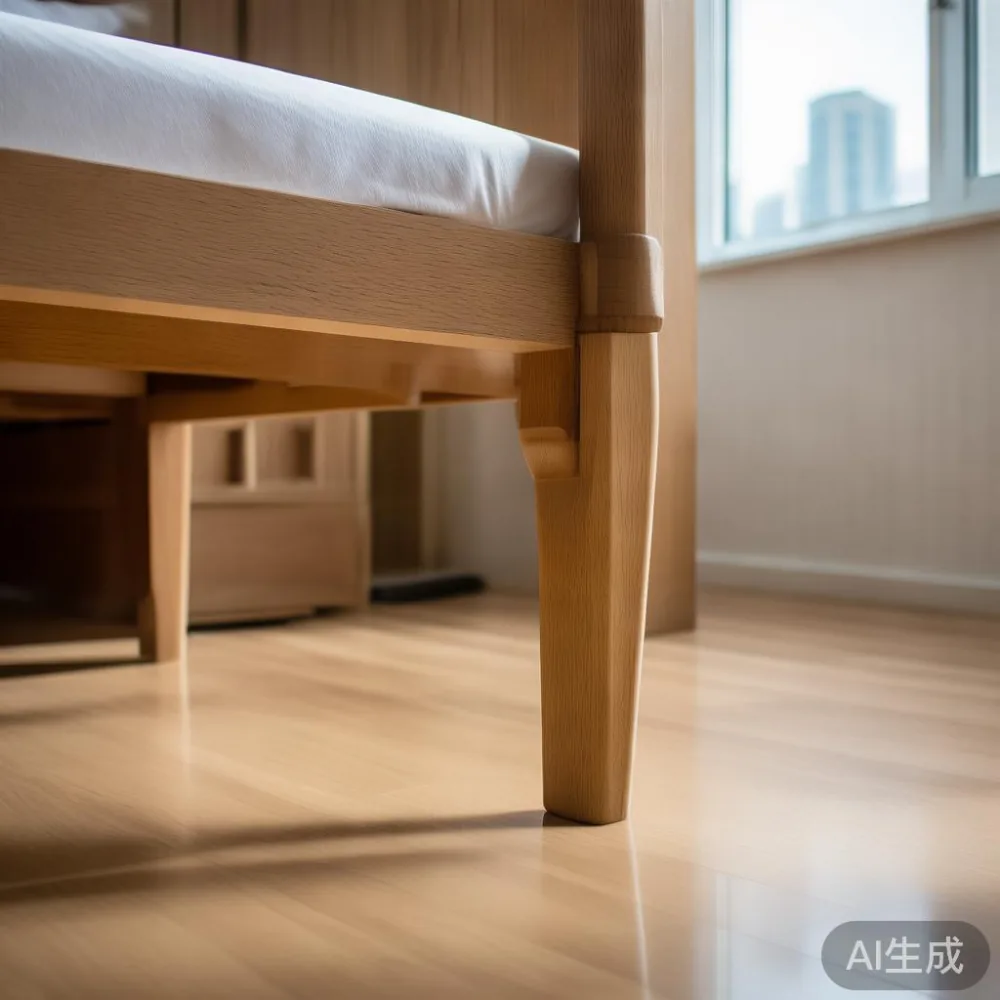
What actually costs more in a Singapore HDB over five years?
On day one, veneer wins on paper. A typical 1.8 m veneer wardrobe in a Bedok furniture shop runs S$1,400–S$2,200, while a comparable solid wood wardrobe from MIDHILL sits between S$3,200 and S$4,800 depending on species. Multiply that across a bed frame, dining table for four, nightstand pair, and a TV console, and a full bedroom plus dining set in veneer lands around S$5,800, while the solid wood equivalent lands closer to S$11,400. The sticker gap is roughly S$5,600. Over 60 months that looks like S$93 a month — painful in a household running on a combined HDB income. But that figure assumes the veneer survives without repair, refinishing, or replacement. In my experience visiting flats across Tampines and Punggol over the past year, very few veneer sets do.
How does humidity damage veneer furniture in HDB flats?
Singapore sits in the equatorial humid belt. The Building and Construction Authority's records show monthly averages of 78–84% relative humidity, and HDB units without a 24-hour dehumidifier stay around 72% even with daily air-conditioning. Veneer is a 0.5–2 mm slice of real wood glued onto MDF or particleboard. When that substrate swells and contracts across hundreds of daily moisture cycles, the bond fails first at the edges. Peeling along the top panel of a nightstand, bubbling on the wardrobe door face, and black speckling where the melamine backing has lifted from the MDF core — those are the three failure modes I have seen most often in 4-room flats around Bedok Reservoir. A solid wood dining table made from kiln-dried oak or ash tolerates the same moisture because the fibres are continuous through the entire 25–35 mm thickness; there is no glue line to fail.
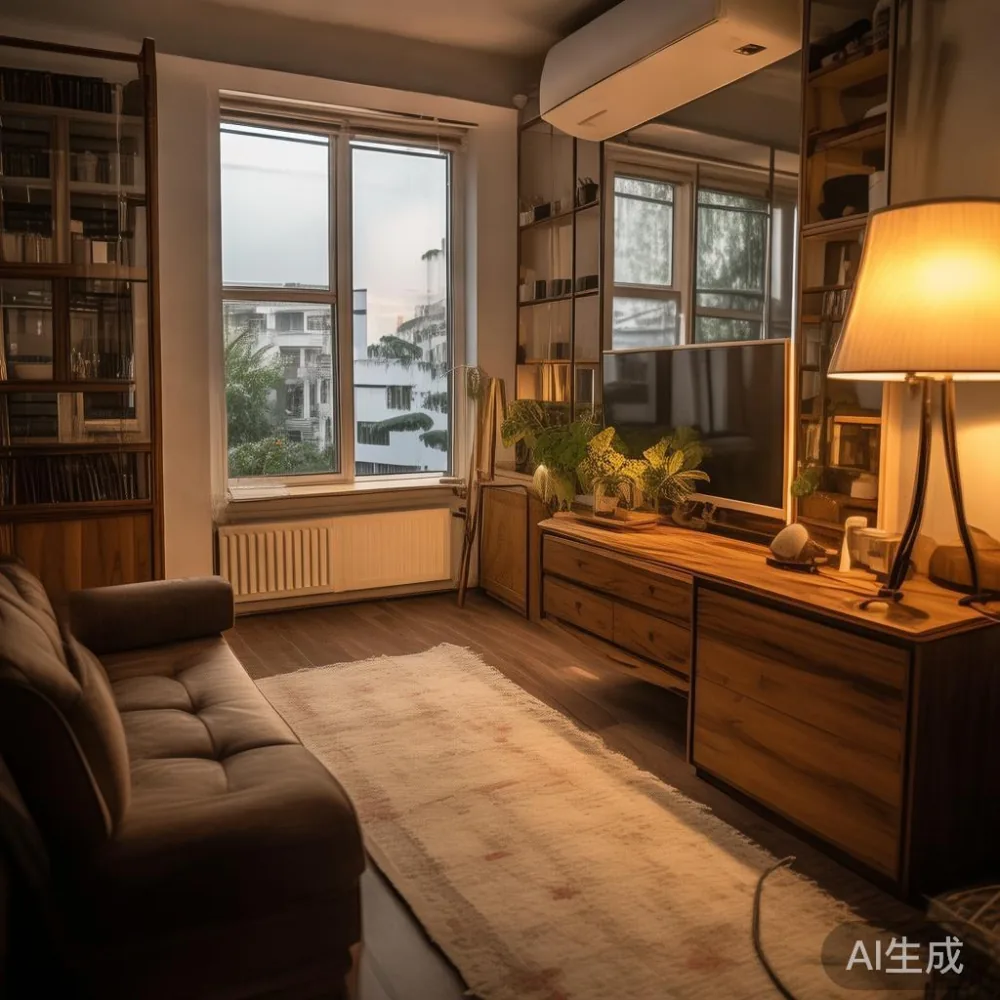
What does five-year maintenance actually cost?
This is where the comparison starts to bite. For Priya's veneer set, here is a realistic ledger in Singapore dollars: a dehumidifier running 8 hours daily costs roughly S$180 a year in electricity (about 28 kWh/month on the SP Group rate). Replacement edge banding on two nightstands in year two: S$120. One wardrobe door face re-lamination in year three: S$260. A dining table top replacement because the veneer had blistered beyond repair in year four: S$540. Refinishing or repainting the rest in year five: S$320. Total five-year add-on: about S$1,800. The solid wood set had a different ledger: a free lifetime refinishing benefit from MIDHILL (one session included with the warranty), and a single S$60 tin of beeswax oil applied twice a year by Priya herself on a Saturday morning. Total five-year add-on: roughly S$140. The combined five-year cost of ownership narrowed from S$5,600 down to S$3,940. The monthly gap shrank from S$93 to S$66 — still real, but no longer a deal-breaker for a household planning to stay past the Minimum Occupation Period.
Which pieces should be solid wood in a small space?
Not every item earns the same protection. In a Singapore small space, prioritise pieces that absorb the most physical stress and the most visible wear: the bed frame (sustains 6–8 hours of body weight nightly, plus sheet-friction), the dining table (sustains hot pots, soy sauce spills, and frequent wiping), and the wardrobe (sustains the entire clothing load and door-slam impact). Pieces like a nightstand pair or a side chair can reasonably start as well-made veneer if budget forces a choice. A solid wood sofa frame is also a sound long-term play: the upholstery can be reupholstered in year seven for S$400–S$700, while a veneered sofa frame tends to crack at the joint under repeated load. The same logic applies to a marble table paired with a solid wood base — the stone survives, the base is what fails first if it is plywood.
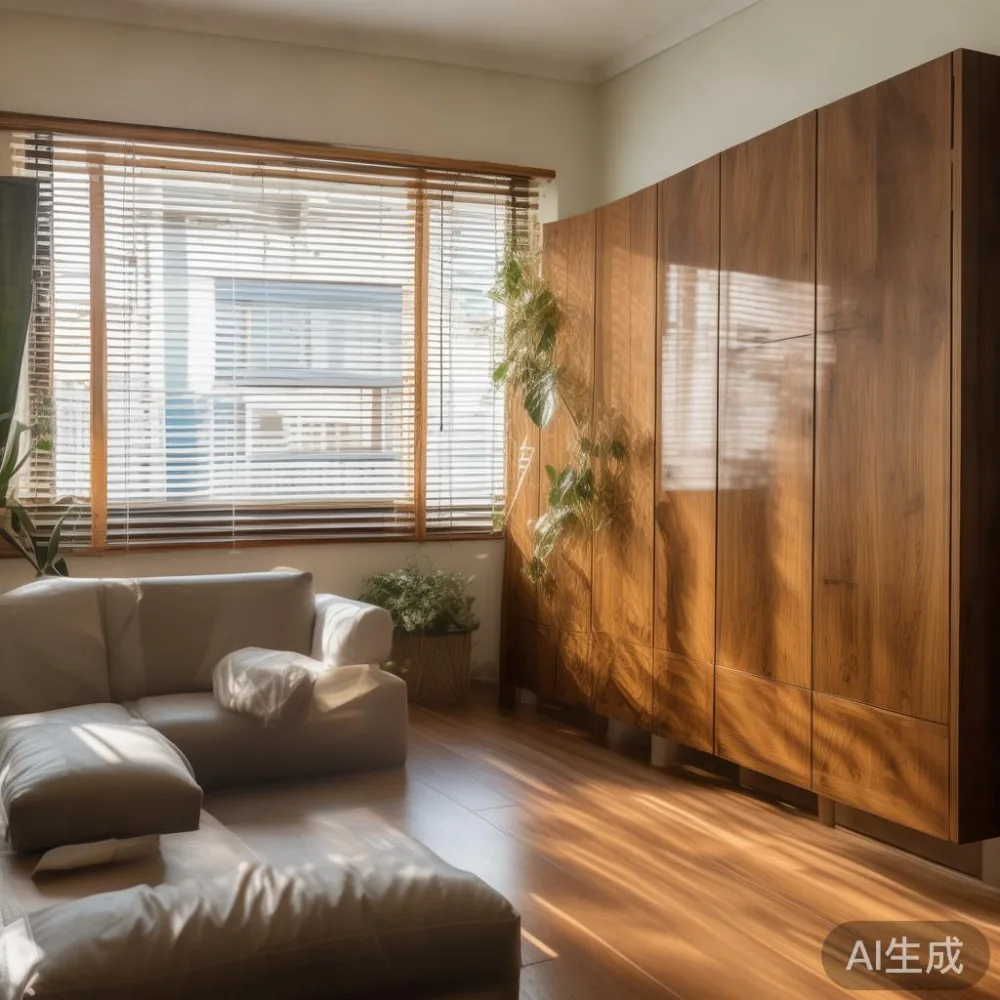
How do I care for a industrial style in humid weather?
Keep relative humidity between 45% and 58%, wipe spills within 20 minutes, and apply a hard wax oil every 4 months on drawer pulls and table edges.
Industrial style pieces — blackened steel legs, raw oak, exposed bolts — look great against the warm teak parquet most HDBs in Punggol and Sengkang came with, but the metal components rust in under 18 months if left in a flat that regularly hits 82% on the hygrometer. Wipe the steel with a dry microfibre cloth every two days during the December and January monsoon phase. For the oak elements, a thin coat of Osmo Polyx-Oil or Fiddes Hard Wax Oil, applied with a lint-free rag and left to cure for 8 hours, restores the matte film that protects against tannin bleed. Treat drawer pulls, table edges, and the chair arm rests quarterly — they take the most skin-oil contact. Skip silicone polishes; they soften the wax over time. If you own a marble table, sealing the surface with a penetrating stone sealer every 12 months prevents ring marks, and coasters are non-negotiable for mugs of kopi or teh during a long WFH day.
What about delivery and installation in a Singapore small space?
This is the line item most buyers forget. A typical Bedok or Punggol HDB service lift measures about 1.1 m wide by 1.5 m deep by 2.1 m tall, with a 630 kg load limit. A flat-pack veneer wardrobe can usually squeeze in flat and be assembled inside the flat itself over two hours. A fully assembled solid wood wardrobe often cannot, and that means partial disassembly at the workshop, two-man carry up the service lift, and reassembly inside the bedroom. MIDHILL's Singapore delivery teams I observed last month in a Punggol unit handled exactly this: the bed frame came in two cartons under 38 kg each, the wardrobe was split into two sub-assemblies under 55 kg each, and the dining table top was carried separately from the pedestal. From order to doorstep the lead time was 28 days — slower than a same-week Tampines mall pickup, but the gap matters less when the product survives year five. Free shipping over US$350, which works out to roughly S$480 at today's exchange rate, is a useful threshold to keep in mind when bundling a bed frame and wardrobe into one shipment.
Does light-luxury styling survive a HDB corridor?
Yes, if you choose the right idiom. French light luxury translates beautifully into a 4-room flat: a 1.6 m solid wood bed frame in white-oiled ash with a soft tufted headboard, paired with a marble table in the living room as the centrepiece, plus a dining table with tapered French-style legs in solid oak. Post-modern light luxury suits newer Punggol BTOs with their cleaner lines: think a low-profile platform bed in walnut, a slim-line wardrobe with finger-pull handles, and a solid wood TV console in the same species. American light luxury reads as warmer and slightly chunkier, which works well in larger 5-room flats around Tampines North where the master bedroom can take a 1.8 m bed frame with a high headboard. Across all three styles, the common denominator is honest material — a guest at QDIB A should be able to tap a nightstand and hear solid wood, not MDF. That tactile honesty is what carries the design across the decade.
Is a European bed for first home worth the larger upfront spend?
Yes, because the box set outlasts the lease and MOP, and usually the second loan cycle too. A European bed for first home — typically a European queen (160 cm × 200 cm) or king (180 cm × 200 cm) with slatted base and solid wood frame — fits a HDB small space more cleverly than an American king (193 cm × 203 cm) because every centimetre matters against the wardrobe door swing and the bedside circulation gap. In Priya's Punggol BTO, the European king left a 55 cm walkway on each side and 70 cm at the foot, which is the minimum comfortable clearance for making up sheets and for two adults to dress in parallel. An American king would have eaten that buffer and forced the wardrobe doors to swing over the mattress. The point is that the higher sticker price buys not just a longer-lasting material but a better-fit geometry for the room you actually live in.
What about warranty and what happens in year six and beyond?
Most veneer bedroom sets sold in Singapore carry a 1-year warranty against manufacturing defects and nothing for wear-and-tear. By year three, peeling edge banding is wear-and-tear. By year five, swollen MDF under a kitchen-adjacent wardrobe is wear-and-tear. The warranty has long expired. A 10-year structural warranty on a solid wood bed frame, dining table, or wardrobe covers the actual load-bearing components — the joinery, the slats, the drawer runners, the wardrobe hanging rail. Lifetime refinishing on the wood surface is the part that keeps the piece looking current in year eight when you might otherwise be browsing a new set. For a household staying through the second renovation cycle (typically years 7–10), that warranty stack is worth more than the sticker gap of S$5,600 spread across 120 months, which is about S$47 a month — roughly the cost of two takeaway and drinks.
So which side of the ledger wins?
Neither side wins on day one, and that is the honest answer. Veneer wins on day one. Solid wood wins on day five, and increasingly so on day ten. In a Singapore HDB small space where humidity, lift dimensions, corridor width, and the standard 1.1 m door frame decide what can physically reach your bedroom, the question is really how long you want the set to last before you have to think about furniture again. If it is two to three years, buy well-made veneer and replace it. If it is seven to ten years, the solid wood path through a maker like MIDHILL pays back in maintenance saved, in fit-and-finish held steady, and in the quiet feeling of tapping a nightstand that still sounds like wood in 2030. Priya is now in month nine of her solid wood set. The nightstand still smells faintly of beeswax. The wardrobe door still lands flush on the latch. The dehumidifier sits in the store room, unused since week three.