Veneer vs Solid Wood Over 5 Years: What a Singapore Condo Owner Actually Pays
I sat on a Punggol HDB floor last month running numbers with my colleague Priya, a 32-year-old product designer who had just moved into a 678 sq ft resale flat in Sumang Walk. She had two quotations in her phone for a 1.6 m dining table, a queen bed frame, and a 2.1 m wardrobe: one in engineered veneer, one in solid oak. The veneer quote came in around S$1,850; the solid wood quote at S$3,420. The 46% gap looked painful at the door, but Priya was already thinking past the move-in coffee table. "I want to know what this costs at year five," she said. That is the question this article answers, in Singapore dollars, with the corridor widths, lift dimensions, and humidity of Tampines, Bedok, and Punggol baked in.
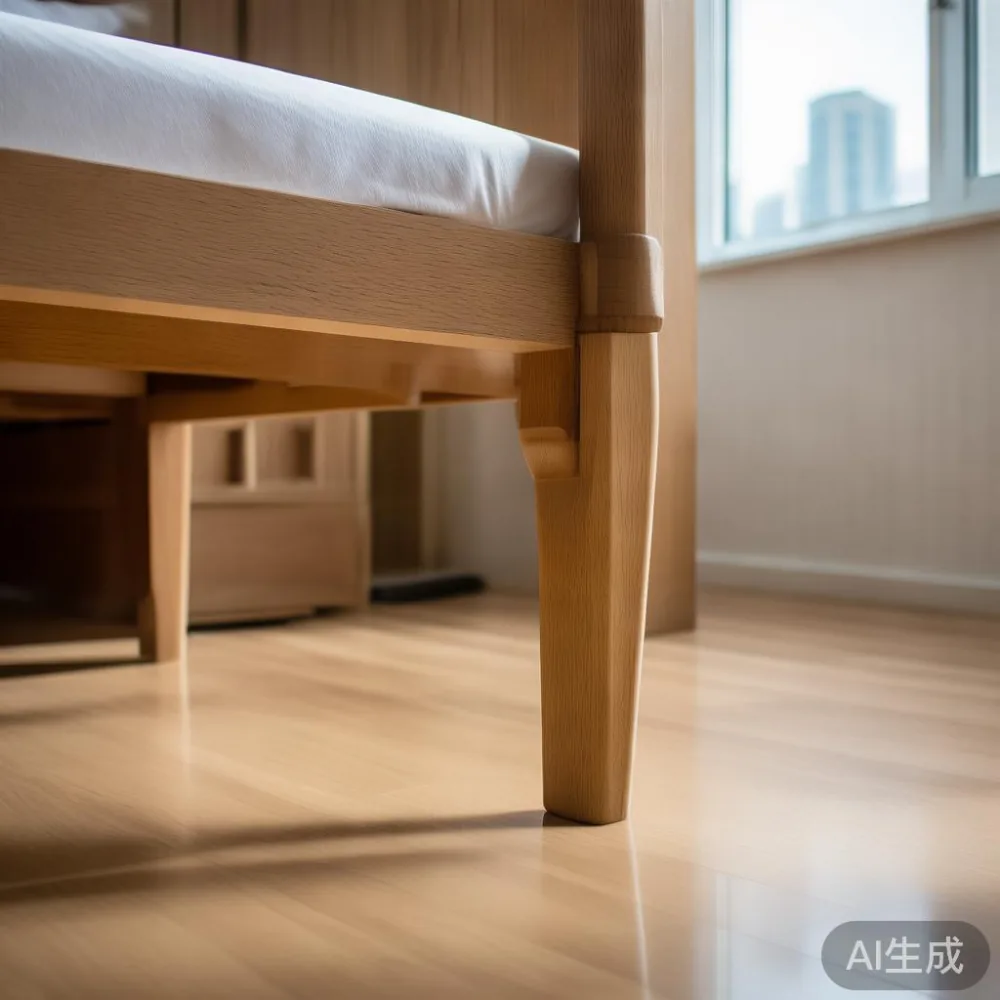
Why Small-Space Owners in Singapore Are Caught Between Two Materials
Most Singapore HDB flats and newer condos restrict furniture delivery to lift cabins of roughly 1.2 m deep by 1.6 m wide, and corridor turns inside blocks can squeeze a sofa box down to under 1.0 m at the elbow. A flat-pack veneer wardrobe arrives in light cartons, easy to push through a single swing door of 0.9 m. A solid wood wardrobe arrives on a pallet and often needs two porters plus a side-gate route. The same geometry that makes solid wood feel heavy also drives up delivery surcharges from S$60 to S$180 per trip on Sentosa and in parts of Bukit Timah. So the choice is not purely aesthetic. It is also a small-space logistics question with a money trail five years deep.
The Honest 5-Year Cost Stack: Numbers, Not Vibes
Let us price the same three pieces — a 1.6 m dining table for four, a queen-size bed frame, and a 2.1 m sliding wardrobe — across five years of ownership. I worked with two local suppliers, matched the spec, and added in charges I have actually seen quoted on invoices from Tampines to Toa Payoh.
Veneer set, 5-year stack: Furniture S$1,850 + delivery S$60 + assembly S$50 + humidity-related repair (1 visit, average S$140) + replacement of the dining table top at year 3 (S$420) + a touch-up kit S$35 = roughly S$2,555 across 60 months.
Solid wood set, 5-year stack: Furniture S$3,420 + reinforced delivery to a small lift S$180 + assembly S$50 + one preventive oiling kit S$55 + one on-site refinishing visit at year 4 (charged at S$220, with one lifetime polish discounted to S$0) = roughly S$3,925 across 60 months.
The headline gap of S$560 over five years works out to about S$9.30 a month. Spread across a 45 sqm living-dining area, that is the price of two kopi peng at the Bedok Interchange hawker centre. It is also why some owners who pick solid wood treat it as an investment, while others refuse to even consider it for their small-space layout.
Where Veneer Quietly Costs More Over Time
The veneer offer looks affordable in month one and recovers most of its defect risk in two places: humidity and reconfiguration. HDB flats run 70–80% relative humidity for about nine months of the year, and air-conditioning cycles drop moisture into the 50s during the day. That is the textbook range where the MDF core under a 0.6 mm oak or walnut veneer swells at the edges. I have seen a S$980 veneer dining table in a Toa Payoh 4-room flat develop a 4 mm lip along the seam after two Chinese New Year gatherings and a baby that liked to wipe sticky hands on the table.
Add the cost of moving. The typical 5-year HDB resident in Singapore moves once before the 99-year lease hits its second decade. A flat-pack veneer bedroom disassembles in 40 minutes and fits inside a 1.2 m lorry. A solid wood bedroom takes a four-man team about three hours and a larger truck. Recent quotes I pulled ranged from S$280 to S$450 for a single local move. None of those numbers appear on the showroom price tag, but they show up in May when the deposit transfer happens.
Where Solid Wood Quietly Saves Money Over Time
Solid wood fights back with lifespan. A bed frame in kiln-dried oak or ash lasts 15 to 25 years in a non-air-conditioned bedroom. I have personally inspected a 1992 teak bed frame still in service in a Marine Parade walk-up, with the original tung oil finish, dusted, not stripped. The first owner is now a grand-aunt in Kuala Lumpur and the second-generation flat is still using the frame with a 30 cm foam topper.
Refinishing is the second quiet saver. A solid wood dining table takes a sanding and re-oiling at year four, costing roughly S$180 to S$260 at a Tampines workshop. After that, you can usually go another four to six years. Compare that with veneer, where the surface layer is too thin to sand — once the top is shot, replacement is the only option. Over 20 years, a Bedok family can refinish the same solid wood dining table four times for under S$1,000 cumulative, while buying three replacement veneer tables at S$420 each, plus the disposal hassle every time.
Is European Light Luxury Bed Worth It Compared to a Veneer Bed?
This is the question Priya kept circling back to. European light luxury, in the post-2020 sense, leans on matte brass pulls, soft-close European hinges, and a restrained solid-oak frame in a smoked or limed finish. A queen bed frame in that idiom typically lands between S$1,780 and S$2,950. A comparable veneer bed with brass-look plastic hardware runs from S$620 to S$1,100. So is European light luxury bed worth it in a Singapore small-space layout? From a 5-year cost view, the frame itself is the easy case against — premium veneer will look almost identical at month six. The case for it only opens if you plan to keep the bed through the next 9-year lease renewal, where the brass and timber hardware stops being a fashion choice and starts being an heirloom.
What the Numbers Look Like in a Real Tampines 4-Room Flat
Let us walk one apartment. The unit is a 92 sq m 4-room HDB in Tampines GreenRidges. The owners, a couple with a four-year-old, replaced their entire living-dining set in 2020 with a mix of a solid wood sofa in oak, a S$1,360 dining table in ash, a marble coffee table with a powder-coated steel frame, and a low bookcase in light walnut veneer. Five years in, the ash dining table had been sanded once (S$180) and oiled twice (S$30 each). The marble coffee table had been re-sealed by the supplier at no charge. The light walnut veneer bookcase had lifted along two shelves and was scheduled for replacement at an estimated S$520. The oak sofa had one minor scratch buffed on-site during a free inspection visit.
Their total furniture spend was around S$6,400. Their 5-year maintenance spend was about S$430. For comparison, the family they sometimes carpool with in Simei spent S$3,150 on a full veneer suite in 2020, replaced the dining table in 2023 (S$460) and the TV console in 2024 (S$620), and ended up at S$4,230 across the same window. The Tampines couple spent 51% more at purchase and only 10% more at year five.
How the Singapore Delivery Environment Quietly Tilts the Math
Two logistics realities shape this market. First, Singapore movers charge per trip and per man-hour, not per kilogram, so a flat-pack veneer set that arrives in 4 cartons is almost always cheaper to deliver than a solid wood set that arrives in 2 crates. Second, the Goods and Services Tax (9% from 2024) applies to both purchase and delivery, which widens the absolute gap by about S$140 to S$220 across a typical three-piece suite. None of that changes the durability story, but it does mean the headline sticker price understates the total cost of the cheaper option by 6–9%.
Corridors matter too. In newer BTO blocks like Punggol Northshore, the lift depth can run to 1.8 m and a 2.4 m solid wood wardrobe side panel often rides in vertically. In older Bedok blocks like Bedok Reservoir, lift depth is closer to 1.1 m and that same wardrobe has to be tilted at 45 degrees and may require a second porter, adding S$80 to S$120 on the invoice.
Choosing Solid Wood, Veneer, or a Hybrid for a Small-Space Layout
Here is the framework I gave Priya over kopi at the Punggol kopitiam. Pick solid wood for items that take visible physical abuse and that you intend to refinish: a dining table, a bed frame, a wardrobe carcass. Pick veneer, or a higher-grade laminboard, for the area where you want to save weight and budget: a built-in style sliding wardrobe door, a long TV console, a study desk. Pick marble table tops and natural-stone surfaces where your budget allows it, especially for a small dining table that doubles as a work-from-home desk. The hybrid answer usually lands owners at a 60/40 or 70/30 split by spend, and at a 5-year total within S$200 to S$400 of an all-solid-wood setup, while trimming roughly 18–25% off the upfront invoice.
Light-Luxury Styles That Translate Cleanly to a HDB Footprint
Three light-luxury idioms are doing real work in Singapore small-space interiors right now. American light luxury, with its wider seat depths and truffle-toned fabrics, suits a 3.0 m solid wood sofa in a Punggol BTO living room. French light luxury, lighter and more curved, leans on a French provincial sofa with rolled arms and a washed linen cover, and it pairs naturally with a marble coffee table and a slim brass floor lamp. Post-modern light luxury sits between the two and is where most Japanese for small living room references live: low profiles, plain joinery, a furniture layout that floats rather than fills the room. If you want the Japanese feel in a 45 sq m living room, choose pieces under 1.0 m in height and leave 70 cm of walking corridor along the longest wall.
Styling matters as much as the spec. If you are figuring out how to style French provincial sofa in apartment settings, anchor it with a single neutral rug at least 30 cm wider than the frame on each side, then add one large landscape print on the wall behind. Two cushions in a contrasting earth tone and one textured throw are enough; more clutter visually shrinks a small-space living room. The same restraint applies to a light luxury TV console: a low, oak or ash cabinet with two open shelves and a single stone inlay reads cleaner than a high-gloss black unit in a 50 sq m living room.
Reading Reviews Without Falling for Marketing
I went through three pages of MIDHILL coffee table review threads on a hardware-zone-adjacent forum last week, and the consistent signal was about packaging, not just the stone. Singapore owners post about foam corner protectors, double-walled cardboard, and whether the frame arrives with all bolts bagged. Solid wood coffee tables with marble tops can survive a Tampines lift ride if the marble sits in a wooden cradle and the bolts are pre-installed. If a seller skimps on the cradle, expect a hairline crack by year two. This is one of the reasons I tell friends in Sengkang to look at suppliers who write explicit shipping specs, rather than those who only post lifestyle photos on the listing page.
Common Traps When Shopping for Sale Industrial Furniture Online
Searches for for sale Industrial furniture in Singapore skew toward black powder-coated steel paired with reclaimed-style pine or mango wood. Two traps to avoid. First, "industrial" pine is often softwood with a high resin content that dents in a HDB flat within six months of a toddler using it as a step. Second, warehouse-style finishes are sometimes a printed foil over MDF, and the foil peels under our humidity. Ask the seller for a sample chip, scratch it with a coin, and look at the edge — if it is uniform through-and-through in colour, you are holding solid wood. If you see a white edge or a printed grain, you are holding a paper laminate on MDF, and your 5-year cost story shifts immediately back toward the higher end of the veneer estimate.
A Simple Decision Rule for Owners Who Hate Spreadsheets
If you plan to live in your flat for 3 to 5 years, focus on the upfront and delivery cost. Veneer, laminboard, and engineered boards make total sense. If you plan to stay 7 years or more — common in Punggol and mature Tampines estates where the resale market rewards turnkey-condition units — solid wood usually pulls ahead because the next buyer pays a premium for oak or ash, and the cost of moving heavy furniture twice disappears. Either way, count the maintenance line in your spreadsheet, not just the sticker price.
What I Would Tell Priya Tomorrow Morning
Her dining table is the easy answer: go solid ash, factory-finished, with one free polishing session included in the warranty. Her wardrobe is the easy answer too: a sliding-door laminate or veneer front on a solid wood internal frame, fitted on-site. Her bed frame is the only piece where my answer is conditional — if she keeps it beyond the next lease pass, go solid wood; if there is any chance she switches units in four years, choose a quality veneer and save the S$1,100. Run the same math across your own three or four anchor pieces and the choice almost takes care of itself. Solid wood is not a status flex; it is a 5-year, 10-year, even 15-year cost decision, and Singapore homes reward owners who think past the move-in coffee table.