Warm Minimal Living in a Small Space: Matching Solid Wood Furniture the Right Way
I still remember standing in the lift lobby of a 1,045-unit development in Punggol last month, watching a delivery crew try to wheel a 2.4-metre teak wardrobe panel through a corridor that measured exactly 1.2 m between handrails. The piece would not turn the corner on the 9th floor. Three months of planning, gone in eight minutes. That moment has shaped every recommendation I give to friends furnishing 4-room HDB flats in Tampines, Bedok, and Punggol: warm minimalism only works when the furniture physically fits the building, the lift, and the small space you actually live in.
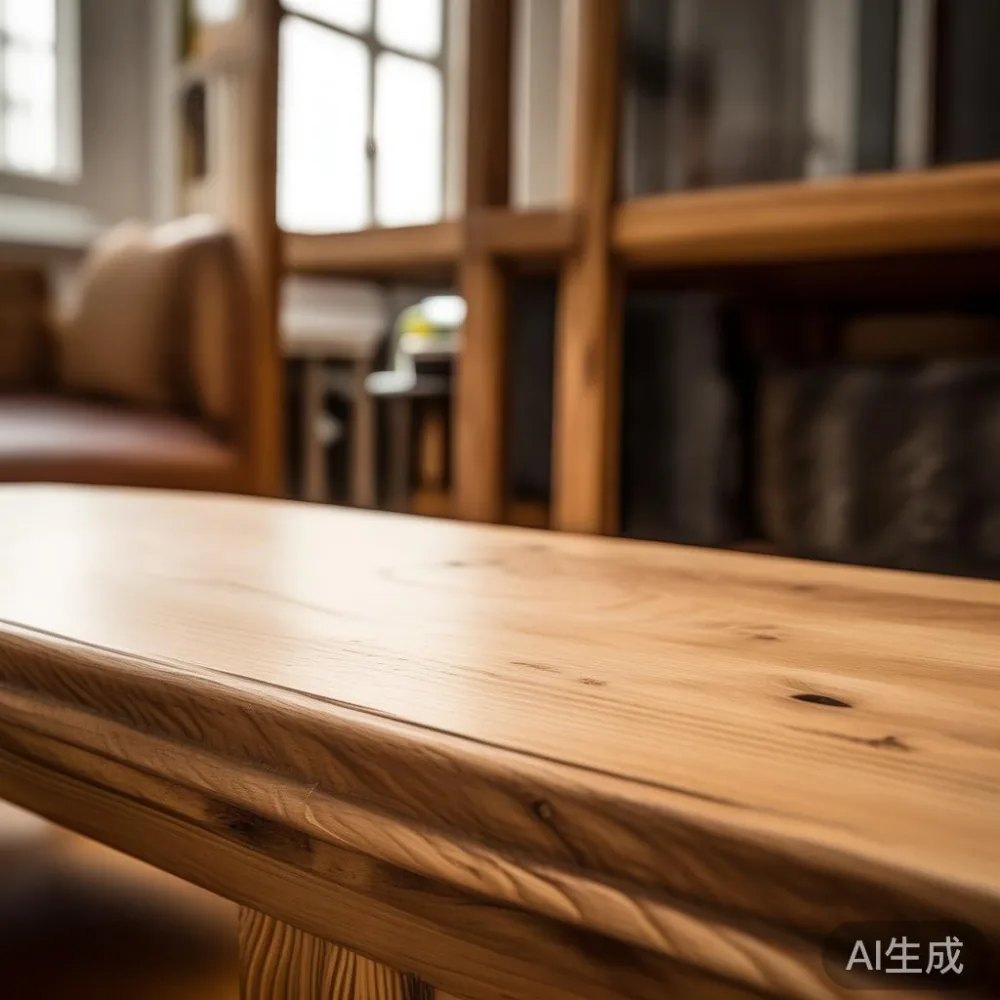
Warm minimalism is not the cold, gallery-style minimalism that Scandinavian designers popularised in the 1990s. It is softer, more tactile, and built around natural materials — solid wood, brushed brass, unglazed ceramic, raw linen. The trick in a 90 sqm HDB flat or a 55 sqm condo is to keep that warmth while protecting the calm negative space that makes a small room feel larger. This guide walks through how to match a solid wood sofa, bed frame, dining table, wardrobe, nightstand, and marble table to a warm minimal interior without breaking the lift dimensions, the corridor rules, or the budget.
What does "warm minimal" actually mean for an HDB flat?
Warm minimalism is a style, not a colour palette. It pairs the visual quiet of minimalism — clean lines, low visual noise, generous breathing room — with the sensory warmth of natural materials. In practical terms, this means ash, oak, or walnut frames instead of black powder-coated steel; boucle or washed linen upholstery instead of high-gloss leather; and off-white plaster walls instead of mirror-finish laminates.
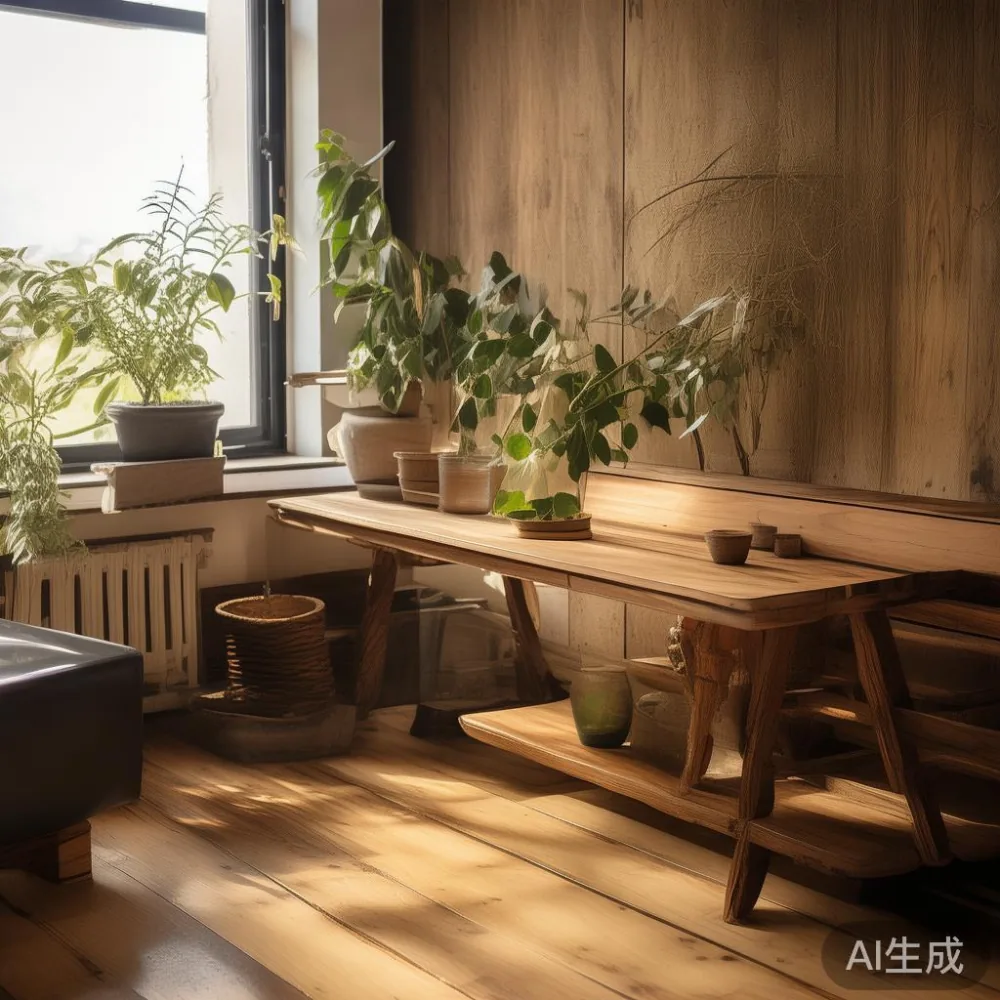
In a small space such as a 4-room HDB in Bedok or a compact condominium in Punggol, this style solves two problems at once. The minimal lines prevent the room from looking cluttered (which a 90 sqm flat does easily), while the warm wood tones keep it from feeling clinical, which is the common complaint people have after copying all-white Pinterest boards. The result is a small space that photographs well, but more importantly, feels calm to come home to after a 12-hour shift at Tuas or Changi.
What is the difference between Modern light luxury king bed and modern furniture?
A Modern light luxury king bed is a specific product category — typically a 1.8 m × 2.0 m solid wood frame with a low platform profile, an upholstered headboard in boucle or top-grain leather, and subtle metallic accents in champagne or brushed brass — whereas "modern furniture" is a broad design era covering any piece made from the early 20th century onwards, regardless of material or price point.
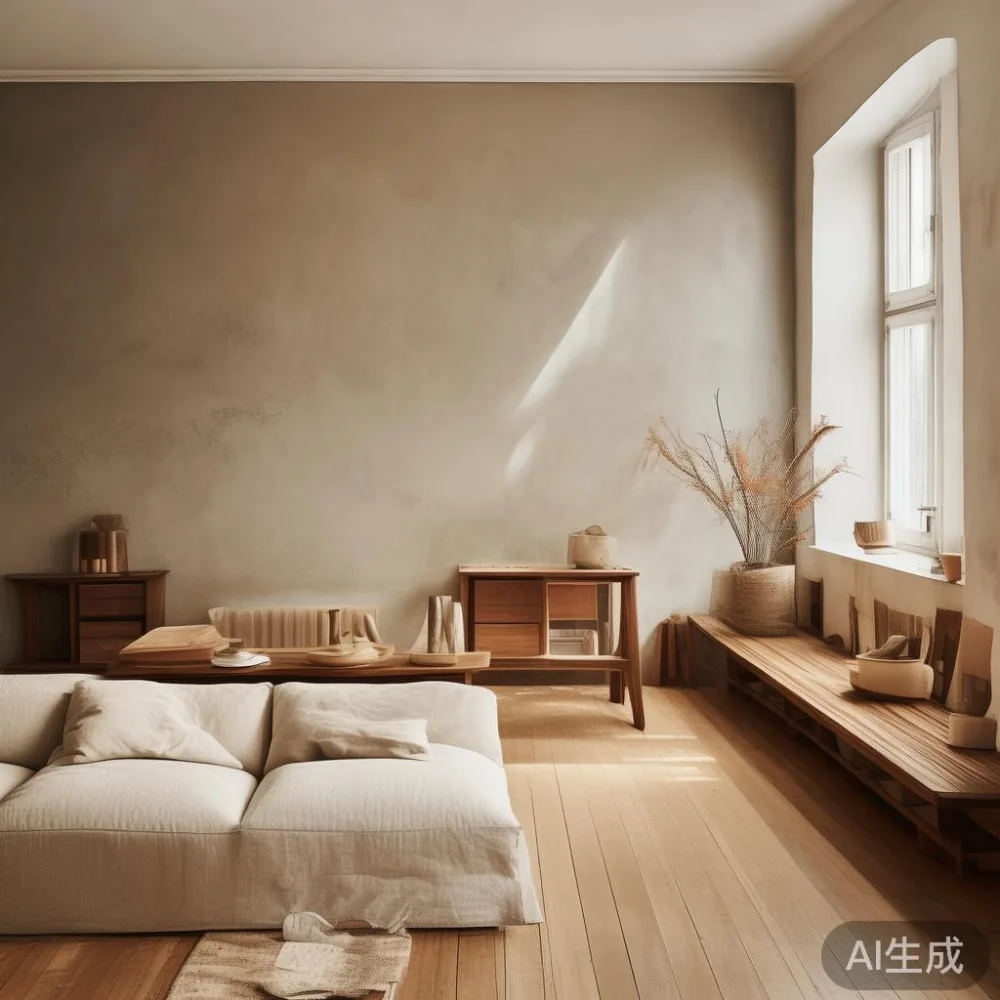
Put simply: all light luxury beds are modern, but not all modern furniture is light luxury. The light luxury label signals craftsmanship (mortise-and-tenon joinery, kiln-dried solid wood, hand-rubbed finishes), restrained ornamentation (no carved scrolls, no gilt), and a price band that sits above mass-market flat-pack but well below couture Italian brands. A queen-size light luxury bed frame in ash or walnut from a Foshan maker such as MIDHILL typically lands between S$2,400 and S$3,800 landed in Singapore, including GST and door-to-door delivery.
For an HDB master bedroom measuring roughly 3.2 m × 3.4 m, a king-size light luxury bed still leaves about 60 cm of walking space on each side — enough for a 45 cm-wide nightstand and a 50 cm-deep wardrobe without the room feeling like a corridor. That calculation is where most people go wrong: they buy the bed first, then discover the nightstand will not fit.
How do you plan furniture around HDB lift and corridor sizes?
Singapore's residential lifts usually have an internal cabin of about 1.5 m deep × 1.4 m wide × 2.3 m high, and the corridor turn at most blocks measures 1.2 m wall-to-wall. Any flat-packed or assembled piece longer than 2.1 m, wider than 1.35 m, or taller than 2.1 m becomes a logistics problem on the upper floors.
Here is the rule I share with every client: measure the lift diagonal, not just the floor. A 2.4 m wardrobe panel will fit on the cabin floor only if you tilt it diagonally, which most solid wood pieces cannot do without stress on the joinery. This is why modular wardrobes with 60 cm-wide carcasses — the standard for most Post-modern teak minimalist furniture ranges out of Foshan — are the safest bet for a small space in a high-rise block.
For dining tables, a 1.4 m to 1.6 m solid wood top seats four comfortably and clears a typical HDB kitchen-to-living corridor of 90 cm to 1.1 m. A 1.8 m table sounds appealing in the showroom but, in my colleague's Punggol unit, forced everyone to side-step around the chairs every time someone stood up. We downsized her to a 1.5 m ash extendable table with a centre leaf, and the room instantly felt 15 sqm larger.
Which solid wood pieces work hardest in a warm minimal small space?
If you have to prioritise, here is the shortlist of pieces that earn their floor area in a 4-room HDB flat.
Solid wood sofa, 180 cm to 210 cm wide. A three-seater in ash or oak with a 90 cm depth and a low 85 cm back keeps sightlines open across a 3.6 m living room. Skirts should sit 8 cm to 10 cm off the floor so the room does not feel bottom-heavy. Budget roughly S$2,800 to S$4,200 for a kiln-dried hardwood frame with removable cushion covers.
Bed frame, queen or king. Choose a platform bed with under-storage drawers if your unit lacks a built-in wardrobe cavity. Drawer heights of 18 cm to 22 cm swallow two seasons of linen. Light luxury queen frames start around S$1,900; king frames from S$2,400, as noted in the previous section.
Dining table, 1.4 m to 1.6 m, with one extension leaf. Solid oak or ash tops 4 cm to 5 cm thick resist the humidity swings that HDBs on higher floors experience during the afternoon monsoon. Expect S$1,400 to S$2,600 depending on leg style.
Wardrobe, modular, 180 cm to 240 cm wide. Two 60 cm internal columns for hanging, one 60 cm column for shelving, finished with a 60 cm bridge unit if ceiling height allows. Solid wood carcasses cost more than engineered board but last 15 to 20 years in Singapore's climate when properly sealed. A 240 cm modular wardrobe from a Foshan workshop typically lands between S$3,200 and S$5,000 with soft-close hinges.
Nightstand, 45 cm to 50 cm wide. One drawer, one open shelf, no handles (push-to-open). Anything deeper than 45 cm eats into your bedside walkway. Two nightstands at S$380 to S$520 each.
Marble table, 100 cm to 120 cm round. A small marble side table or coffee table introduces the cool stone that balances the warm wood. Sintered stone tops are more practical for households with children; genuine Carrara marble needs sealing every 18 months. Budget S$900 to S$1,800 for the table alone.
How do you keep the look warm without making the room feel heavy?
Three rules keep the visual weight down.
First, stick to one wood species per room. Mixing walnut, oak, and teak in a 12 sqm space creates the "furniture showroom" effect that small spaces cannot absorb. Pick one species — ash is the most forgiving, oak the most durable, walnut the warmest visually — and let the marble table or brass lamp introduce contrast instead.
Second, keep the largest piece visually lightest. A 210 cm solid wood sofa reads as airy if the cushions are loose and the base is recessed. A 240 cm wardrobe reads as lighter if the doors are push-to-open with no protruding handles. These are the small details that separate a warm minimal interior from a generic Scandinavian catalogue page.
Third, leave 20 cm to 30 cm between the back of the sofa and the wall if the room allows, or push it fully against the wall if the small space is tight. Floating the sofa away from the wall only works when there is something interesting behind it (a console, a planter, a wall sconce). Otherwise the gap just collects dust and looks unfinished.
A light luxury approach — French, American, or Post-modern light luxury — leans on these proportions rather than on ornament. French light luxury tends toward curved silhouettes and cream upholstery; American light luxury favours straight lines, deeper seats, and walnut tones; Post-modern light luxury mixes the two with matte metals and asymmetric details. In a small HDB flat, the American or Post-modern direction usually works best because the cleaner geometry gives back the centimetres the curves would steal.
How do you budget for a complete warm minimal set in SGD?
Here is a realistic landed-Singapore budget for a 4-room HDB flat furnished in solid wood, including 9% GST, door-to-door delivery, and basic installation. Lift-access delivery to the 9th floor in Punggol typically adds S$120 to S$180 per trip; corridor carry-in is usually included by makers such as MIDHILL for orders above S$350, which keeps the math simple.
Living room: 210 cm solid wood sofa (S$3,200), 110 cm round marble or sintered-stone coffee table (S$1,050), TV console in ash (S$1,400). Total: about S$5,650.
Dining area: 1.5 m extendable dining table (S$1,800), four solid wood dining chairs (S$480 total). Total: about S$2,280.
Master bedroom: king-size light luxury bed frame (S$3,100), two nightstands (S$900 total), 240 cm modular wardrobe (S$4,200). Total: about S$8,200.
Common bedroom: queen bed (S$1,950), single nightstand (S$420), 180 cm two-door wardrobe (S$2,400). Total: about S$4,770.
Grand total, before any bundle discount: roughly S$20,900. A well-negotiated package from a Foshan maker exporting to Singapore regularly comes in 12% to 18% under that figure, putting a complete warm minimal solid wood set for a 4-room HDB in the S$17,500 to S$18,500 range landed at your door.
What should you check before confirming an order with an overseas workshop?
Five quick checks prevent the lift-lobby disaster I described at the start of this article.
1. Ask for the fully assembled dimensions of every piece, not the flat-pack box size. A wardrobe that ships in three 80 cm cartons will reassemble to 240 cm wide, and that final dimension is the one that matters.
2. Confirm the corridor turn radius at your block. Most Singapore HDB corridors allow a 1.2 m turn; some newer blocks in Punggol are tighter at 1.1 m. Anything over 2.1 m in its longest single dimension needs to be confirmed against this number before production begins.
3. Request kiln-drying certificates for the wood. Solid wood that has not been kiln-dried to 8% to 12% moisture content will warp within six months in Singapore's 80% average humidity. Responsible Foshan workshops provide this documentation with every shipment.
4. Clarify the warranty in writing. A 10-year structural warranty on joinery, plus lifetime refinishing on the wood surface, is the benchmark you should expect from an established workshop. Makers such as MIDHILL publish these terms openly, which is a quiet signal of confidence.
5. Agree the return window in SGD terms. A 14-day return policy that covers change-of-mind on colour or size, with the maker absorbing return shipping, removes the largest risk of buying solid wood online. Read the small print on which costs are refundable and which are capped.
Which small-space mistakes ruin a warm minimal interior?
The most common mistake is buying pieces that are 5 cm to 10 cm too large in every direction, because showrooms feel forgiving and HDB rooms do not. A 220 cm sofa in a 3.4 m living room leaves 60 cm of walkway, which sounds fine until you add a 45 cm-deep coffee table and suddenly the room is a maze. Always mock up the floor plan with painter's tape on the actual floor before paying a deposit.
The second mistake is mixing too many metal finishes. Warm minimal interiors look best with one accent metal — brushed brass, brushed nickel, or matte black — repeated across handles, lamp bases, and tapware. Mixing brass and black in the same room reads as indecisive, not layered.
The third mistake is under-buying storage. A small space with too few closed shelves ends up with surface clutter, and surface clutter is the one thing warm minimalism cannot survive. If the budget is tight, spend on the wardrobe and the TV console first, then layer in the marble table and the accent chair later.
The fourth mistake is ignoring acoustics. Hardwood floors, plaster walls, and solid wood furniture create a slightly echoey room. A 200 cm × 300 cm wool rug under the dining table, or a heavy linen curtain on the window, absorbs enough mid-range sound to make a 90 sqm flat feel intimate rather than hollow.
How long does delivery from Foshan take to a Singapore HDB?
Door-to-door, sea freight from Foshan to Singapore takes 14 to 21 days for in-stock pieces, plus 5 to 10 days for last-mile delivery and lift-access scheduling. Custom orders add 25 to 35 days of production before shipping. A realistic total is 30 to 50 days from order confirmation to assembly in your Tampines or Bedok unit.
Sea freight costs have stabilised at roughly S$180 to S$260 per cubic metre for solid wood furniture in 2025, which works out to about 8% to 12% of the piece's retail value. Air freight is faster (7 to 10 days) but doubles or triples the shipping cost, so it rarely makes sense unless the order is under S$2,000 and time-critical.
Final thoughts on building a warm minimal home that fits your lift, your corridor, and your life
Warm minimalism is not about owning fewer things — it is about owning the right things, in the right wood, at the right dimensions for the small space you actually live in. When the solid wood sofa, bed frame, dining table, wardrobe, nightstand, and marble table all share one wood species, one metal accent, and one scale of proportions, even a 90 sqm HDB flat in Punggol can feel like a calm, considered home rather than a storage unit for oversized furniture.
Measure the lift, mock up the floor plan, and choose a workshop that publishes its warranty, its moisture specs, and its return policy in plain language. Do that, and the warm minimal small space you are planning will still look right in ten years — not just on the day the delivery crew finally clears the corridor.