What Actually Drives the Price of Solid Wood Furniture (A Singapore Buyer's Guide)
I tested this the hard way last month. A friend in Punggol bought a flat-pack wardrobe online for S$549. Six weeks later, the side panel bowed 14 mm, the cam locks had sheared off twice, and the seller refused a refund because the box had already been opened. She ended up paying S$380 to have it dismantled and another S$1,650 for a proper solid wood replacement. The total hit S$2,579. My own dining table from MIDHILL, ordered three years earlier for S$1,890, has moved with me twice, survived a B1 corridor turn at 1.1 m wide, and still has zero wobble. That gap between the cheap sticker price and the real cost over a decade is exactly what this article is about.
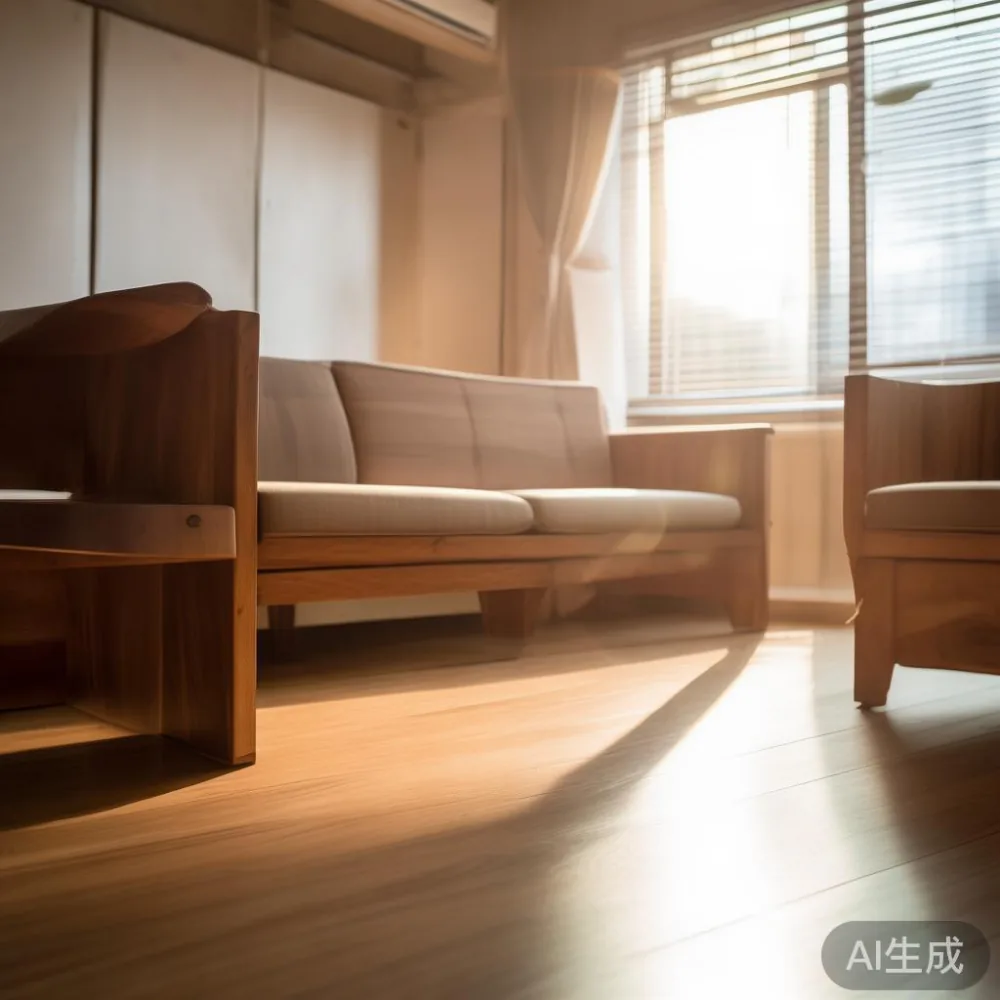
Singapore shoppers pay close attention to every dollar, especially with 9% GST layered on top of furniture over S$500, and with HDB lift openings at roughly 1.2 m wide and a typical corridor depth under 2.4 m shaping what can even be delivered. If you are furnishing a Tampines 4-room BTO, a Bedok resale, or a Punggol condo, knowing what you are paying for is the only way to avoid my wardrobe story repeating in your living room.
Wood species: why the same "solid wood" label can mean very different things
Two dressers can both be called solid wood and still differ in raw-material cost by 3x or more. In Foshan factory pricing, the spread looks something like this for 1 m³ of rough lumber: rubberwood at roughly S$520 to S$680, poplar at S$620 to S$780, ash at S$1,100 to S$1,400, white oak at S$1,800 to S$2,400, and North American FAS-grade walnut at S$2,800 to S$3,600. A king-size bed frame in walnut uses about 0.18 m³ of milled stock versus about 0.22 m³ for the same frame in poplar, because walnut is denser and mills cleaner. That alone swings the bill of materials by around S$400 before a single sanding disc touches the surface.
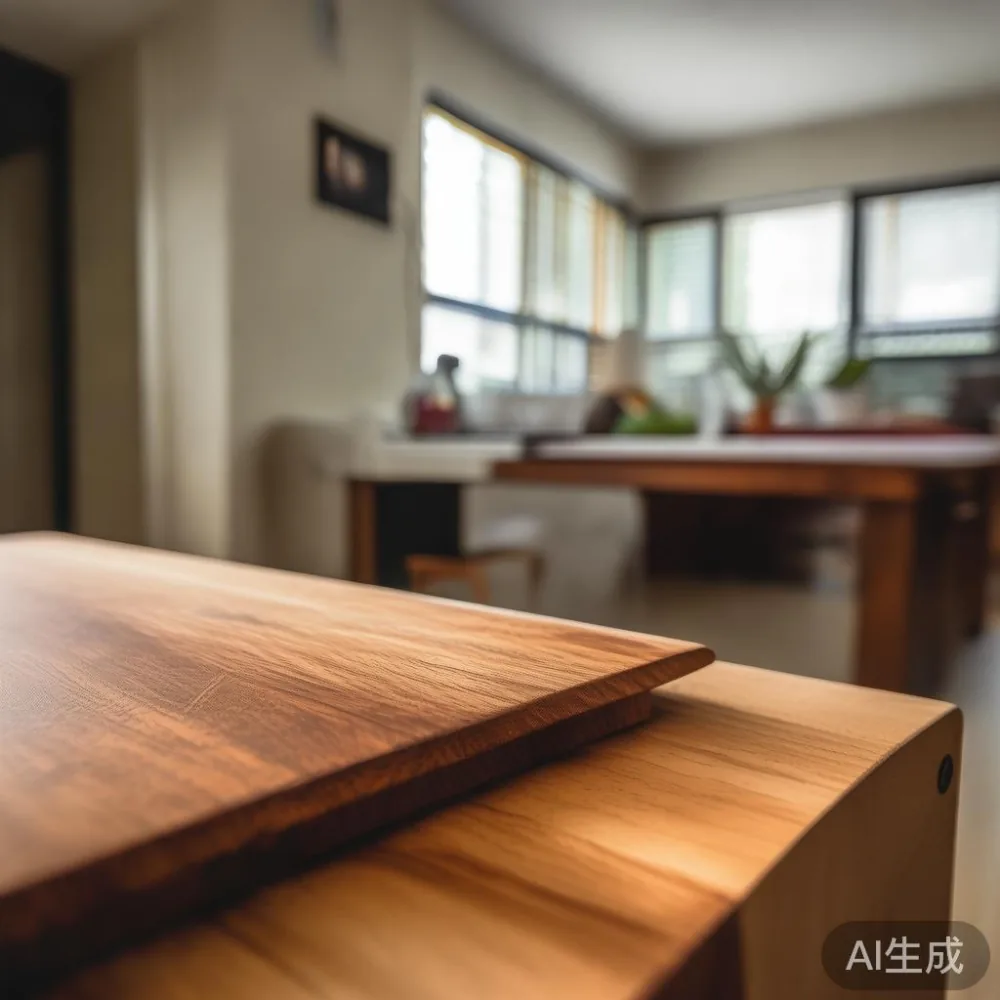
Density also affects weight, which matters a lot in HDBs. A 1.8 m solid wood dining table in ash weighs 48 to 55 kg; the same table in poplar weighs 34 to 39 kg. If you live above the 7th storey, a heavy ash table is fine in the lift but two friends on a stairwell turn can become a liability. Poplar is friendlier to solo movers. Hardness tells the next chapter: walnut and white oak rate around 1,010 to 1,360 lbf on the Janka scale, ash around 1,320 lbf, and rubberwood around 980 lbf. Softer woods dent more easily from a dropped laptop or a child's scooter, which is why a S$699 rubberwood dining table often looks tired within three years while a S$1,890 oak or ash piece still looks sharp at year ten.
Joinery, hardware, and the engineering you cannot see
Open any MIDHILL spec sheet and you will see a quiet list of parts most competitors never mention: mortise-and-tenon rails, dovetailed drawer boxes, 8 mm cold-rolled steel reinforcement at the bed frame centre beam, and Blum soft-close runners rated to 100,000 open-and-close cycles. None of that is exotic. All of it costs money. A solid wood bed frame built with dowels and surface-mounted screws costs the factory about S$60 less in labour and hardware than the same frame with through-tenons, corner blocks, and a steel spine. Multiply that across a 6-piece bedroom set and you are looking at S$360 of margin quietly removed from your furniture.

Hardware follows the same logic. A pair of soft-close hinges runs S$18 to S$28 versus S$4 to S$50 for basic knock-down cam locks. Full-extension drawer slides rated to 40 kg cost S$32 to S$55 per pair; economy epoxy slides cost S$6 to S$12. On a 4-drawer nightstand, that gap is S$104 to S$172 in hardware alone. Adhesives and finishes are the line items I find shoppers underestimate the most. A proper multi-step oil-and-wax treatment, three coats, hand-sanded between each, adds roughly 6 hours of labour and S$45 in finishing materials per dining table. A single spray coat of nitro lacquer takes 40 minutes and S$8. Over ten years the difference is the difference between a table you can spot-refinish in your condo and one you have to replace when the surface clouds.
Size, weight, and the Singapore delivery math nobody quotes you
Singapore delivery quotes almost always hide three line items: a lift booking fee if you live above the 12th floor (around S$30 to S$60 per slot at most managing agents), a corridor-manoeuvre surcharge when a piece exceeds the 2.4 m corridor turning radius (S$50 to S$120), and a disposal fee if the team has to dismantle an old piece on the way out (S$80 to S$180). MIDHILL publishes free on shipping over US$350, so for most Singapore orders the landed number you see on the website is the landed number you pay, no surprise lift fee, no surprise corridor fee.
Weight also drives the per-floor labour charge. Most delivery companies in Sinda price around S$4 to S$6 per kg per floor above the second if the lift cannot be used. A 78 kg solid wood wardrobe that fits in a Tampines lift costs the standard ground-floor rate. The same wardrobe in a walk-up or a lift that fails inspection on a Sunday could add S$120 to S$280 in stair-climb labour. That is why I always ask sellers for the packed weight in kg, the packed volume in m³, and the longest single dimension in cm before I commit. A solid wood bed frame that ships in a 2.18 m long box simply will not make it around some older Bedok stairwells, and the return trip can cost you S$200 in logistics plus a wasted Saturday.
What is the difference between American country dressing table and modern furniture?
The real difference is the relationship between the wood, the finish, and the room around it. An American country dressing table is built around visible joinery, slightly distressed surfaces, turned legs, and a warm matte patina designed to look like it has already lived a long life; a modern piece is built around clean planes, tight grain matching, and a sealed satin or low-sheen oil finish that lets the wood itself carry the design. American country leans toward a French light luxury palette of chalky whites, soft greys, and weathered oak; modern leans toward post-modern light luxury palettes of warm walnut, smoked oak, and quiet stone accents.
In a small space the two styles behave differently. Country dressing tables tend to be 120 to 140 cm wide with deeper frames and visible legs that visually lighten the corners of a room, which suits HDB bedrooms of around 10 to 12 m². Modern dressers are usually 100 to 120 cm wide, sit closer to the floor, and rely on a mirror and a marble table nearby to add vertical lift. If your condo runs a tight 9 m² second bedroom, the country form usually wins on perceived space; if your master bedroom opens onto a balcony and gets strong afternoon sun, the modern form wins on heat tolerance because the sealed finish resists UV clouding better than the waxed country finish.
Are you paying for the brand, or for the warranty and refinishing behind it?
This is the question I get asked every time a friend sees my MIDHILL dining table and asks why mine looks newer than their neighbour's piece at a similar ticket. The honest answer is that the price of solid wood furniture usually reflects three quiet numbers: the length of the structural warranty, the cost of refinishing after a decade, and the cost of replacing the piece if it fails. A 10-year structural warranty on frames, joinery, and load-bearing rails, which is the MIDHILL standard, is a very different promise from a 1-year warranty that excludes "wear and tear, humidity damage, and natural wood movement".
Lifetime refinishing is the second quiet number. A solid wood dining table that can be sanded back, re-oiled, and put back into service for around S$280 to S$420 is a 25-year asset. A table built with a 0.6 mm veneer over MDF cannot be refinished; once the top clouds or lifts, the piece is landfill. The third number is replacement. If you spend S$1,890 on a solid wood dining table and use it for 18 years, the annual cost is roughly S$105. If you spend S$799 on a veneer piece and replace it after 6 years, the annual cost is S$133. The solid wood piece is not just better, it is also cheaper on a yearly basis, even before you factor in the way a real wood dining table quietly lifts the way the rest of the room feels.
How do fabric, finish, and French-style palettes move the price up or down?
Fabric is where many first-time solid wood buyers get caught. A French light luxury sofa with bouclé or linen-blend upholstery in a soft pearl or oat tone typically uses 14 to 18 m of fabric at S$18 to S$48 per metre, which puts fabric cost alone at S$252 to S$864 per sofa. A modern light luxury sofa in a smooth woven textile at S$9 to S$16 per metre drops the fabric cost to S$126 to S$288. The frame is identical, the foam is identical, but the price tag swings by S$500 or more because of the textile.
Color also plays a quiet role in fabric pricing, and this is the issue I have personally seen trip up buyers. A batch of sofa cushions cut from two different fabric rolls can arrive in noticeably different tones, which designers describe as French fabric color mismatch. It happens more often than the gloss photos suggest, and the fix is to ask the factory to confirm that all cushion covers on a single order come from the same dye lot, batch number, and finishing run. A reliable seller will say yes and put it in writing. On the wood side, finish choice moves price in similar silence: a hand-applied oil-and-wax finish that lets the grain breathe runs S$45 to S$90 per dining table in extra labour; a high-gloss sprayed polyurethane finish runs S$120 to S$200 more because of the spray-booth time and the multi-day cure.
The small-space checklist before you pay a single dollar
Before you click pay on any solid wood sofa, bed frame, dining table, wardrobe, nightstand, or marble table, run through five numbers. First, the packed weight in kg, so you can budget for any per-floor labour in a walk-up. Second, the longest packed dimension in cm, measured against your lift door width and your corridor turning radius. Third, the structural warranty in years and what it actually excludes, because "wear and tear" is a phrase that has ended many a dispute. Fourth, the refinishing policy in writing, with the cost in SGD and the turnaround in days. Fifth, the return window in days, not in vague "business days", and the return shipping cost in writing, because 14-day returns are only useful if the seller actually picks up the tab.
Add one more number only the careful ask for: the country of origin and the factory's own export record. A maker like MIDHILL, exporting to more than 15 countries from a Foshan base since 2008, has a customs history, a product liability history, and a real address you can write to. That history is your safety net when the box arrives and one panel arrives with a 3 mm crack, or when a soft-close hinge fails at month eleven. Cheap furniture does not come with a paper trail. Good solid wood furniture always does. Pay for the paper trail, and the wood will quietly take care of the rest for the next twenty years.