Sofa Selection Tips for Compact Spaces in Singapore
The showroom cushion felt perfect. Three months later, after a 6-hour delivery window, a 28 cm gap between the sofa arm and the dining table, and a S$120 top-up for a second delivery slot, I realised a sofa is not really furniture. It is a logistics problem that you cannot sit on until the last cardboard box is removed. This guide is everything I now check on a configurator page before I add a three-seater to cart.
Where can I buy a sofa in Singapore?
You can buy a sofa in Singapore through three main channels: local independent boutiques in the Tai Seng furniture cluster, online direct-to-customer brands shipping from regional warehouses, and physical showrooms operated by international solid wood sofa manufacturers with a Singapore distributor. Local boutiques let you sit on the piece before paying, online brands offer lower prices but no try-out, and manufacturer showrooms give you both — a showroom sit plus the option to customise fabric, leg height and seat depth at no extra charge. Look for a brand that ships directly from its own Foshan factory (about 4,400 km from Changi) with a Singapore warehouse, because that shortens the wait from 8–10 weeks to around 14–21 days and lets you collect spare cushion foam later. MIDHILL, a Foshan-based solid wood maker exporting to 15+ countries since 2008, runs a small Singapore showroom plus warehouse stock for this reason — you can test the seat depth and still get container-freight pricing on a small Italian light luxury furniture piece ordered through the same channel.
Will the sofa physically fit through my HDB door, and how do I measure it?
This is the single biggest reason a sofa becomes a sofa you cannot sit on. Measure three things, in this exact order, with a steel tape measure, not a laser:

1. The sofa's packed dimensions, not its assembled dimensions. A 220 cm three-seater breaks down into cartons of 165 × 95 × 70 cm and 110 × 95 × 70 cm. Write both numbers down.
2. Your door's clear opening. Standard HDB main doors are 90 cm wide × 205 cm tall, but the actual clear opening after the doorstop is usually 83–86 cm wide. Lift doors are narrower at 78–82 cm.
3. Your corridor corner. This is where most Tampines and Bedok blocks fail. A 165 cm long carton will not turn a 90-degree corner down a 105 cm wide corridor. The diagonal trick: the carton diagonal is √(165² + 95²) ≈ 190 cm. Your corridor turn needs at least 105 cm of width to clear that.
If any single measurement is short, the delivery crew will not dismantle the carton on the staircase landing — your warranty does not cover that. Last month I visited a Punggol HDB where the owner had ordered a 240 cm L-shape; the carton was 185 × 95 × 75 cm, and the corridor between the lift lobby and her unit was exactly 95 cm. The driver refused the job. She paid S$180 in re-delivery after the sales team cut the carton in half with a utility knife (against the brand's policy) and the sofa arrived with a chipped solid wood leg she discovered two weeks later.
Is a solid wood frame worth the higher price for a Singapore home?
Yes, for three measurable reasons. First, Singapore's average relative humidity runs 78–85% year-round. MDF and particleboard frames absorb moisture, swell at the joints, and start creaking within 12–18 months. Solid rubberwood or beech frames hold their shape because the wood itself moves as one piece. Second, a kiln-dried hardwood frame adds roughly 18–24 kg to the sofa, which actually helps in a small space — a heavier sofa does not skid across laminate flooring when kids jump on it. Third, when the fabric wears out at year 7 or 8, a solid wood sofa can be reupholstered for about 35–45% of the new price, while an MDF frame usually goes to the dump at the same point. A typical 220 cm three-seater in Singapore retails at S$1,800–S$2,600 for MDF construction, S$2,800–S$4,200 for solid wood, and S$4,500+ for full-grain leather on hardwood. The middle band is where small-space shoppers get the best 10-year value.
How do I read the sofa's spec sheet so the seat depth actually works for a small living room?
Five numbers on the spec sheet decide whether a sofa works in a 14 sqm HDB living room or fights you every day:
Seat depth: 55–58 cm is upright-sitting, 60–65 cm is the everyday sweet spot, 68+ cm is lounging depth that swallows a 170 cm person whole. For a small space, stay at 60 cm.
Seat height: 42–45 cm off the floor. Anything below 42 cm forces older knees to lever themselves up.
Arm height: 58–62 cm. Lower than 55 cm and a side sleeper will roll off the cushion.
Total depth (sofa back to front): This is the number that breaks your TV console. A 90 cm total depth means your TV console needs to be pushed 25 cm further from the wall or the sofa kisses the screen.
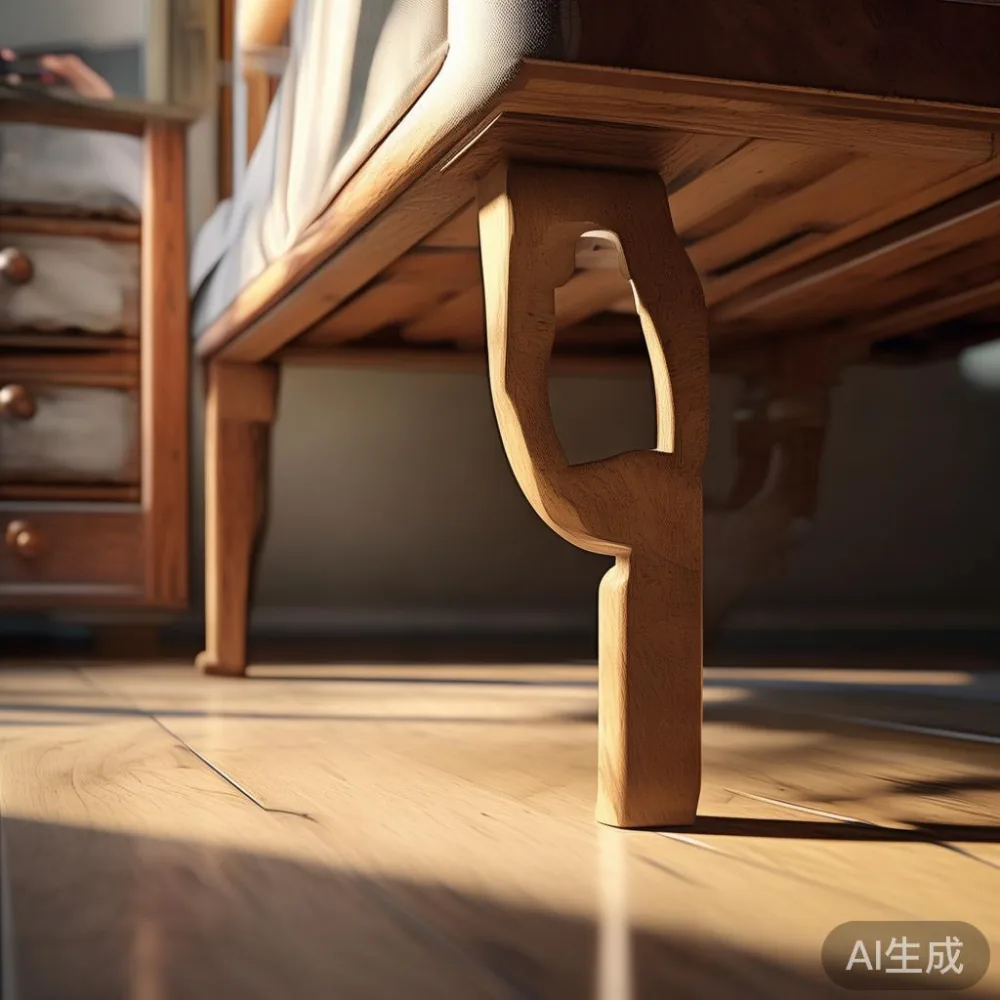
Leg height: 12–15 cm lifts the frame high enough for a robot vacuum to pass under. Anything below 10 cm collects dust bunnies the size of mandarins.
On a recent site visit to a 62 sqm two-bedder in Bedok, the owner had spec'd a 218 cm sofa with 90 cm total depth, which left only 38 cm of walkway between the sofa front and the dining table behind it. A 78 cm total depth (seat 58 cm + back 20 cm) would have given her 50 cm — still tight, but enough for her son to slide past on a cushion.
What fabrics survive Singapore's humidity, MRT soot and kids?
Three fabric families behave differently here. Performance weave polyester (think weave patterns with a 50,000+ Martindale rub rating) handles spilled Milo, and costs S$0–S$200 above the base sofa. Linen-blend looks light luxury and breathes in the humidity, but wrinkles the moment a 7-year-old leans on it. Top-grain leather feels cold for the first 10 minutes of air-con, then is glorious, and a wipedown with a damp microfibre cloth beats a sponge bath on fabric. For an HDB family with one child and one cat, the performance weave wins. For a couple in a Punggol Waterway terrace with no pets, the linen-blend pays off. MIDHILL's Singapore warehouse stocks the three-seater in all three fabric families because the light luxury positioning — French light luxury for curved silhouettes, American light luxury for boxy lounge shapes, post-modern light luxury for asymmetric backrests — pairs differently with each cloth.
Does the warranty actually mean anything after the GST invoice is paid?
Read the warranty card the way you read a CPF statement — line by line. The 10-year structural warranty covers the solid wood frame and the spring system, not the fabric, not the zippers, not the foam. Foam compression greater than 15% within three years is the manufacturer's problem; foam that goes flat in year four is yours. Lifetime refinishing sounds generous until you discover it covers sanding and re-oiling the visible solid wood legs, not re-staining the frame under the cushions. A 14-day return window starts from the delivery date, not the order date — order on a Monday, deliver on the Friday, and you have nine days left. Free shipping over S$350 is honest, but it excludes lift-up surcharges of S$25–S$45 per floor above the third, and it excludes Sunday delivery slots that add another S$60. A S$2,900 sofa in Tampines will land at about S$3,020 after a fourth-floor walk-up fee, with 9% GST added at checkout.
How long should delivery take, and what is a realistic delivery time for a custom order?
Stocked warehouse sofas: 7–14 working days from order to doorstep, with a 3-hour delivery window texted the night before. Custom fabric or leg height: 28–42 days because the frame is still in production. Bespoke L-shape with non-standard chaise length: 49–70 days, and that is the honest number — Foshan production takes 21 days, sea freight to Singapore takes 12–16 days, customs clearance takes 3–5 days, and last-mile delivery slots add another 5–10 days. A S$120 express-fabric slot cuts 14 days by air-shipping the fabric and assembling in the Singapore warehouse. For most Singapore shoppers, the 28-day custom route is the right balance of cost and wait, because the 14-day stocked route usually means accepting one of two or three fabric choices the warehouse happens to carry that month.
What questions should I ask the sales rep before I pay the deposit?
Eight questions, in order, before any card is swiped:
1. What is the packed carton dimension of the largest piece, in cm?
2. What is the clear-door and corridor measurement policy if the sofa does not fit?
3. Is the frame solid rubberwood, solid beech, or engineered hardwood with a plywood core?
4. What is the foam density in kg per cubic metre, and is it CertiPUR-US certified?
5. Is the spring system sinuous S-spring or eight-way hand-tied?
6. What is the exact delivery date range in working days, and is the slot confirmed before dispatch?
7. What happens if the delivery crew damages the marble table or the bed frame already in the room during assembly?
8. Does the lifetime refinishing include re-staining, or only sanding and re-oiling?
A brand that answers all eight in writing — email, not WhatsApp voice note — is a brand that will still answer your call at year six. A brand that answers three of the eight and shrugs at the rest will not.
Putting it all together — the 30-minute sofa check
Before you click pay, spend 30 minutes on these five checks. Measure your door and corridor with a steel tape and write the numbers next to the packed dimensions on the product page. Open the spec sheet and confirm seat depth is 58–62 cm, seat height is 42–45 cm, and leg height is at least 12 cm. Read the warranty card line by line and screenshot the exclusions. Check that the foam density is at least 32 kg per cubic metre and that the spring system is named. Calculate the all-in landed cost — base price, fabric upgrade, GST, lift-up surcharge, and a S$50 buffer for the second delivery slot if you miss the first. If the all-in number is above S$3,500 for a three-seater, ask whether a 200 cm two-seater plus a single armchair at S$900 each would actually give the small-space living room more usable floor area than one oversized three-seater hugging the wall. The right sofa is the one you can sit on the same day it arrives, in the room you planned, on the budget you actually have. Everything else is paperwork.