Before You Buy a Sofa You Cannot Sit On: A Singapore Small-Space Guide
A sofa can look generous in a showroom and become almost useless in a Singapore HDB flat. The problem is rarely the sofa itself. It is the combination of narrow lift doors, tight corridors, odd corners, reserved parking, a staircase, and a living room that has to accommodate daily life from breakfast to bedtime. Buying furniture for small space therefore means measuring access as carefully as measuring the seat.

Last month I visited a family in Tampines with a new 3-room flat. They had selected a 220 cm three-seat sofa with a solid wood frame, removable seat cushions, and attractive French light luxury styling. The showroom sample looked generous. Their living room was only 3.2 m wide, however, and the common corridor outside their unit narrowed to about 95 cm. The sofa arrived at the void deck on delivery day, but the delivery crew could not turn it past the corridor bend without scraping the frame.
The family did have a valid small-space plan: a 165 cm loveseat, a 42 cm nesting table, and one slim 36 cm lounge chair. They had also expected the larger sofa to be split into modules. It was not. After 40 minutes of repositioning and one rejected delivery attempt, they cancelled and bought a modular model with detachable arms and a narrower body.
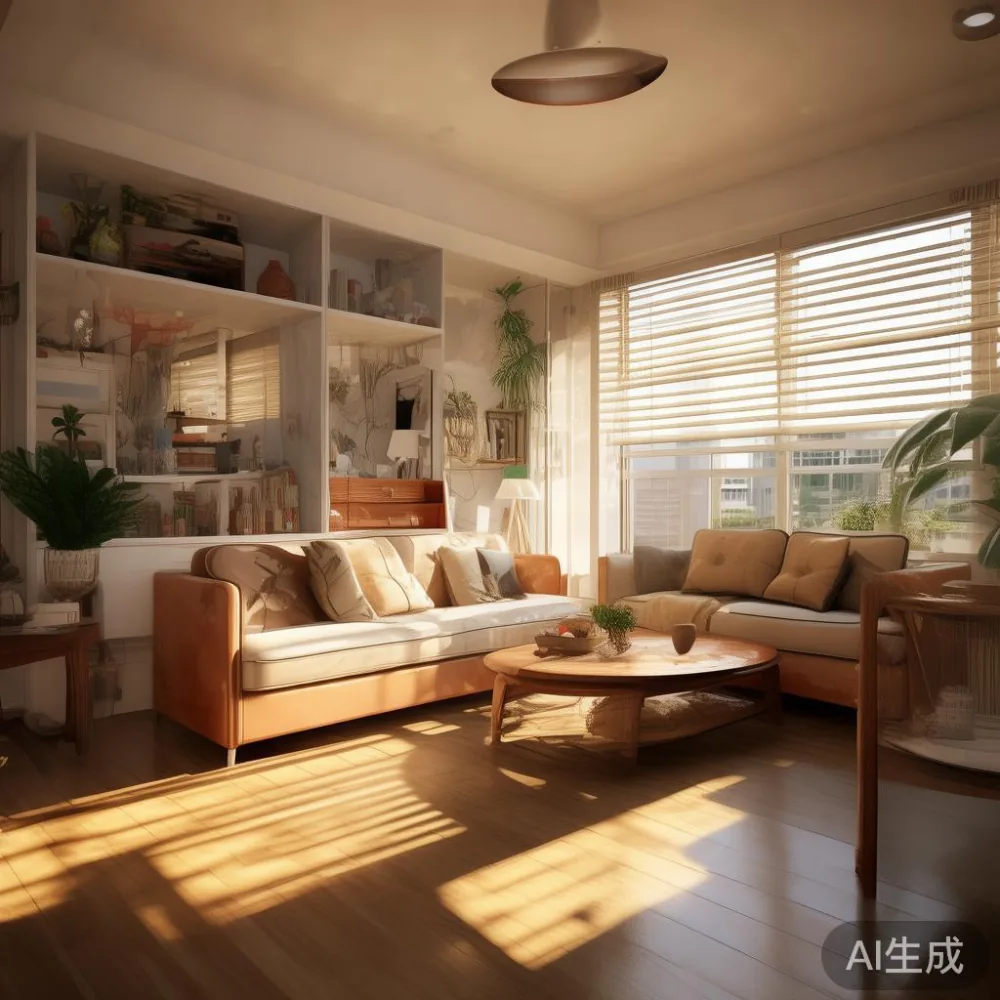
This experience illustrates the rule behind this guide: if nobody can confirm that a sofa can enter the home and still provide usable seating, it is not yet a candidate. For shoppers comparing designer Modern light luxury furniture, access dimensions should come before fabric swatches and decorative details.
Will the sofa fit through the lift, staircase, and corridor?
Begin with the route from the building entrance to the living room. In many Singapore developments, the physical dimensions of the sofa are less important than the turns it must make. A sofa may fit through a 90 cm lift door while remaining impossible to rotate inside a 110 cm by 140 cm lift car. Staircases create a different calculation because each landing adds another restriction.

Ask the retailer for the sofa’s maximum external dimensions, including the frame, arms, feet, and packaging. Measure them yourself rather than relying only on a product page. For a compact sofa, a body around 165-190 cm long and 80-95 cm deep may suit a 3.2-3.6 m living room better than a conventional 200-220 cm sofa. These are planning ranges, not guarantees: shape and corner radius still matter.
For the lift, record at least four numbers:
- Door clear width: often about 80-100 cm in older HDB lifts, though individual buildings differ.
- Lift car depth: roughly 120-160 cm in many residential lifts.
- Diagonal clear dimension: useful for tilting a sofa without pressing it against the doors.
- Turning space: ideally at least 110 cm at a corridor corner, with more space if the sofa has a continuous back.
Take photographs of the route and show them to the delivery company. A conscientious seller should ask about the lift, landing, stairs, and turning points before dispatch. MIDHILL can advise on access based on those measurements, but the buyer remains responsible for confirming that the route and parking zone are suitable.
Measure the sofa in its transport position, not just its display position. A removable back or seat cushions can reduce the package, while fixed arms or a solid timber frame can make it bulky. “Solid wood sofa” is reassuring for durability, yet a solid frame with shaped arms may still be difficult to manoeuvre. Ask whether the back and arms detach, what fasteners are used, and whether the pieces can be carried by 2 people without damage.
Do not confuse a “disassembled” sofa with a modular one. Disassembly might mean loosening a screwed-on back, producing two awkward pieces. Modular construction allows sections to be separated and carried one at a time. That distinction can decide whether a 180 cm sofa reaches a third-floor flat safely.
Can you still use the room after the sofa arrives?
Fit is not the same as function. A 200 cm sofa placed across a 3.2 m room can leave only 60 cm on one side and 120 cm on the other. One side may become a decorative strip rather than a usable walkway. In a Bedok HDB flat, where the dining area often shares the living room, that spare width may be needed for chair pull-out space and passing to a balcony door.
Sketch the room at a sensible scale. For example, use 1 cm for every 10 cm of real space. Draw the sofa, TV console, dining table, and the main circulation route on the same plan. A dining table may need 75-90 cm behind each chair, while a compact dining table of 100-120 cm can serve two people. A bed frame may project 190-210 cm from the wall and still fit because its mattress is handled separately; a sofa cannot always be split in the same way.
Watch the clear space between the sofa and coffee table. About 35-45 cm is generally comfortable for reaching items, while 30-35 cm can work in a compact flat. Leave at least 60-75 cm along the main route from the entrance to the balcony or kitchen. If the new sofa eliminates that route, it is too large for the room regardless of its stated width.
For a smaller HDB living area, a 140-165 cm two-seat sofa can provide more practical freedom than a 190-220 cm three-seater. A chaise chaise section is not automatically wasteful, but a chaise running parallel to the sofa adds depth where circulation is already limited. Check that the chaise does not block a window, radiator, or balcony access. Some buyers appreciate a compact chaise for stretching out; others need clear floor space for children, luggage, or a dining chair.
The same restraint applies across the home. A slim nightstand of 35-45 cm wide can be practical beside a 160 cm bed frame. A marble table may look elegant with a narrow base, but a heavy stone top is less forgiving during access. A wardrobe requires generous working space in front of its doors, and a dining table needs room for chairs to move. Product selection for small space should consider the entire furniture group rather than treating the sofa as an isolated purchase.
Is the seat comfortable, or merely visible?
A showroom gives you 10-15 minutes with a sofa. That is enough to notice initial firmness, but not enough to judge long-term support. The useful question is whether the sofa supports the body in the positions the household will actually use. Sit with both feet on the floor, recline fully, lean sideways, and check whether the arm height allows a relaxed arm position.
For a typical adult, a seat height near 40-45 cm is easier to rise from than a very low 35-38 cm design. Seat depth around 50-58 cm may suit average users, while a deeper 60-65 cm seat can leave the feet unsupported. Cushion density matters too, but high-density foam alone does not guarantee comfort. A balanced structure may combine a supportive solid wood frame, elastic webbing, a controlled foam layer, and a fibre or feather-feather blend on top.
Sit for at least 20 minutes if possible. A loose back cushion that forces a slouched posture is less useful than a firmer seat that invites upright sitting. Households should also test the edge. A wide seat that feels comfortable centrally may provide only 45-55 cm of usable width per person once the arms and cushion compression are considered.
Removable, washable covers are useful in humid Singapore conditions. Ask for care instructions, fabric composition, seam allowance, and replacement cushion pricing. A light-coloured performance weave may resist a daily spill more easily than a delicate boucle, but no fabric should be described as spill-proof unless the manufacturer provides that specific care rating.
Light-luxury design can still be family-friendly. French light luxury often uses pale upholstery, curved silhouettes, and refined proportions; American light luxury leans towards deep cushions and substantial comfort; post-modern light luxury may combine restrained forms with contrasting materials. The style should not compromise the seat. A sculptural frame may be difficult to sit into, while oversized loose cushions can make a compact model look deeper than it really is.
What should a sofa’s solid wood construction reveal?
A solid wood sofa should have a frame that is stable under load and appropriate for repeated use. During inspection, look for straight joints, secure corner blocks, even gaps, and supports beneath the seat rather than decorative panels with no structural role. Ask which timber is used, whether it is solid wood or veneer, and whether the frame is kiln-dried to reduce movement in humid conditions.
Do not treat the word “solid” as a complete description. The species, thickness, joint method, and finish all affect performance. A frame with 20-30 mm structural members and properly fastened joints can offer good stability, while thinner components may be acceptable only in lighter constructions. Check the underframe by lifting removable cushions. You should see continuous support across the seating area without obvious sag.
Ask about the warranty in writing and understand what it covers. MIDHILL provides a 10-year structural warranty on qualifying furniture, along with lifetime refinishing. These are meaningful distinctions for a solid wood sofa because the frame can be serviced rather than discarded after fabric wears out. Confirm whether refinishing applies to the timber finish, what customer labour or delivery charges may apply, and whether transferring the sofa to another address affects coverage.
Finish durability matters in a family home. A water-based finish may be easier to repair locally but still needs protection from heat and moisture. Test the surface with a slightly damp cloth only if the supplier permits it. Do not use a marble table as a temporary work surface for tools: abrasive grit can damage stone. Keep those surfaces separate, and use a felt or cork pad beneath decorative objects.
Does the price include GST, delivery, assembly, and returns?
In Singapore, displayed prices may or may not include GST, so confirm the final payable amount. For example, a sofa listed at SGD 2,360 before GST becomes SGD 2,424.80 when 8% GST applies. The difference is useful to note because shoppers often compare products by the headline figure alone.
Ask what delivery means. A quoted service should state whether it includes bringing the package to the unit door, carrying it to the lift, unpacking, assembly, and packaging removal. A curbside delivery in Singapore may leave the sofa at the void deck or ground-floor loading area. Carrying a solid wood sofa through a corridor is labour-intensive, so the service level can materially affect the final cost.
For MIDHILL, delivery is free on orders over US$350, although the offer is stated in US dollars. Confirm the equivalent threshold or current local checkout treatment in SGD before relying on it. International free-shipping thresholds should not be assumed to include every accessory or special-order item.
Check the estimated delivery window and the handling time. Allow approximately 7-14 working days for many ready-to-ship pieces, while made-to-order furniture may require 4-8 weeks. During periods with heavy demand, production and transit can take longer. A seller should distinguish between “ships in 5 days” and “arrives in 5 days.”
Returns are equally important. MIDHILL allows returns within 14 days under its stated policy, but read the conditions for unused items, original packaging, assembly, and custom dimensions. A sofa that has been assembled and then returned may need inspection for wear. Ask for a written returns process and retain the delivery record. Clear terms are more useful than a long promise printed somewhere deep in a website.
How do Japanese and Italian approaches compare in a compact home?
Buyers often search for Japanese sofa vs Italian light luxury sofa because the two design traditions appear to solve compact living differently. Japanese approaches commonly emphasise low profiles, restrained volumes, and efficient use of floor area. Italian-leaning design often introduces expressive curves, tactile upholstery, and a stronger visual presence. These are broad tendencies, not rules for individual products.
In a Punggol condo with generous floor area but a 95 cm lift, a slightly larger sofa may be physically possible if it separates into modules. In an older Bedok flat with narrow rooms and a 90 cm corridor, a 165 cm Japanese-style low-profile design may preserve more circulation space than a 210 cm Italian-inspired curve. The correct comparison is not nationality; it is total footprint after delivery and everyday usability.
Consider the height of the back as well. A low back can visually open a room and preserve sightlines, but a very low back may not suit older users or anyone who wants to recline. A high back can feel cocooned while taking more visual volume. For a sofa under 180 cm, a balanced design with slim arms can gain 10-15 cm of usable internal width compared with a heavily padded model.
Atmosphere also depends on the surrounding furniture. A compact solid wood bed frame, a narrow nightstand, and a dining table with rounded corners can keep the home visually calm. A marble table with a slender pedestal may reduce visual clutter, but ensure it does not narrow a passage. The same principles apply to a wardrobe: flush handles and sliding doors can preserve floor area, provided the installation allowance is measured.
For bedroom planning, light luxury for bedroom should begin with mattress access and wardrobe clearance, not decoration alone. A 160 cm mattress in a 180 cm-wide bed frame leaves limited side space in a small room. Allow at least 50-60 cm on one side where possible, and ensure that the wardrobe door can open without striking the bed frame. The phrase best Modern bed for 2026 may appear in design articles, yet the most useful bed is the one that fits the actual room and can be assembled on site.
The same fit-first approach appears in bed shopping. A shopper reading best light luxury bed for 2026 should compare frame dimensions, mattress support, underbed clearance, and delivery access. Questions about is European light luxury bed worth it should include timber species, finish, centre support, drawer construction, and warranty—not simply the name attached to the style.
What final checklist should you complete before payment?
Create a one-page approval sheet and complete it before paying. Include the room dimensions, lift door width, lift car dimensions, corridor turns, stairs, parking arrangement, and final delivery position. Attach photographs and a simple floor plan. Give the supplier the sofa’s packaged dimensions and the largest available door or lift. If the answer is uncertain, choose a model with removable arms, a split back, or separate seat modules.
Next, confirm the body dimensions and usable seat dimensions. A 175 cm sofa may offer only 145 cm of internal seating after the arms, while a 190 cm sofa may provide 160 cm. Test it with shoes on and with the cushions in their compressed position. Check that it accommodates the intended number of sitters without forcing everyone to share one cushion.
Then verify the contract. Record the item name, timber and upholstery specifications, finish, dimensions, price before and after GST, delivery scope, assembly requirement, estimated arrival in working days, warranty duration, refinishing terms, and return deadline. Keep a copy for at least 12 months after delivery, and photograph the sofa on arrival before assembly.
Finally, read the seller’s service promise as a connected system. A 10-year structural warranty and lifetime refinishing support long-term ownership. A 14-day return period gives a short inspection window after delivery. Free delivery above the stated threshold can reduce cost, but only if the service includes the level of carrying required by the building.
The most important lesson from the Tampines visit was practical: a beautiful sofa cannot improve a room if it cannot enter the flat, and a larger sofa can make a small space feel smaller. Measure the route, test the seat, verify every cost, and choose the construction that suits how people will actually live. A well-proportioned loveseat or modular sofa can look more luxurious than an oversized model because it leaves room for the room to function.