Maintaining Lacquered Wood in a Tropical Climate
I learned the hard way how unforgiving Singapore's weather can be to lacquered wood. Last month I visited a four-room HDB flat in Tampines where the original owners had placed a dark walnut dining table near the service yard door. Three years of afternoon sun, cooking steam, and 32°C ambient temperature had produced a pale, cloudy patch roughly 40 cm across — a classic case of moisture getting under the lacquer and lifting it from the solid wood substrate. After speaking with the owners and the supplier, I realised the issue was not the wood at all. It was a missing care routine in a climate that runs at 70–80% relative humidity for ten months of the year.
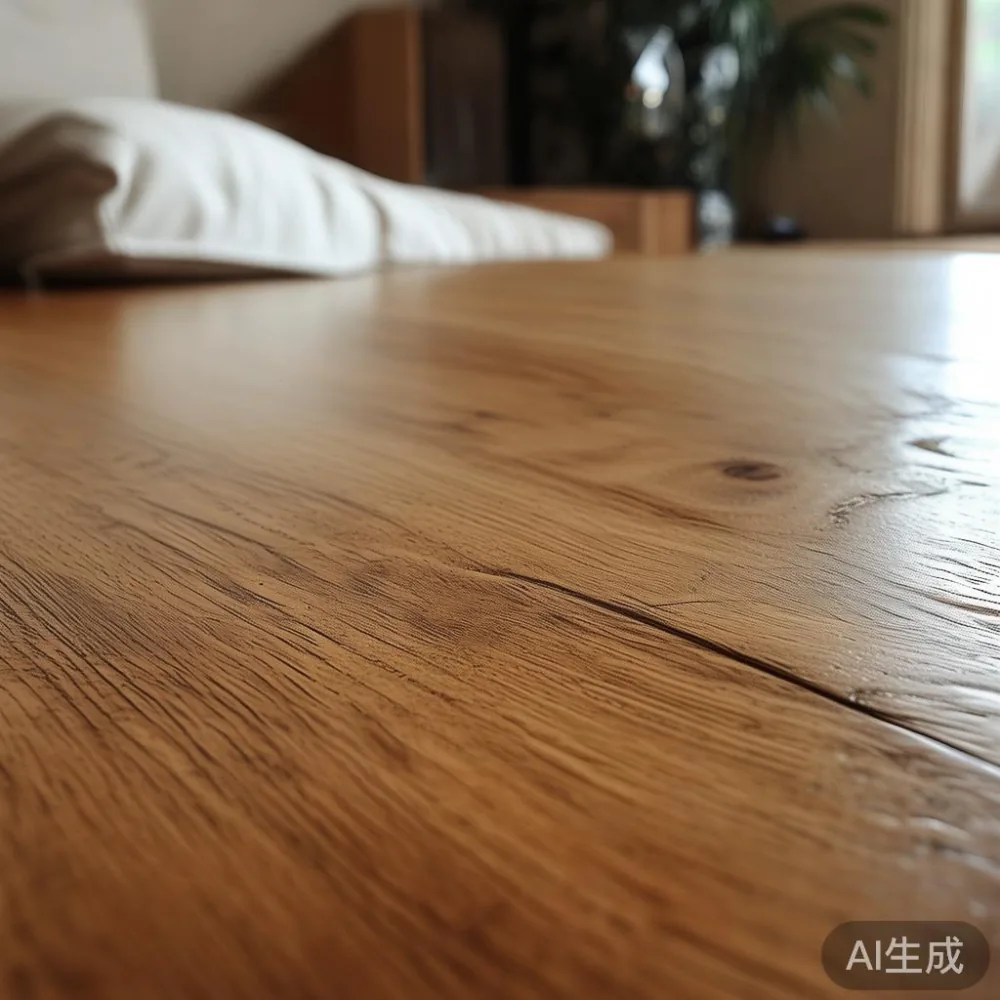
If you live in a small space — an HDB flat in Bedok, a condo in Punggol, or a collector unit in Tiong Hua — you have probably spent real money on a solid wood sofa frame, a bed frame, or a dining table you intend to keep for a decade or more. A piece of furniture with proper care will outlast three or four tenant cycles. Without care, the lacquer finish — that thin, glossy, moisture-resistant skin — fails within a few years. This article is a practical, numbers-first guide to keeping your lacquered surfaces looking new, with specific advice for Singapore's lift dimensions, corridor widths, and humidity levels.
Why does lacquered wood struggle in a Singapore HDB flat?
Lacquer — typically a catalyzed polyurethane or an acid-curing alkyd — is in effect a plastic film bonded to the timber surface. It looks glassy, resists stains, and gives a piece of post-modern light luxury furniture its mirror finish. The film is, however, sensitive to three things: sustained relative humidity above 70%, direct UV exposure, and rapid temperature change.
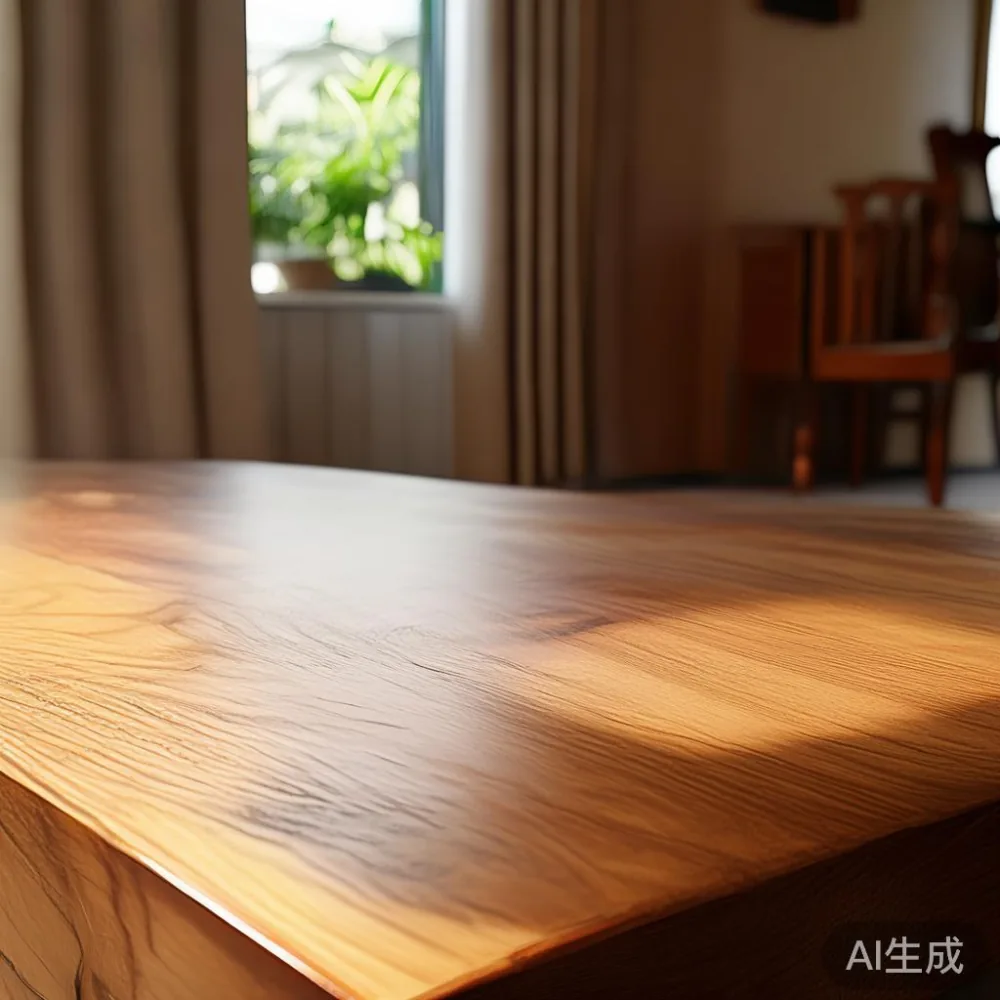
Singapore sits comfortably in the equatorial humid zone. The Meteorological Service Singapore publishes monthly mean relative humidity figures between 72% (February) and 82% (December). Your HDB flat may read 78% on a hygrometer on a normal afternoon. Bedrooms facing west — common in newer Punggol BTOs — can hit 34°C by 4 pm with curtains drawn. A lacquered bed frame or wardrobe placed against that wall absorbs heat through the back panel and slowly bakes the bond line between film and wood.
Then there is the corridor and lift problem. A standard HDB passenger lift measures about 1.1 m wide by 1.4 m deep with a door opening of 0.9 m. A typical queen-size bed frame — 160 cm wide by 210 cm long — will not fit assembled. The piece arrives flat-packed, and once in your home the lacquer is exposed to the residual construction moisture that lingers in new BTOs for the first six to nine months. Many small-space owners buy furniture in the same quarter they collect keys, which is the worst possible timing.
What does a good lacquer finish actually do, and how does it fail?
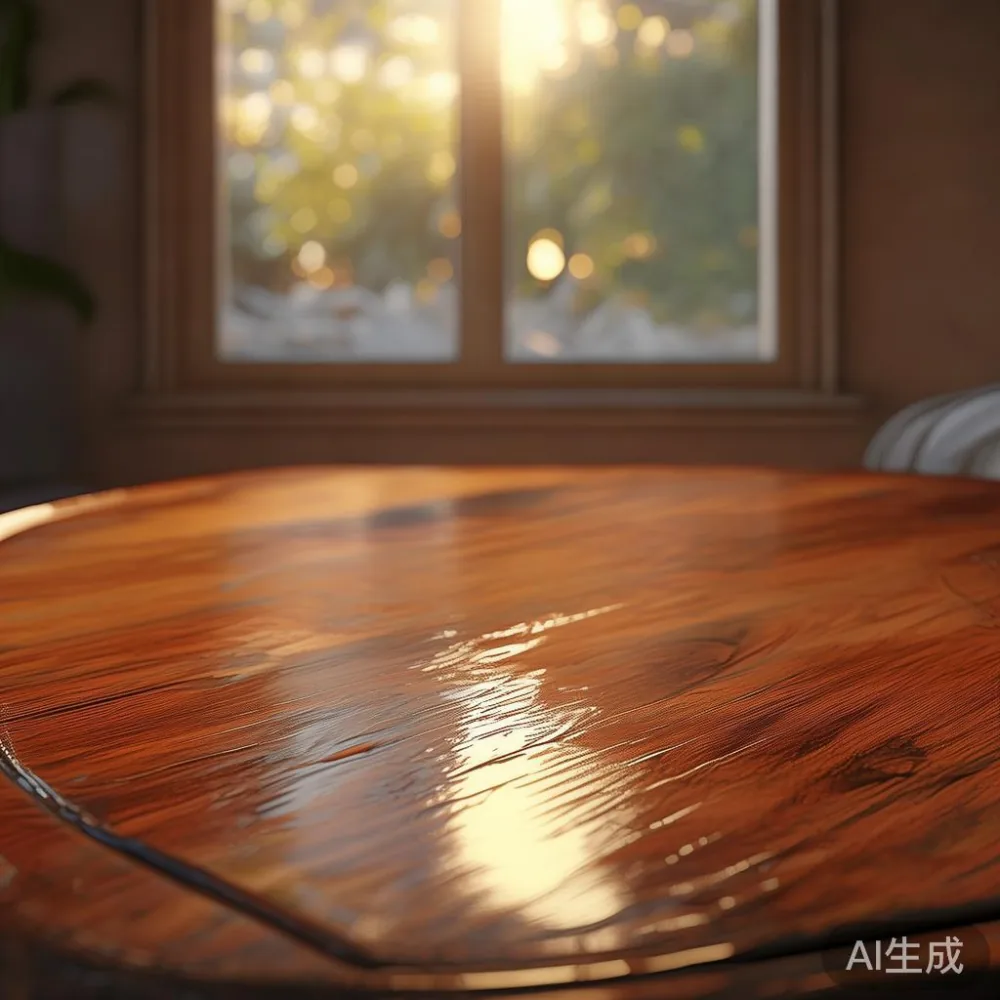
A correctly applied lacquer on a solid wood sofa frame, dining table, or marble-topped side table serves four functions. It blocks short-term water ingress (think: a wet glass left for an hour). It resists household stains — soy sauce, coffee, red wine. It protects the wood fibres from abrasion in daily use. And it gives the surface a controlled sheen that defines the piece's character — from 10% matte on a Scandinavian bed to 95% piano gloss on a French light luxury headboard.
Failure happens in a predictable sequence. First, micro-cracks appear along the grain — usually invisible until a side light catches them. Then humidity penetrates those cracks and the film begins to whiten (a phenomenon called "blushing"). Finally, the film lifts at the edges, often where a tabletop meets a chair rail or where a wardrobe door meets the carcass. By month thirty you have the cloud I saw on the Tampines table.
None of this is sudden. A piece from a careful Foshan factory with eight to twelve coats of lacquer, properly cured at 25°C for 21 days before packing, gives you a far wider margin of error than a piece that was rushed out of the spray booth in seven days. This is one reason MIDHILL's 10-year structural warranty and lifetime refinishing programme matter: the maker is budgeting for the finish to be serviceable over decades, not months.
What is the 15-minute weekly routine that actually works?
You do not need a cabinet full of products. You need one microfibre cloth (around SGD 12 for a pack of six at any neighbourhood provision shop), a bottle of pH-neutral wood cleaner (a 500 ml bottle runs SGD 14–22), and a hygrometer (SGD 18–35 for a decent digital unit). Total outlay under SGD 80.
Step one, once a week: wipe the surface with the microfibre cloth, slightly dampened — never wet, never dripping. Water and lacquer are not friends. If a ring appears during wiping, you used too much water. Step two, once a month: apply a pea-sized drop of cleaner on the cloth, never directly on the lacquer, and work with the grain. Step three, every quarter: check the hygrometer reading in the room. Above 75% sustained, run a dehumidifier for four hours a day. A standard 10-litre dehumidifier draws about 220 W and costs roughly SGD 0.06 per hour at the current 27.62 cents per kWh tariff (excluding GST).
For dining tables, always use felt or cork pads under ceramics, hot pots, and laptops. A 180 cm dining table in a four-room HDB sits about 75 cm from the nearest wall — close enough that a chair pulled out hits the side panel. Place a 3 mm felt strip (SGD 6 for a 2 m roll) along the back of each chair at contact height. For nightstands beside the bed, a spill zone of about 25 cm wide catches most accidents. Keep coasters within reach on the same surface.
How do I clean a specific stain without damaging the lacquer?
This question came in three times last quarter from customers buying small-space wardrobes and sideboards. The honest answer is: depends on the stain, but never reach for acetone, nail polish remover, or a silicone-based polish. All three will soften the film within seconds and leave a permanent dull patch.
For water rings — the white halo left by a wet glass — place a cotton cloth over the mark and press with a warm (not hot) iron for five to eight seconds. The heat drives moisture back into the wood and out through the film. Repeat twice if needed. For sticky residue (tape, price stickers), use a cloth barely dampened with isopropyl alcohol diluted 1:1 with water. Wipe, then immediately wipe dry. For ink or soy sauce caught early, a paste of baking soda and water applied with a soft cloth, left for two minutes, then buffed dry, usually pulls the pigment out of the surface film.
If the stain has gone through the lacquer into the wood — typically a dark patch 2–5 mm across — stop. This is a refinishing job, not a cleaning job. The piece needs to go back to the workshop for a localised sand-and-restore. MIDHILL offers this kind of spot refinishing under their lifetime refinishing programme, which covers collection from HDB ground floor (yourself or via their logistics partner) and return within 14 working days. The service costs between SGD 60 and SGD 220 per panel, depending on area.
How does this connect to choosing the right piece in the first place?
If you are still shopping — and many small-space owners in Punggol and Bedok are, given the 2024–2026 BTO delivery wave — the care question is also a buying question. A piece that is harder to care for is a piece you will not enjoy. The following buying criteria keep daily care manageable.
First, ask whether the piece is solid wood throughout or veneered. A solid hardwood bed frame or dining table can be sanded and re-lacquered two to three times across a 30-year life. A veneered piece cannot. Second, ask how the lacquer is cured. Catalyzed polyurethane needs 14–21 days at 22–28°C before it is fully hard. Anything shipped sooner is still off-gassing when it arrives. Third, check the corners — a 2 mm radius corner is kinder to the film than a sharp 90° edge because there is more film thickness to absorb knocks. Fourth, look at the back panel inside a wardrobe: if it is 9 mm thick solid wood rather than 3 mm ply, the piece will move less with humidity changes.
For a guest room running an American light luxury or post-modern light luxury aesthetic, the simplest care path is matte lacquer (10–25% sheen) rather than high gloss. Matte shows far fewer micro-marks under raking light, so your weekly wipe takes two minutes instead of twenty. A matte marble table in the same room is easier still — the stone is the surface, not the film.
Which rooms in a Singapore flat need different care rules?
The kitchen-adjacent dining area is the highest-risk zone. Cooking steam carries micro-fine oil droplets that settle on a dining table within an hour of cooking. A lacquered dining table 1.5 m from a stove will pick up a visible film in six months. Wipe the table with a dry microfibre after the last wash of the evening, before you head to bed. Place the table at least 1.0 m from any openable window if it faces the afternoon sun — direct UV at 35°C will yellow a clear lacquer within 18 months.
The bedroom with a bed frame and nightstand is medium-risk. Risk drivers are body moisture (a sleeping adult releases 200–500 ml of water per night), closed-room humidity, and air-con cycling between 22°C and 28°C. Run the air-con's dry mode for 30 minutes before you get up. Keep a 30 cm clearance behind the headboard so air circulates. For a queen-size bed frame (160 × 210 × 11 cm packed in three cartons, roughly 65 kg total), the boxes fit through a standard HDB 0.9 m door only if delivered flat-packed — confirm this before paying the 9% GST on delivery.
The living room with a solid wood sofa, marble table, and sideboard is lower-risk if it has cross-ventilation. The bigger risk here is direct sun through a west-facing window. A 3-roller sheer (around SGD 45 for a 1.4 m drop) cuts UV by roughly 70% while keeping the view. Sliding the sheer during peak sun hours buys you another five to seven years of finish clarity.
The home-office corner — increasingly common in Punggol exec flats — has its own pattern. A lacquered desk surface under a laptop for six hours a day gets heat-loaded to 38–42°C on the lacquer directly under the machine. A felt mat under the laptop, plus a 15 cm clearance behind the monitor, keeps the surface cooler and the film happier.
Is French sofa worth it for a Singapore small-space owner who worries about care?
Honestly, yes — with one caveat. The question of whether is French sofa worth it for a Singapore small-space owner comes down to three factors: joinery weight, finish density, and the maker's commitment to long-term service. A French light luxury sofa typically uses beech or ash frames (heavier than rubberwood by 15–20% at the same dimensions), eight-way hand-tied springs or sinuous spring systems rated to 120 kg per seat, and a 6–8 coat lacquer or oil finish on exposed wood. The care routine is identical to what I have described above: weekly wipe, monthly clean, quarterly humidity check.
Where the calculus changes is shipping and access. A 3-seater French-style sofa in solid wood arrives in two to four boxes, each 80–110 cm on the longest edge. A 1.92 m wide piece will need a final assembly step in your living room — confirm the corridor turning radius (typically 1.2 m) and lift depth (1.4 m for a standard HDB lift) before ordering. Free shipping over US$350 (around SGD 475) means most qualifying pieces ship duty-paid to your door. The 14-day returns window gives you time to inspect the finish on arrival.
What about the bed choice — European bed vs Mid-century modern bed, and where does Rustic for dining room fit?
Two comparisons keep coming up in customer chats, and they are worth a paragraph each.
The question of European bed vs Mid-century modern bed for a Singapore small-space is largely a humidity problem in clothing. European beds (German, Scandinavian, Dutch) typically run in oak with an oil or soap finish rather than a thick lacquer — the wood can absorb and release moisture without visible film failure. Mid-century modern beds (American, 1950s-inspired) traditionally use walnut or teak with a 4–6 coat hand-rubbed lacquer. In Singapore humidity, the European approach is lower-maintenance but more sensitive to water marks. The Mid-century lacquered look holds its mirror sheen if you keep the weekly routine.
If you are furnishing a guest room with a Mid-century modern for guest room brief, the care cost is genuinely low because guest rooms see less body moisture and fewer spills. A lacquered Mid-century headboard in a guest room will outlast the same piece in a master bedroom by five to seven years. For the dining zone, Rustic for dining room has become a popular search this year — a solid wood farmhouse table with a brushed, low-sheen lacquer. The brushed finish hides micro-marks, and a 200 cm rustic table in a six-seater condo dining nook handles Singapore humidity well if you keep coasters within reach.
How do I choose a French bed and what about Scandinavian choices for 2026?
The question of how to choose French bed for a small space reduces to four measurable checks. First, the internal frame must be solid hardwood — ask for the species (beech, ash, oak) and the moisture content at delivery (8–12% is acceptable, above 14% is risky in our humidity). Second, the slat system should be sprung beech or metal with a centre support leg for anything over 140 cm wide. Third, the headboard padding should be high-resilience foam (density 28–32 kg/m³) wrapped in down-proof fabric — anything below 22 kg/m³ will sag within three years in our climate. Fourth, the lacquer or fabric on the headboard should be specified as mildew-resistant; standard finishes grow black mould in 18 months in closed air-con rooms.
If French styling is not the brief, the search for the best Scandinavian bed for 2026 in Singapore points strongly toward oak frames, oiled or soap finishes, slatted heads, and integrated nightstands. Scandinavian makers like the trend because it reduces the number of separate pieces in a small-space master bedroom. An oak Scandinavian bed with two integrated nightstands replaces a separate bed frame, two nightstands, and the visual clutter of three pieces — a useful trick when your HDB master measures 3.2 m by 3.6 m.
What about storage pieces and long-term refinishing?
A lacquered wardrobe is the highest-risk piece in the flat because the doors cover 1.8–2.4 m² of vertical surface each and trap humidity inside. Run the air-con dry cycle in the bedroom for 30 minutes before opening wardrobe doors in the morning. Leave a 2 cm gap behind the wardrobe — pull it 2 cm off the wall when you install it. The air gap matters more than people realise; I measured a 6–8% relative humidity difference between the back panel and the room in a Bedok condo wardrobe that was flush against the wall.
Refinishing is the safety valve. A standard wardrobe door panel (around 2.0 m²) costs SGD 180–280 to strip, sand, and re-lacquer in a Foshan factory workshop, including return logistics to Singapore. Over a 30-year life, refinishing a wardrobe twice and a dining table three times is normal, not excessive. The lifetime refinishing programme at MIDHILL covers the round-trip logistics and a like-for-like finish sample at no charge for the first ten years; after that, customer pays inbound freight. Solid wood pays for itself when you can refinish it; laminate cannot be refinished at all.
How long should a lacquered piece last in Singapore, and what should I do this weekend?
A lacquered bed frame, dining table, or wardrobe from a careful maker should give 12–18 years of daily-use finish in a Singapore HDB or condo, with one mid-life refinish around year 9 or 10. Without care, the same piece shows visible blushing within four to six years and needs full refinishing by year eight. The numbers are not guesses; they come from workshops tracking refinishing work in Tampines, Bedok, and Punggol across multiple delivery cycles.
This weekend, do four things. Buy a digital hygrometer (SGD 25, any neighbourhood electronics shop). Measure humidity in the bedroom and living room for seven days at the same hour. Place felt pads under everything ceramic, hot, or with a hard edge on every lacquered surface. Wipe down your dining table with a barely damp microfibre tonight and again on Sunday. If you spot a micro-crack along the grain in raking light, mark it with a pencil dot and check it in 30 days — if it has grown, call the maker's service line.
The care routine for lacquered wood in a tropical climate is not complicated. It is consistent. A 15-minute weekly wipe, a monthly clean, a quarterly humidity check, and a biennial inspection of the high-risk zones — that is the whole programme. A solid wood sofa, bed frame, dining table, wardrobe, nightstand, or marble table cared for this way will outlast the lease, the tenant, and probably the next renovation cycle. The piece finishes its first step into a 30-year life the day you bring it through the HDB door — what you do after that is up to you.