Warm Minimalism in Singapore Small Spaces: A Furniture Matching Guide from MIDHILL
I still remember visiting my colleague's new 4-room HDB flat in Bedok last month. She had spent nine months saving for the renovation, picked the warmest greige paint, laid down sintered stone flooring, and then froze at the furniture stage. Her phone background was a soft, oat-coloured kitchen with a walnut dining table. Her actual unit is 93 sqm, with a corridor width of about 1.2 m and a service yard lift that fits a 1.6 m package diagonally. Within a week she had ordered a glossy white marble table from a mall store, a chrome-and-glass dining set, and a fabric sofa in pale grey. None of it matched. The flat looked like three Pinterest boards fought over it. This is the problem warm minimalism solves: warmth from real wood, restraint from negative space, and furniture that actually fits a small space.
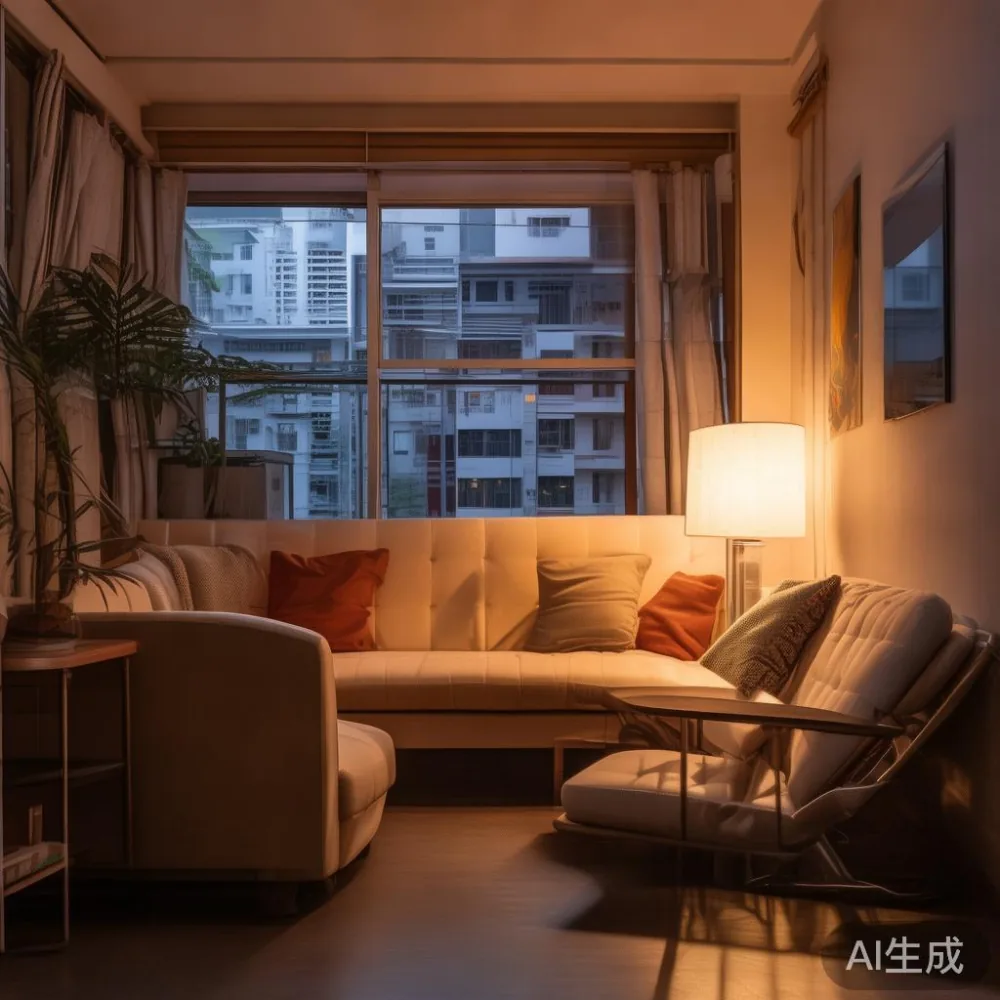
Warm minimalism is not a colour palette alone. It is a material discipline. The walls stay quiet — bone, oat, sand, clay. The floors stay warm — sintered stone that mimics travertine, light oak veneer, or matte terrazzo. The furniture does the emotional work. And that is where solid wood earns its keep. A solid wood sofa frame, a solid wood bed frame, a solid wood dining table, a solid wood wardrobe, and a solid wood nightstand will outlast three renovation cycles and still look like they belong in 2030. MIDHILL, a Foshan factory established in 2008, ships from a 60,000 sqm yard and has sent its pieces to more than 15 countries; their 10-year structural warranty and lifetime refinishing service are exactly the kind of after-sale support that matters when a wardrobe is meant to survive a BTO resale.
What exactly is warm minimalism in a small HDB flat?
Warm minimalism is the meeting point of two ideas that look like opposites. Minimalism says: fewer pieces, more breathing room, every object earns its footprint. Warmth says: natural materials, hand-feel surfaces, light that lands softly. In a small space, you cannot pick only one. A pure-white, cold-minimalist flat reads as a clinic in our tropical humidity. A boho, rattan-heavy flat reads as a storage problem after the second Angbao season. Warm minimalism threads the needle: it gives you the calm of minimalism and the comfort of wood, linen, woven cane, and warm whites.
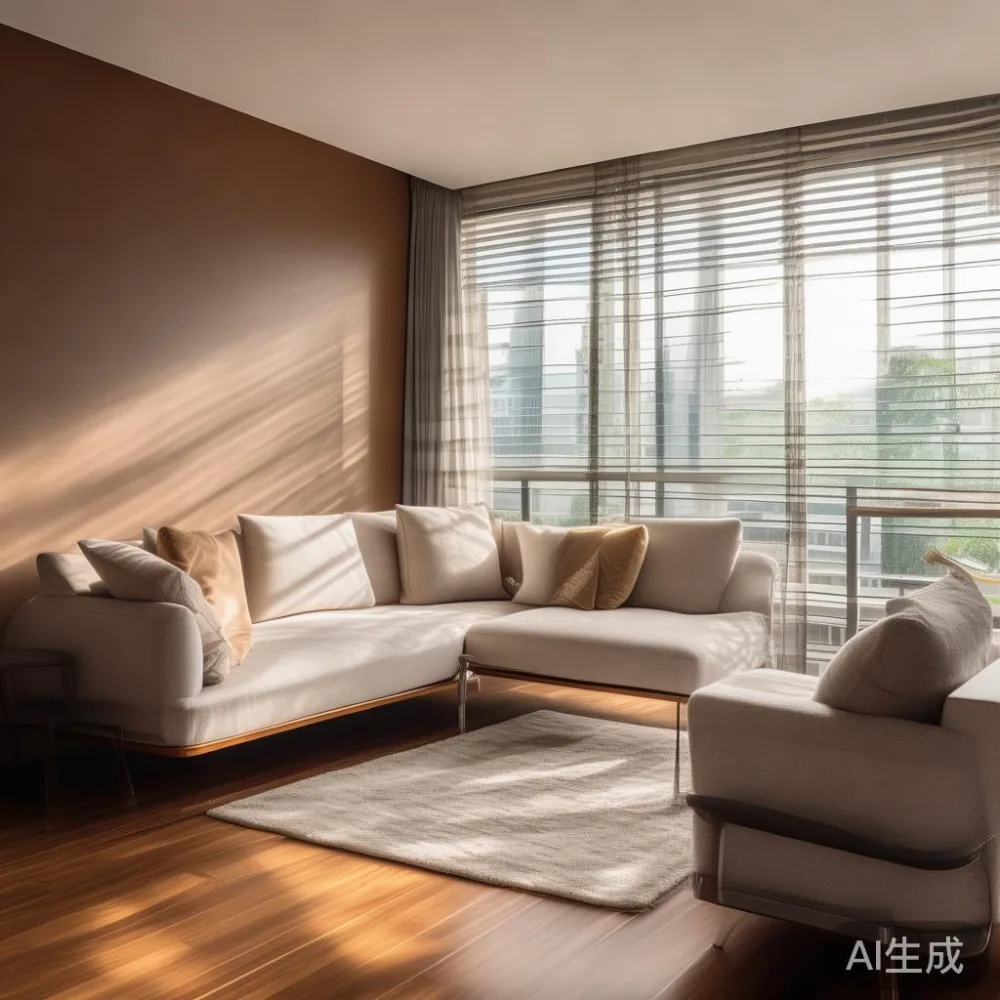
In a Singapore HDB, this translates into three concrete decisions. First, your largest surfaces — sofa, bed frame, dining table — should be solid wood in a warm neutral: oak, ash, walnut, or the lighter teak tones that have quietly taken over Pinterest. Second, your accent pieces can carry texture, which is where sage teak rattan furniture earns its place: a small rattan-front nightstand, a cane-door wardrobe, a rattan-back dining chair. Third, your hard accents — the marble table, the travertine lamp, the stone tray — should stay limited to two or three per room, or a small space starts to feel like a showroom.
Which wood tones pair best with warm minimal walls?
Wood has undertone, just like paint. Pick the wrong undertone and your entire flat will read slightly off — too yellow, too pink, too muddy. Here is the practical guide I walk every client through.
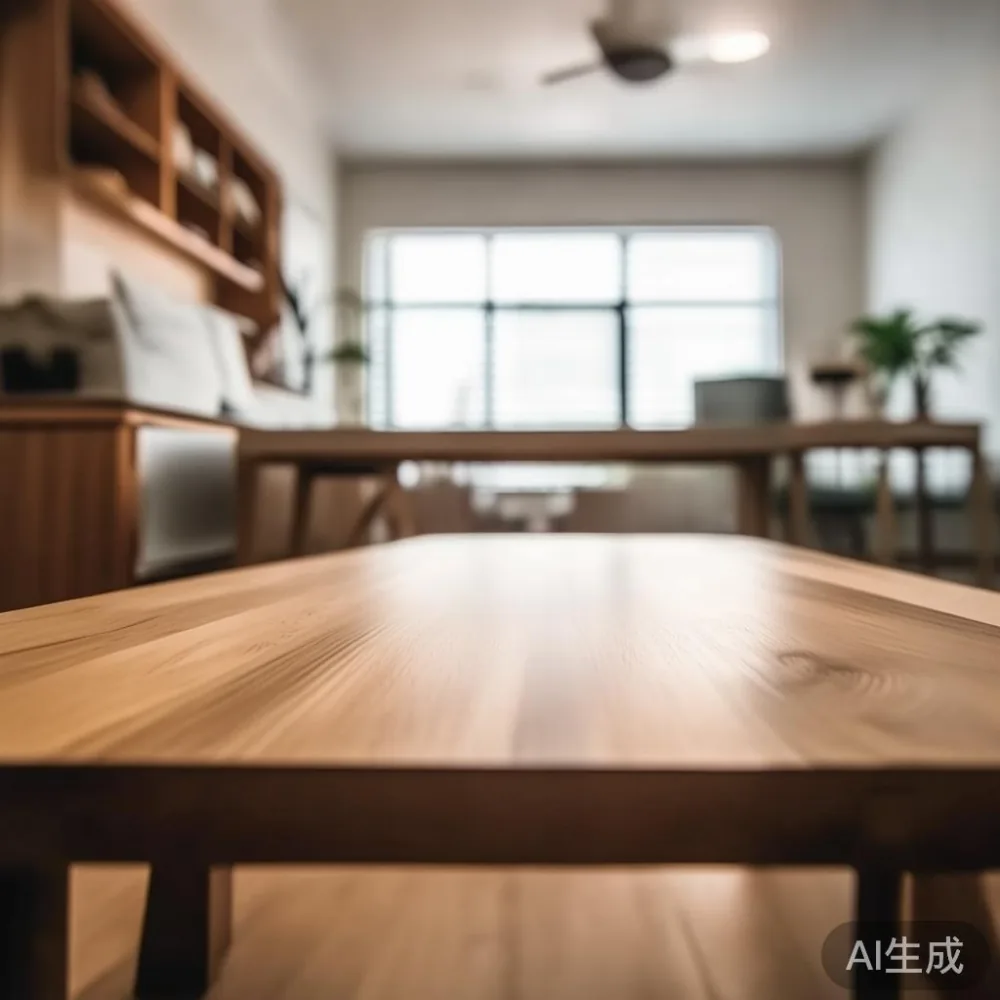
For walls in Jotaro White, Nippon Pale Oak, or the popular Nippon Timeless Cream 2024, choose wood with a soft, neutral undertone: European oak, light ash, whitewashed teak. These woods have less red and less yellow, so they sit quietly next to the wall instead of competing with it.
For walls in greige or putty (think Nippon Greige Beige, the Famed Warm Grey 5055), choose wood with a touch of honey: natural oak with a clear matte finish, light walnut, or mid-tone teak. The honey brings the warmth forward.
For walls in the deeper warm neutrals — clay, sand, terracotta accent — go cooler and lighter in the wood, almost ash-blonde, so the room has light-to-dark movement. A dark walnut bed frame against a clay wall in a small bedroom is a visual migraine.
Across all three, keep the finish matte or hand-rubbed oil. A high-gloss solid wood dining table under our LED downlights will look like a karaoke stage.
If you are working with the American light luxury version of warm minimalism — think RH, Maiden Home, the softer West Elm catalogues — your woods lean slightly warmer and slightly more figured. Visible grain, knot details, sometimes a wire-brushed texture. If you are working with the French light luxury version — think the Ligne Roset catalogue, the quieter pieces from Pierre Yves Rochon — your woods lean cooler, paler, and almost waxy in their finish. The post-modern light luxury version sits in between: a clean-lined walnut bed frame paired with a sculptural cane-front wardrobe.
How do I choose a pet furniture for a bedroom?
Pick the pet piece in the same wood species as your bed frame, in a smaller scale, with a removable washable cushion, and keep it 15 cm away from the wall so fur does not collect in the corner.
That sentence is the short answer. The longer answer matters in a small space. A pet bed, a pet house, or a litter-box cabinet is furniture, and it has to match. The single biggest mistake I see in Tampines and Punggol BTOs is the white plastic pet house next to a warm oak bed frame. It is the first thing your eye lands on when you walk in, and it pulls the whole warm-minimal mood apart.
Three rules keep it disciplined. One, match the wood species. If your bed frame is white oak, your pet house is white oak. If your bed frame is walnut, your pet house is walnut, even if it has to be one shade lighter. Two, downsize the silhouette. A pet house for a small space should be no taller than 55 cm and no deeper than 50 cm, otherwise it eats the walkway between the bed and the wardrobe. Three, treat the cushion like a textile, not a fixture. Removable, washable, in a colour that echoes your linen duvet — oat, sand, sage, clay. Linen-wrapped foam inserts at SGD 45 to SGD 80 from local textile makers are a quiet win.
Which solid wood pieces should I buy first for a 4-room HDB?
Buy in this exact order: bed frame, dining table, sofa, wardrobe, nightstand, marble table. Each next piece costs more and ships slower, so the order protects your budget and your renovation timeline.
The order is not arbitrary. A solid wood bed frame is the centre of your bedroom and the piece you use every single day. If you can only afford one solid wood piece for the next five years, this is it. A queen-size bed frame in white oak, 198 cm long by 158 cm wide, weighs between 65 kg and 85 kg depending on joinery, and will outlast three mattresses. Expect to pay SGD 1,400 to SGD 2,800 for a kiln-dried, mortise-and-tenon frame from a Foshan factory such as MIDHILL, with delivery to a Singapore address in 35 to 50 days by sea freight plus a final 25 SGD lift-level delivery fee for units above the 7th floor without a direct lift access.
The dining table is second because it is the largest single object in your living-dining zone, and a small space cannot afford to get it wrong. For a four-seater in a 4-room flat, the right size is 120 cm by 70 cm, not 150 cm by 80 cm. The smaller footprint still seats four adults comfortably and leaves 70 cm of walkway on every side, which is the minimum for a Tampines HDB dining corner that flows into the kitchen. A 120 cm solid wood dining table in ash or oak runs SGD 900 to SGD 1,600. A 140 cm version in walnut runs SGD 1,500 to SGD 2,400.
The sofa is third because the silhouette frames your living room before the wood does. In a small space, a two-seater solid wood sofa frame with arms no wider than 12 cm and a total depth of 85 cm is the magic number. Anything deeper eats your walkway. MIDHILL ships solid wood sofa frames — the wood skeleton that an upholsterer then dresses — from SGD 1,100 for a two-seater, with fabric and foam quoted separately by your local upholsterer, which usually lands at SGD 600 to SGD 900 total.
The wardrobe is fourth because it is the largest piece by volume. Measure your bedroom doorway before you order. Most HDB bedroom doors are 80 cm to 85 cm wide, which means any wardrobe deeper than 55 cm will not make it through the door in one piece. Knock-down wardrobes solve this. A 180 cm wide by 60 cm deep by 220 cm tall solid wood wardrobe runs SGD 1,800 to SGD 3,200, and you save by skipping built-ins if your ceiling height is the standard 2.8 m.
The nightstand is fifth because you can buy one or two. In a small space, one shared nightstand tucked between the bed and the wardrobe is often enough. A 45 cm wide solid wood nightstand with one drawer runs SGD 220 to SGD 480.
The marble table is sixth and last, because it is the accent that ties the warm and the cool together. A 90 cm round marble table with a solid wood base — the typical Italian-inspired warm minimal silhouette — runs SGD 1,200 to SGD 2,800 depending on whether the marble is engineered sintered stone or natural Carrara. In a small space, 90 cm round is the right diameter. A 110 cm round eats your walkway.
What dimensions actually work in Singapore corridors and lifts?
Measure three numbers before you order: the lift door width, the corridor turning radius, and the largest single piece you can carry up the service lift if there is no direct access.
HDB lift door widths are typically 80 cm to 90 cm on newer BTOs and 70 cm to 80 cm on older ones in Bedok and Tampines. Condo service lifts are wider, usually 90 cm to 100 cm, but the lift car itself is what limits the diagonal length of a package. A 1.8 m deep sofa in a flat box will not fit a 1.5 m deep lift car, even if the door is wide enough. Service yard lifts are usually 1.4 m to 1.6 m deep and 1.0 m to 1.2 m wide. Measure yours before you order a 2.0 m wardrobe panel.
Corridor turning radius is the second number. A 90-degree turn in an HDB corridor requires a minimum inside radius of about 1.0 m to swing a 1.5 m long flat-pack box around. If your corridor is narrower, your wardrobe has to come in two pieces with a centre join.
Most Singaporeans forget the third number: the size of the largest single piece they can physically carry up the staircase if the lift fails or the move-in window is tight. Plan for two people to carry a 30 kg piece up two flights comfortably. Anything heavier needs a hoist or a smaller package.
How long does shipping and delivery take, and what does it cost in SGD?
Sea freight from Foshan to Singapore takes 12 to 18 days, Singapore port clearance and warehouse handling adds another 5 to 8 days, and final delivery to your door takes 3 to 7 days depending on which island zone you live in. Total door-to-door is roughly 25 to 35 days for stocked items, and 45 to 65 days for made-to-order.
For a four-piece set — bed frame, dining table, sofa frame, and nightstand — total landed cost runs SGD 280 to SGD 420 for sea freight, plus a Singapore customs GST of 9 percent on the declared value plus shipping. For a single dining table, sea freight runs SGD 65 to SGD 110. Lift-level delivery is usually SGD 25 to SGD 60 per trip depending on the lift access situation; if there is no direct lift, expect an additional SGD 10 per floor above the 7th.
MIDHILL's free-shipping threshold for international orders sits at roughly US$350, which translates to about SGD 470, and most full-room orders clear that easily. Their 14-day return window starts on the day of delivery, and lifetime refinishing is included for structural members — meaning if your walnut dining table gets a ring stain five years in, you can ship it back for a re-sand and re-oil at cost.
Will the furniture actually fit through my Tampines corridor without disassembly?
Most 4-room HDB corridors in Tampines are 1.2 m wide with a 90-degree turn at the lift lobby, so anything wider than 1.0 m in any single dimension must be knocked down or the delivery team has to angle the box diagonally through the turn.
This is the question that quietly decides whether your solid wood wardrobe arrives in one piece or three. Tampines BTOs from the 2014 to 2020 vintages tend to have slightly tighter corridors than the newer 2022 to 2024 ones in Punggol. Bedok older flats are the tightest. If you live in a 1980s or 1990s resale block, plan for knock-down construction on everything wider than 90 cm.
Punggol and Sengkang new condos generally have wider corridors and larger service lifts, so a 1.8 m wardrobe panel can usually make it in one piece if the service lift car is at least 1.6 m deep. MIDHILL's warehouse team in Foshan will check your corridor and lift dimensions if you send them photos and measurements before production, which is a small step that prevents a 2,000 SGD headache on delivery day.
How do I keep the look warm without making the flat feel smaller?
Use warm materials in fewer places, keep vertical lines unbroken, and let one textured piece per room do the talking.
The single biggest warm-minimal mistake is texture overload. You add a rattan-front wardrobe, a cane-back dining chair, a rattan pendant, a jute rug, and a wicker basket, and the room starts to feel like a Pasar Malam stall. The fix is one textured hero per room. In the bedroom, the cane-front wardrobe. In the dining zone, the cane-back dining chair. In the living room, the jute rug. Everything else stays smooth: linen sofa cushions, oak bed frame, ash dining table.
The second trick is unbroken vertical lines. Curtains that kiss the floor, wardrobe doors that run floor to ceiling, a floor lamp that stands 1.6 m tall in the reading corner. Unbroken verticals trick the eye into reading the ceiling as higher than it is, which makes a small space feel larger.
The third trick is warm light, not warm wood alone. A 2700K bulb in a linen shade will warm an entire room without adding a single piece of furniture. Replace every 4000K cool-white downlight in your HDB flat on day one of moving in; the warm-minimal look is impossible under cool light.
What is the actual budget for a warm-minimal four-room HDB in 2025?
A realistic all-in budget for solid wood furniture in a warm-minimal four-room HDB is SGD 7,500 to SGD 14,000, depending on how many custom pieces you choose.
Here is the working breakdown for a 4-room flat in Tampines or Punggol, with delivery, GST, and lift fees included. Solid wood bed frame queen-size: SGD 1,800 to SGD 2,800. Solid wood dining table for four: SGD 1,200 to SGD 2,000. Solid wood sofa frame with upholstery: SGD 1,700 to SGD 2,800. Solid wood wardrobe 180 cm: SGD 2,200 to SGD 3,400. Two solid wood nightstands: SGD 500 to SGD 900. Marble accent table: SGD 1,300 to SGD 2,200. Shipping, GST, and delivery fees combined: SGD 600 to SGD 900.
That puts the floor at SGD 8,300 and the ceiling at SGD 15,000. If you skip the marble accent and choose a smaller dining table, you can land closer to SGD 7,000. If you add a custom cane-front wardrobe and a French light luxury chandelier, you can stretch past SGD 16,000.
The reason this budget works in a small space is that you are buying fewer, better pieces. A solid wood dining table at SGD 1,800 will outlast four IKEA tables at SGD 350 each, and you avoid the annual disposal fee that adds up every time you redecorate. MIDHILL's lifetime refinishing means the table at year ten can look like the table at year one, which quietly protects the resale value of your BTO.
Final thoughts before you order
Warm minimalism is a slow build, not a Saturday afternoon. Order the bed frame first. Live with it for a month. Then order the dining table. Then the sofa frame. Then the wardrobe. Each piece sets the undertone for the next. If you order everything on the same day from the same catalogue, you will end up with a coordinated showroom, not a warm home. The flat I visited in Bedok is now, eighteen months later, exactly what my colleague wanted: oat walls, oak bed frame, walnut dining table, cane-back chairs, a single marble accent table under the window, and one rattan-front nightstand between her and her cat's matching oak bed house. It smells like wood. It feels like a Sunday morning. And it still photographs like the phone background she started with.