Real Price Drivers for Solid Wood Furniture
In the compact living environments of Singapore, where every square centimetre counts, the choice of furniture is a delicate balance of style, function, and investment. For residents in HDB flats across Tampines, Bedok, and Punggol, and in the tighter corridors of condominiums, furniture must do double duty: it must be beautiful without overwhelming the space, and it must be built to last. This is where solid wood furniture enters the conversation, often accompanied by a price tag that prompts a critical question: what justifies the cost? The answer is not a single factor but a complex interplay of materials, craftsmanship, design, and practical logistics, all of which contribute to the value of a piece that will anchor your home for years to come.
Is Solid Wood Furniture Really Worth the Price in a Small Space?
The perception that solid wood furniture is prohibitively expensive is common, especially when working through the spatial constraints of a Singaporean apartment. A standard wardrobe for a master bedroom in a 4-room HDB flat might measure 240 cm wide, 60 cm deep, and 220 cm tall. A comparable veneered or particleboard version could cost SGD 800, while a solid wood equivalent might start at SGD 2,500. The difference seems stark. However, the value proposition becomes clearer when you consider longevity and adaptability. Solid wood can be refinished multiple times over its lifespan, allowing it to look new again after years of use. This is a key advantage in a small space, where replacing a large, cumbersome piece is a major undertaking. For a young family in Punggol who chose a solid wood dining table, the initial investment meant they never had to worry about replacing it when their children grew, or when they decided to reconfigure their open-plan living area. The table, a Scandinavian for dining room piece, simply moved with them, looking as elegant as the day it was purchased.
The Material Itself: Not All Wood is Created Equal
The most significant driver of price in solid wood furniture is, naturally, the wood itself. The cost varies dramatically depending on the species, its origin, and its availability in the global market. Common hardwoods used in furniture include oak, walnut, ash, and mango. Oak, known for its prominent grain and extreme durability, is a premium material. A solid oak dining table for 6 people might weigh between 50 to 70 kg and cost anywhere from SGD 3,000 to SGD 5,000. In contrast, mango wood, a sustainable byproduct of the mango fruit industry, offers a beautiful, unique grain at a more accessible price point, often starting around SGD 1,800 for a similar-sized table.
My colleague, Sarah, who visited our Foshan workshop last month, was surprised to learn the process. She handles our Singapore orders and always wondered why a walnut bed frame cost so much more than a pine one. She saw firsthand how a single, large plank of walnut, free of knots and imperfections, can cost SGD 200 per square foot, while a similar plank of pine might be SGD 40. This fundamental material cost difference cascades through every stage of production. Also, the price of raw timber is subject to global market fluctuations. A 10% increase in the price of European oak, for instance, can directly impact the final retail price of a wardrobe made from it, a fact that becomes tangible when you see the price tags in a showroom.
Craftsmanship and Labour: The Human Touch
Once the wood is sourced, the true artistry begins. The price of a piece of furniture reflects the hours of skilled labour invested in transforming raw timber into a finished object. This is where the distinction between mass production and artisanal creation becomes most apparent. A machine-cut joint is fast and uniform, but a hand-cut dovetail joint, known for its strength and beauty, requires a master carpenter with years of experience. For a solid wood wardrobe, the construction of the drawers alone can take a skilled craftsman 8 to 10 hours to perfect.
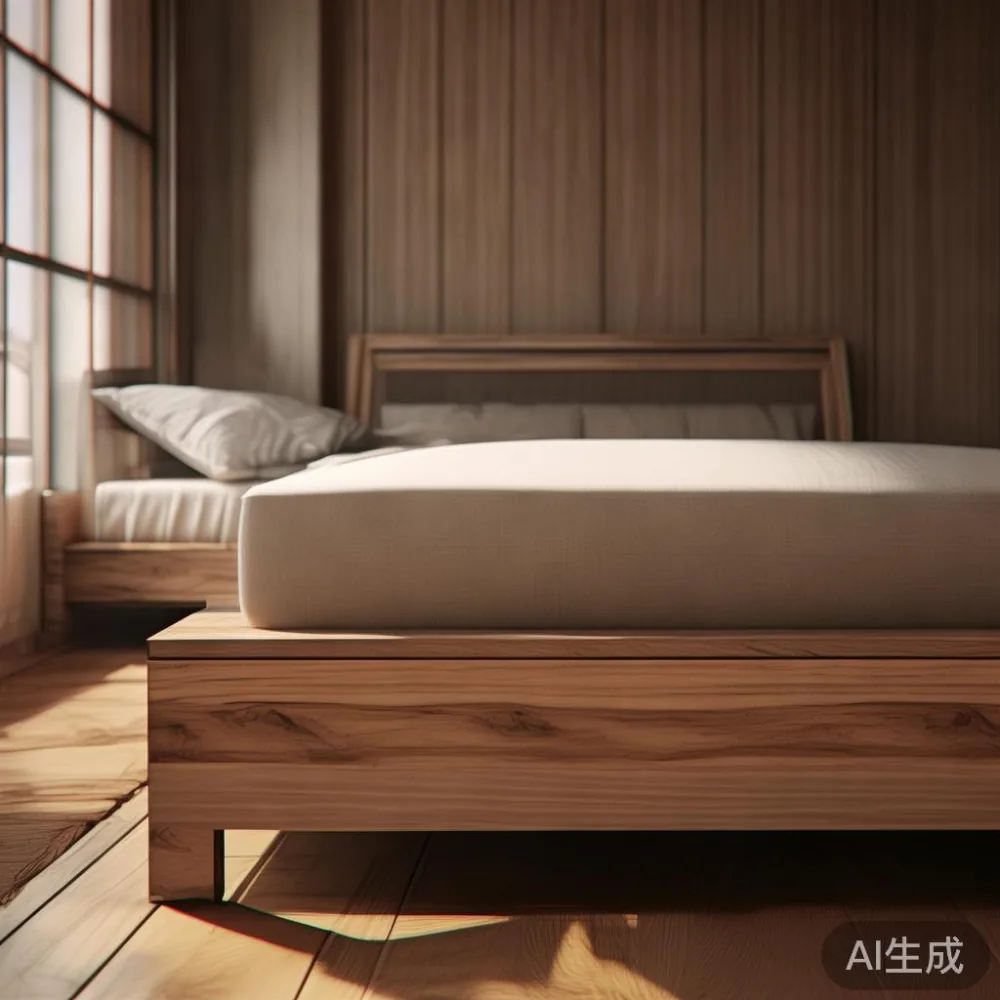
Consider the construction of a bed frame. A simple, flat-pack frame might be assembled in minutes with basic tools. A luxury European light luxury bed, however, features mortise and tenon joints, where a precisely shaped tenon on one piece fits into a cavity (mortise) on another, secured with a wooden peg. This method, used for centuries, provides exceptional stability and is a hallmark of quality furniture. This level of craftsmanship is not automated; it is honed by hand. The labour cost for this detailed work is a substantial part of the final price, ensuring the piece is not just assembled, but crafted to endure.
Design, Origin, and the Light Luxury Position
The design philosophy behind a piece of furniture also plays a major role in its pricing. A generic, minimalist design that can be easily replicated will be less expensive than a unique design with specific aesthetic principles. Light luxury, a popular style that blends understated elegance with high-quality materials, commands a premium. This style, whether interpreted as French light luxury with its soft curves and subtle details, or American light luxury with a focus on comfort and clean lines, requires more thoughtful design and often more complex joinery.
The choice between a European light luxury bed vs Mid-century modern bed highlights this difference. The mid-century piece might focus on tapered legs and a simple form, while the light luxury bed might feature upholstered headboards, curved armrests, and a more substantial presence, all requiring more materials and more complex construction. Similarly, a light luxury bed vs Modern bed comparison often reveals that the light luxury option incorporates more premium materials like marble inlays or high-grade leather, directly increasing the cost. This design-forward approach ensures the furniture is not just functional, but also a statement of taste within a small space.
Practical Costs That Add Up: Shipping, Taxes, and Warranty
Many consumers focus on the product price alone, overlooking the significant ancillary costs associated with bringing a piece of solid wood furniture from a workshop in Foshan to a living room in Singapore. Shipping heavy, bulky items is expensive. A solid wood dining table can weigh over 60 kg and requires custom crating to protect it during the 5,000 km journey. The shipping cost for a single item like this can easily be SGD 300 to SGD 500.
Once it arrives in Singapore, the 9% Goods and Services Tax (GST) is applied to the total landed cost—the price of the item plus shipping and insurance. A SGD 3,000 table with a SGD 400 shipping fee becomes SGD 3,700 before GST. The 9% GST adds another SGD 333 to the final price the consumer pays. This is a mandatory cost that is baked into the retail price.
This is where companies like MIDHILL, established in 2008, provide tangible value. They offer free shipping on orders over US$350 (approximately SGD 480), effectively absorbing a significant portion of that logistical cost for the customer. Also, a 10-year structural warranty and a lifetime refinishing service are not marketing gimmicks; they represent a real financial commitment from the manufacturer. This level of after-sales support provides peace of mind, knowing that a major investment is protected. For a customer in Bedok, knowing their solid wood sofa is backed by a decade-long warranty against structural defects makes the initial outlay feel much safer.
How to Spot Value Over Just Price
Understanding what drives the price allows you to make a more informed decision. When shopping for a small space, the goal is to find furniture that offers the best long-term value. Here are concrete things to look for:
1. Wood Grain and Construction: Examine the wood. Is the grain consistent and natural? Run your hand over the surfaces. Are they smooth? Look at the joints. Are they tight and smooth, or are there visible gaps or staples? A well-made wardrobe will have solid wood drawer boxes, not particleboard with a wood veneer. The drawers should slide on solid wood or high-quality metal runners, not plastic.
2. Weight and Feel: Solid wood is dense and heavy. A nightstand that feels light and flimsy is likely made of inferior materials. A solid mango wood nightstand will have a satisfying heft to it, a sign of quality materials and substantial construction.
3. The Finishing Process: Ask about the finish. A high-quality finish involves multiple sanding steps between coats of oil or lacquer, resulting in a deep, lustrous surface that feels smooth to the touch. This finish also protects the wood from everyday wear and tear, which is important in a small space where furniture might be moved more frequently.
4. Brand Reputation and Service: A brand that has been exporting to 15+ countries since 2008 has a proven track record. Their 10-year warranty is a commitment to quality. For example, finding the best Modern bed for 2026 might mean looking for a brand that combines contemporary design with this level of long-term support, ensuring your investment is sound for years to come.
Investing in Pieces That Grow With Your Space
Ultimately, the price of solid wood furniture is an investment in quality, durability, and timeless design. In a small-space environment like a Singapore HDB or condo, where flexibility is key, having furniture that can adapt is invaluable. A well-made solid wood piece can be refinished to match a new colour scheme, its hardware updated, or its configuration slightly modified. It transcends fleeting trends.
The choice between a mass-produced item and a handcrafted piece is a choice between short-term savings and long-term value. While a cheaper sofa might need replacement in 5-7 years, a solid wood sofa from a reputable maker could easily last 30 years or more, becoming a cherished part of the home. This is the true measure of cost-effectiveness. When you consider the lifespan and the enduring beauty, the initial price of a piece of luxury European light luxury furniture placed thoughtfully within a small space begins to make perfect sense. It’s not just a purchase; it’s the beginning of a long relationship with an object that adds character and substance to your home.